
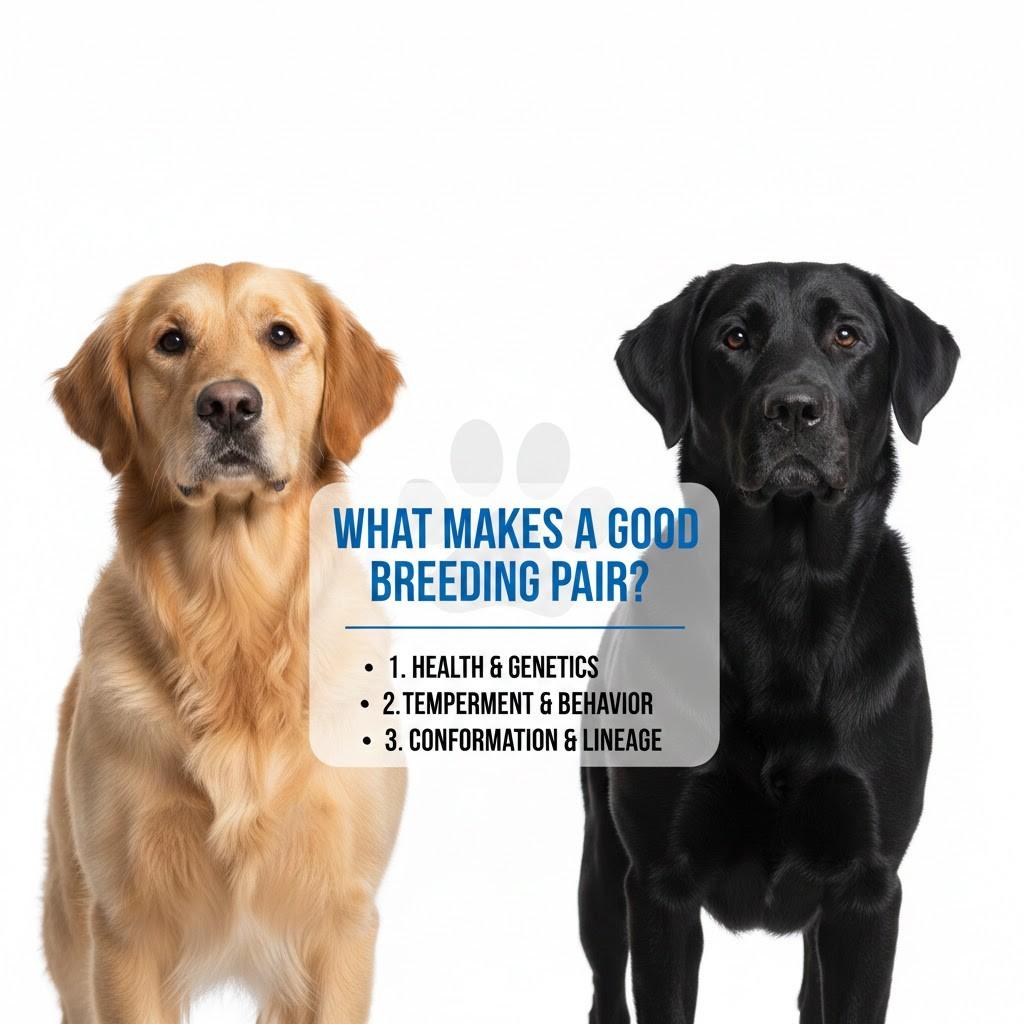
Choosing the right breeding pair is one of the most important decisions a breeder can make. A successful match isn’t just about producing puppies—it’s about preserving and improving breed standards, ensuring health, and promoting sound temperament. Whether you’re breeding for show, companionship, or working traits, the selection process requires careful planning and a strong understanding of genetics, behavior, and breed-specific needs.
1. Health and Genetic Compatibility
Both dogs should be in excellent physical condition and free of hereditary diseases. Start with:
- Health screenings for hips, elbows, heart, and eyes (based on breed recommendations)
- Genetic testing to identify carriers of inheritable conditions
- Complete medical history including vaccinations, parasite control, and any previous illnesses or injuries
Avoid breeding two carriers of the same genetic condition to reduce the risk of affected offspring.
2. Temperament and Behavior
Good temperament is essential for producing well-balanced puppies, especially for families or service work. Look for:
- Calm, confident demeanor
- Trainability and responsiveness
- Social tolerance with people and other dogs
Avoid breeding dogs with a history of aggression, fearfulness, or anxiety. Temperament is influenced by both genetics and environment but can be inherited to a significant degree.
3. Conformation to Breed Standards
If your goal is to maintain or improve a breed, both dogs should closely match the standard set by major kennel clubs (like the AKC, UKC, or FCI). Evaluate:
- Size and structure
- Coat quality and color
- Movement and balance
- Facial features and overall proportion
A knowledgeable breeder or breed judge can help assess conformation and spot faults that may be subtle to new breeders.
4. Complementary Traits
Breeding isn’t just about picking two beautiful or healthy dogs—it’s about combining complementary traits. For example:
- A male with strong bone structure may balance out a lighter female
- A female with excellent temperament may offset a stud with more intensity
- Pairing a dog with a weak topline with one that has strong back conformation may help improve that trait in the litter
Avoid doubling up on faults; instead, aim to enhance the strengths of both dogs.
5. Fertility and Reproductive History
If either dog has been bred before, their past reproductive performance can be an important clue.
- Has the female had healthy litters with no complications?
- Is the male proven, with good conception rates and healthy offspring?
- Are heat cycles and sperm counts normal?
While unproven dogs can certainly be successful, working with at least one proven partner can help reduce uncertainty.
6. Lineage and Pedigree
Thorough knowledge of the dogs’ ancestry helps breeders anticipate both strengths and potential weaknesses.
- Study at least three generations back
- Look for titles, working ability, or health records in the pedigree
- Avoid tight inbreeding unless done with careful genetic planning
Linebreeding (controlled breeding within a family) can help fix desirable traits but also increases risk if genetic problems are present.
7. Breeding Goals and Ethics
A good breeding pair should match your specific goals—whether you’re aiming for show dogs, family pets, or working dogs. Just as important:
- Never breed purely for profit or appearance
- Always have a plan for placing puppies in responsible homes
- Commit to taking back any puppy that cannot be kept by its buyer
Ethical breeding prioritizes health, purpose, and long-term responsibility.
Final Thoughts
A good breeding pair is the foundation of a healthy, well-tempered, and high-quality litter. Health testing, temperament assessment, and thoughtful matching are all essential to responsible dog breeding. Taking the time to research and evaluate your choices will help ensure that your breeding program contributes positively to the breed and to the dogs’ future homes. PetsDogPuppy