Regular grooming is essential for your dog’s health, hygiene, and comfort. While professional groomers can handle complex tasks, many grooming needs can be managed at home with the right tools. Whether you have a long-haired breed that needs frequent brushing or a short-coated dog that still sheds, building a basic home grooming kit is a smart investment.
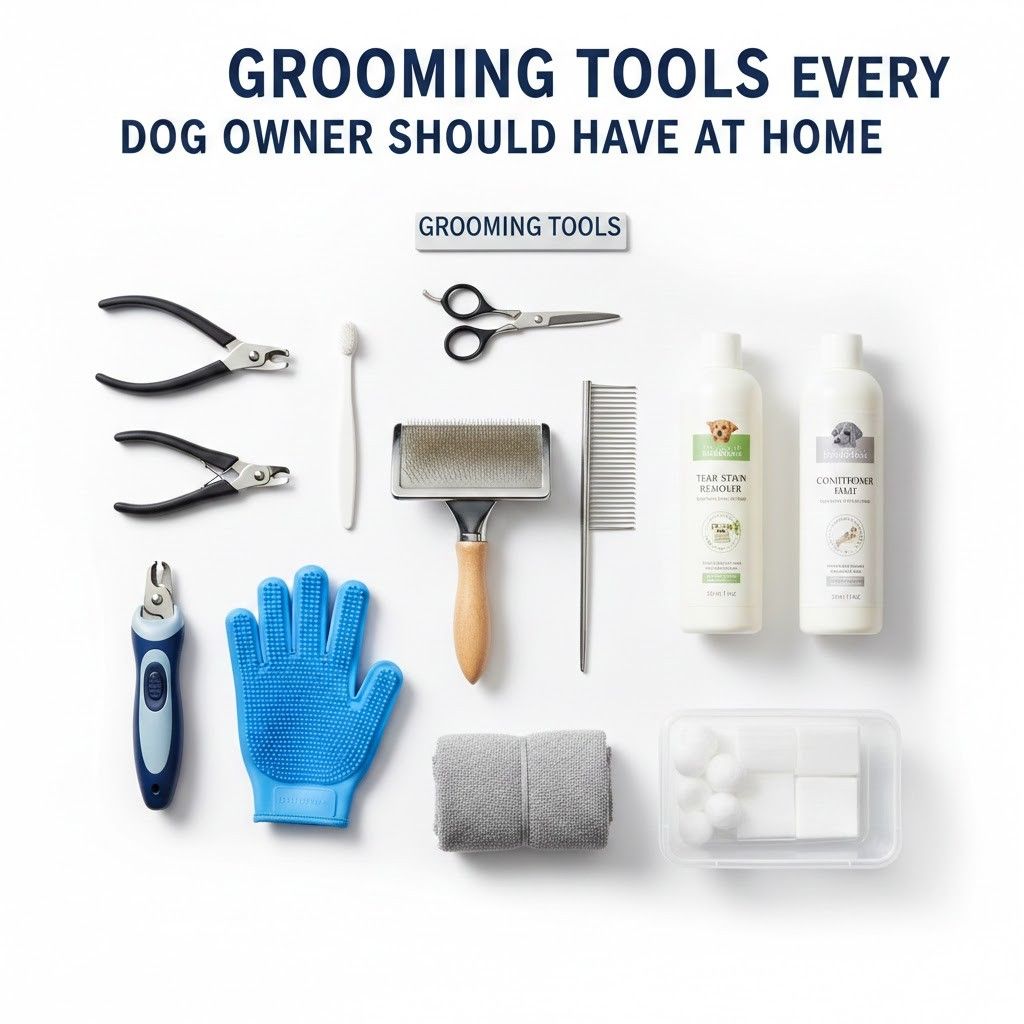
1. Slicker Brush
A slicker brush has fine, short wires close together on a flat or curved surface. It’s excellent for:
- Removing mats and tangles
- Reducing loose fur
- Reaching the undercoat in long-haired breeds
Use gentle strokes to avoid skin irritation, especially in sensitive areas.
2. Bristle Brush
Ideal for short-haired breeds, bristle brushes help:
- Remove dirt and debris
- Distribute natural oils for a shiny coat
- Stimulate the skin
Choose the bristle firmness based on your dog’s coat type—softer for short coats, firmer for longer or wiry fur.
3. Deshedding Tool (e.g., FURminator)
Shedding is natural, but excessive loose fur can be controlled with a quality deshedding tool. These tools reach the undercoat and reduce shedding significantly when used weekly.
Perfect for double-coated breeds like Huskies, German Shepherds, and Retrievers.
4. Nail Clippers or Grinders
Overgrown nails can cause pain, posture problems, and even joint issues. You’ll need:
- Guillotine or scissor-style clippers for regular trimming
- Dremel-style grinders for a smoother finish and dogs sensitive to clipping
Always avoid cutting into the quick—the sensitive part of the nail that can bleed.
5. Dog-Safe Shampoo and Conditioner
Never use human products. Dog-specific shampoos are pH-balanced and gentle on canine skin. Consider:
- Hypoallergenic shampoos for sensitive skin
- Oatmeal or aloe-based products for soothing
- Medicated options if recommended by a vet
Rinse thoroughly to avoid residue that may cause itching.
6. Grooming Scissors and Thinning Shears
Used for trimming hair around the face, paws, and sanitary areas. Thinning shears are great for blending fur and softening harsh lines—especially helpful for breeds with layered coats.
Always use blunt-tipped scissors near the eyes and mouth for safety.
7. Ear Cleaning Solution and Cotton Pads
Routine ear cleaning helps prevent infections, especially in floppy-eared breeds. Use a vet-recommended cleanser and cotton pads (never cotton swabs) to:
- Remove wax and debris
- Reduce odors
- Prevent bacteria buildup
Consult a vet if your dog’s ears are red, smelly, or itchy.
8. Dog Toothbrush and Canine Toothpaste
Dental health is often overlooked. Regular brushing:
- Prevents plaque buildup and bad breath
- Lowers the risk of gum disease and tooth loss
- Supports overall health
Only use toothpaste formulated for dogs—human toothpaste can be toxic.
9. Towels and a Nonslip Mat
After baths, use highly absorbent towels or a dog-drying mitt. Place a nonslip mat in the tub or grooming area to prevent injuries during wet grooming sessions.
10. Grooming Table (Optional but Useful)
If you groom often, a grooming table makes the process easier and safer. Many come with adjustable heights and safety straps. It’s especially useful for medium to large dogs or if you’re doing detailed trimming.
Final Thoughts
Having the right grooming tools at home allows you to maintain your dog’s health and appearance between professional visits. Regular brushing, bathing, nail trimming, and dental care help your dog stay clean, comfortable, and happy. With practice and the proper supplies, grooming can also become a bonding experience you and your dog enjoy. PetsDogPuppy