Dogs can’t tell us when they’re hurting—but they can show us. As a responsible pet owner, learning to recognize the subtle (and not-so-subtle) signs of pain is essential to keep your dog healthy and comfortable. Whether it’s an injury, illness, or age-related condition, early detection of pain can lead to faster treatment and better outcomes.
Here are the most common physical and behavioral signs that your dog may be in pain.
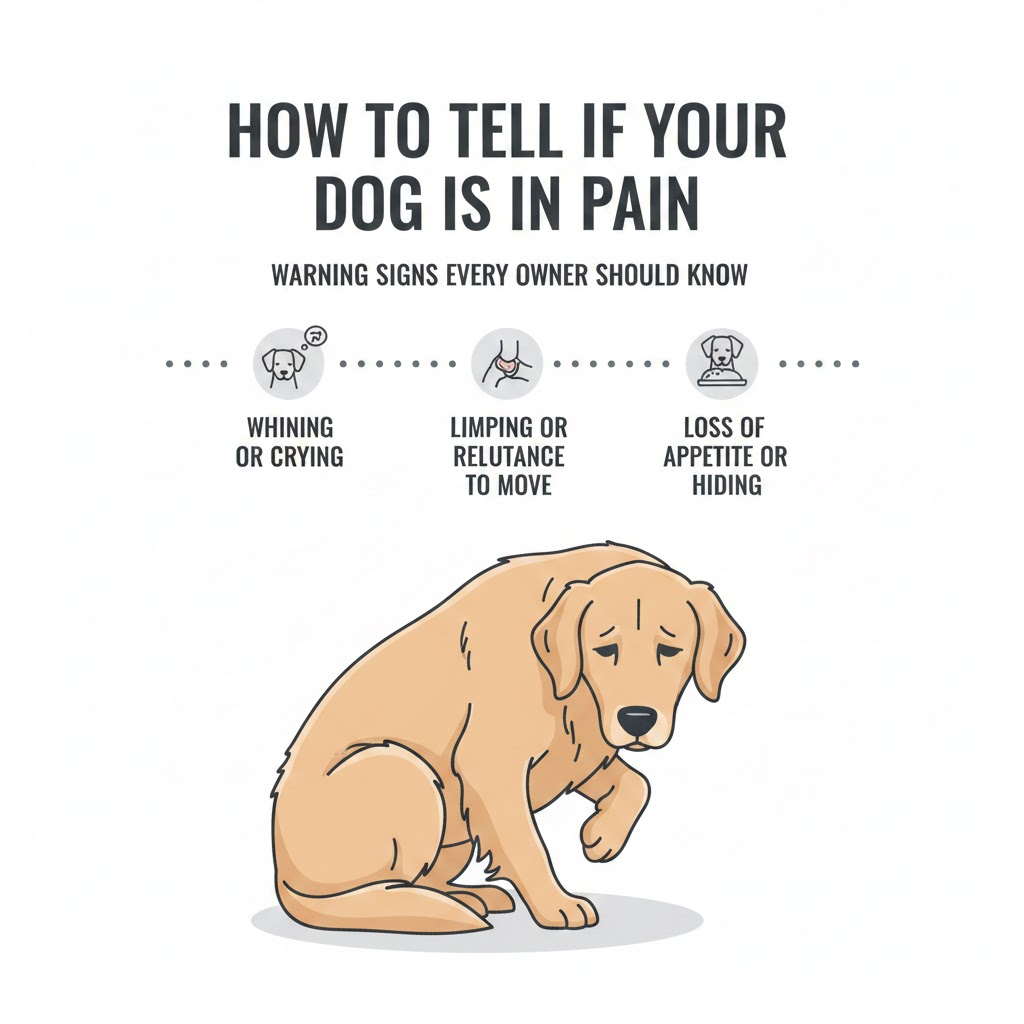
1. Limping or Trouble Moving
One of the most obvious signs of pain is limping or favoring a limb. Your dog may also:
- Avoid climbing stairs or jumping
- Walk more slowly
- Hesitate to rise after lying down
These signs could point to joint issues, muscle strain, or paw injuries.
2. Changes in Appetite
Pain can reduce your dog’s interest in food or cause difficulty chewing or swallowing. If your dog suddenly becomes picky, skips meals, or loses weight, discomfort could be a factor.
Dental pain, gastrointestinal issues, or more serious internal problems may be the cause.
3. Increased Vocalization
Whining, whimpering, yelping, or even sudden barking may be your dog’s way of expressing pain. Some dogs become unusually quiet instead. Pay attention to any change in how your dog uses their voice, especially when touched or moving.
4. Restlessness or Lethargy
Pain can make dogs unusually restless—they may pace, struggle to get comfortable, or avoid lying down. On the other hand, some dogs become very still or sleep more than usual.
Both behaviors can be warning signs, depending on your dog’s usual energy level.
5. Excessive Grooming or Licking
Dogs in pain often lick or chew the area that hurts. This can include:
- A specific paw or joint
- The base of the tail
- Surgical or injury sites
If licking becomes obsessive or causes skin damage, it’s time to consult a vet.
6. Changes in Breathing
Pain can cause rapid, shallow, or heavy breathing. If your dog pants excessively without exercise or shows signs of labored breathing while resting, it may indicate discomfort or distress.
Monitor breathing patterns and seek veterinary attention if they persist.
7. Unusual Aggression or Avoidance
Dogs in pain may become irritable or unusually defensive. You may notice:
- Growling or snapping when touched
- Avoiding being handled or petted
- Hiding or isolating themselves
Even the most affectionate dogs may withdraw or react negatively when they’re hurting.
8. Changes in Posture
A hunched back, stiff stance, tucked tail, or abnormal sitting position can all signal pain, especially in the spine or abdomen. Your dog might also carry their head lower than usual or seem tense.
9. Shaking or Trembling
Shaking that isn’t related to cold or fear could indicate pain or nausea. It’s especially concerning if paired with other symptoms like vomiting, diarrhea, or behavioral changes.
10. Eye or Ear Sensitivity
If your dog squints, paws at their eyes, or resists having their ears touched, they may have localized pain. Infections, injuries, or dental issues can sometimes cause pain to radiate into the face and head.
When to See the Vet
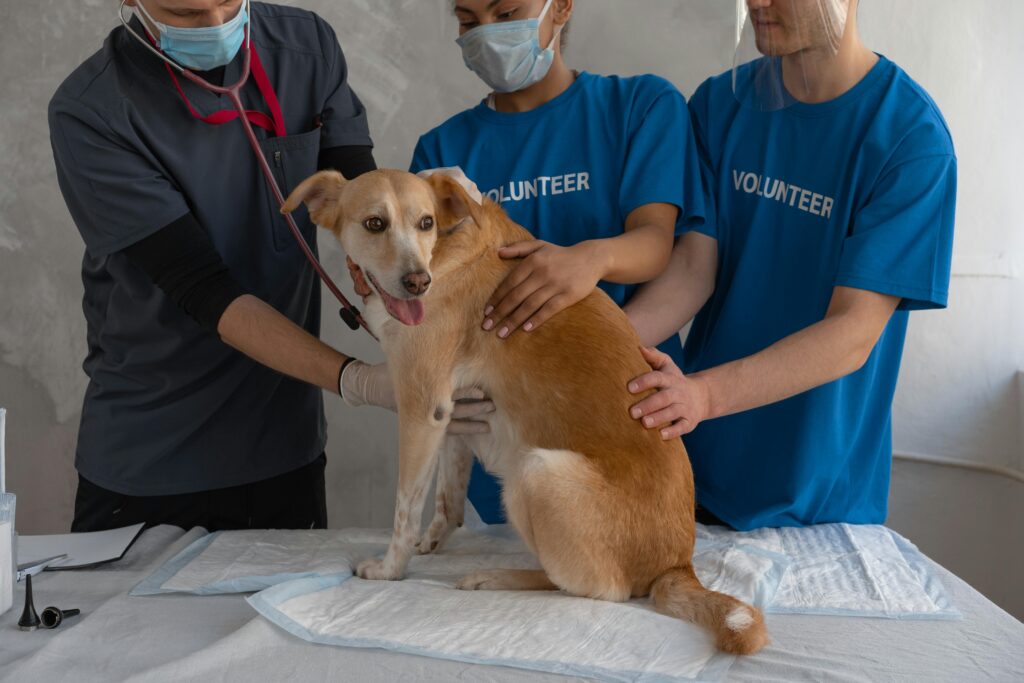
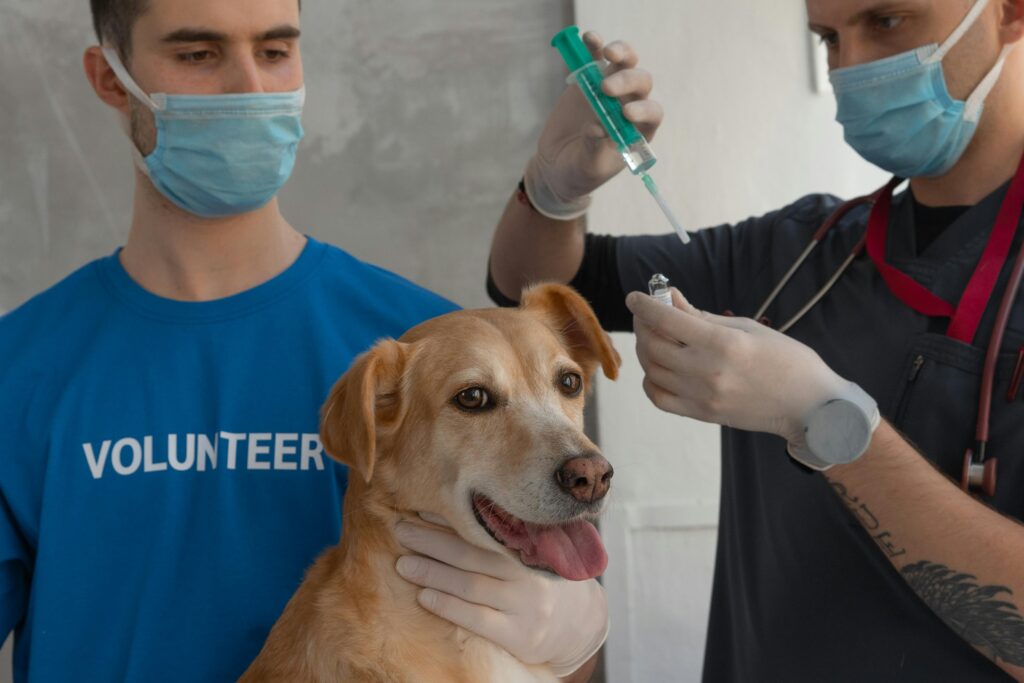
If your dog shows any of the above signs—especially if they appear suddenly or last more than a day—schedule a veterinary exam. Some conditions causing pain, like internal injuries or organ issues, may not be visible but can be serious.
Veterinarians can perform diagnostic tests, physical exams, and imaging to identify the source of discomfort and recommend proper treatment.
Final Thoughts
Recognizing when your dog is in pain can be challenging, especially since many dogs instinctively hide it. By staying observant and understanding the signs, you can step in early and help your dog feel better sooner. When in doubt, trust your instincts—if something feels off, it’s always worth checking with your vet. PetsDogPuppy