
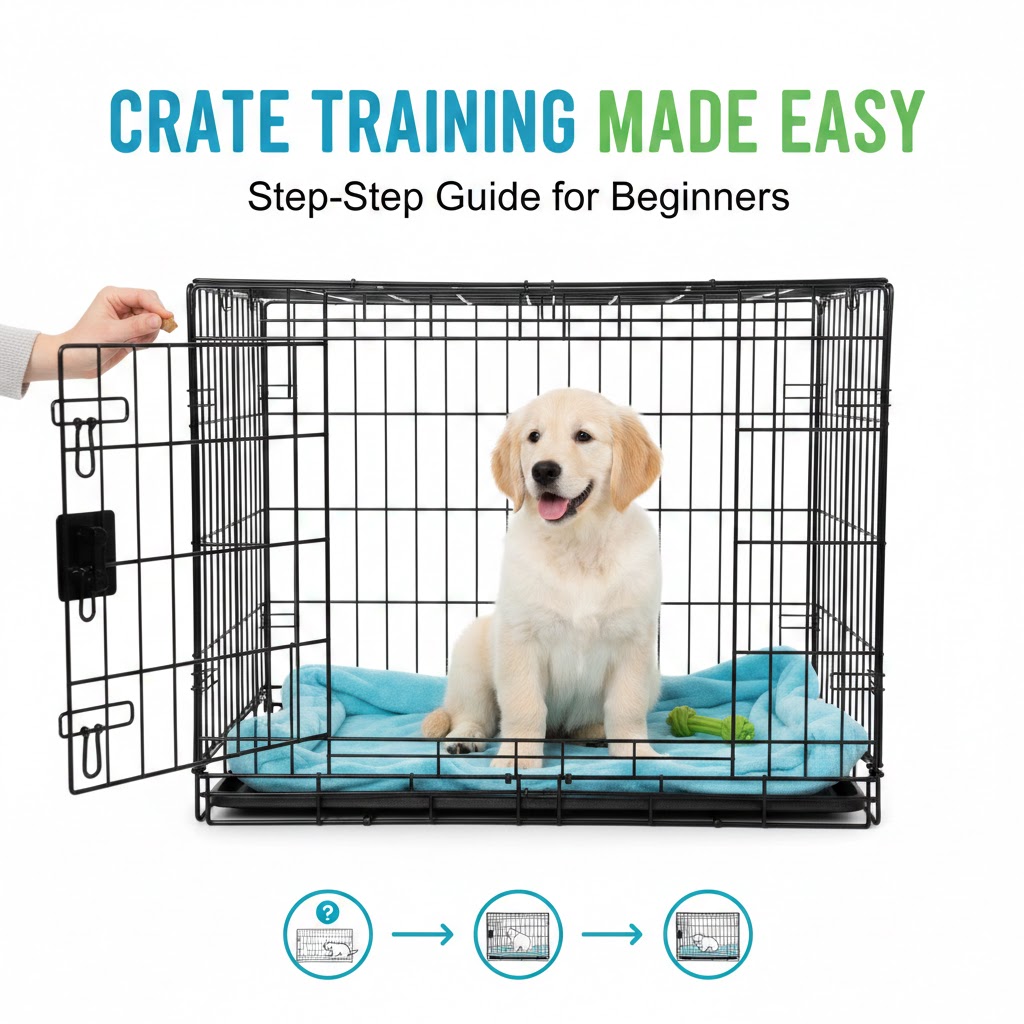
Crate training is one of the most effective ways to help your dog feel secure, establish house rules, and prevent destructive behavior. When done properly, a crate becomes your dog’s safe space—not a punishment. Whether you have a new puppy or an adult rescue, this step-by-step guide will help you introduce crate training with confidence and care.
What Is Crate Training?
Crate training is the process of teaching your dog to comfortably rest or spend short periods of time in a crate. It can help with:
- Potty training
- Preventing chewing or accidents when unsupervised
- Travel safety
- Creating a secure, quiet place to relax
Choosing the Right Crate
Before training begins, make sure you have the proper crate:
- Size: Your dog should be able to stand up, turn around, and lie down comfortably. Too much space may lead to accidents.
- Type: Wire crates offer visibility and ventilation. Plastic crates are more enclosed and may feel cozier.
- Location: Place the crate in a quiet, low-traffic area, but not isolated from the family. A corner of the living room or bedroom works well.
Step 1: Introduce the Crate Gradually
Let your dog explore the crate on their own terms.
- Leave the door open and place soft bedding and favorite toys inside.
- Encourage them with treats and praise whenever they approach the crate.
- Avoid forcing them in—let curiosity build comfort.
This stage may take a few hours or several days depending on your dog’s age and temperament.
Step 2: Associate the Crate with Positivity
Make the crate a rewarding place.
- Feed your dog meals inside the crate to build positive associations.
- Use treat-dispensing toys to keep them occupied inside.
- Practice short sessions of relaxing in the crate with the door open.
The goal is to make your dog see the crate as part of daily life—not a strange or scary place.
Step 3: Close the Door Briefly
Once your dog is comfortable entering the crate, begin closing the door for short periods.
- Start with just a few seconds and gradually build up to 1–5 minutes.
- Stay nearby and speak in a calm, reassuring voice.
- Open the door before they get anxious.
Repeat this process several times a day, slowly increasing the time spent with the door closed.
Step 4: Leave the Room
Begin building independence by stepping out of the room while your dog is in the crate.
- Start with a few minutes and increase time gradually.
- Return before your dog becomes anxious or barks excessively.
- Always reward calm behavior when you return.
This builds confidence and helps prevent separation anxiety.
Step 5: Use the Crate for Longer Periods
Once your dog is content with brief crate stays, you can begin using it:
- During naps or bedtime
- When leaving the house for short periods
- To prevent bad habits when you can’t supervise directly
For puppies, the general rule is they can hold their bladder for one hour per month of age (e.g., a 3-month-old = 3 hours max in crate).
Tips for Crate Training Success
- Never use the crate for punishment.
- Keep crate time positive and calm.
- Avoid crating for too long. Adult dogs can usually manage 4–6 hours, but puppies need frequent breaks.
- Stick to a routine. Consistency helps dogs learn faster.
- Ignore barking for attention—only let your dog out when they are calm and quiet.
What to Do If Your Dog Resists
If your dog cries or whines, give them a moment to settle. Rushing to let them out may reinforce the behavior. However, if the whining continues, they may need a potty break or have not adjusted yet—go back a step and rebuild confidence.
Final Thoughts
Crate training takes patience and consistency, but the payoff is a more confident, relaxed dog and a cleaner, safer home. By introducing the crate gradually and focusing on positive associations, you can turn it into a comforting routine your dog will learn to love. PetsDogPuppy