Just like humans, dogs can experience anxiety and stress. Whether it’s triggered by loud noises, unfamiliar environments, separation, or past trauma, a nervous dog often needs extra care and patience. Instead of relying immediately on medication, many dog owners prefer natural methods to help their pets relax. Here are safe, effective, and gentle ways to calm a nervous dog naturally.
1. Create a Calm, Safe Environment
Start by giving your dog a space where they feel secure. This can be a quiet room, a crate with soft bedding, or a designated corner of the house. Limit exposure to loud sounds, too much foot traffic, or sudden changes in the environment.
Provide comforting items such as:
- A familiar blanket or toy
- A piece of your clothing with your scent
- White noise or soft classical music
Consistency in environment and routine helps reduce stress.
2. Use Calming Scents and Essential Oils (Safely)
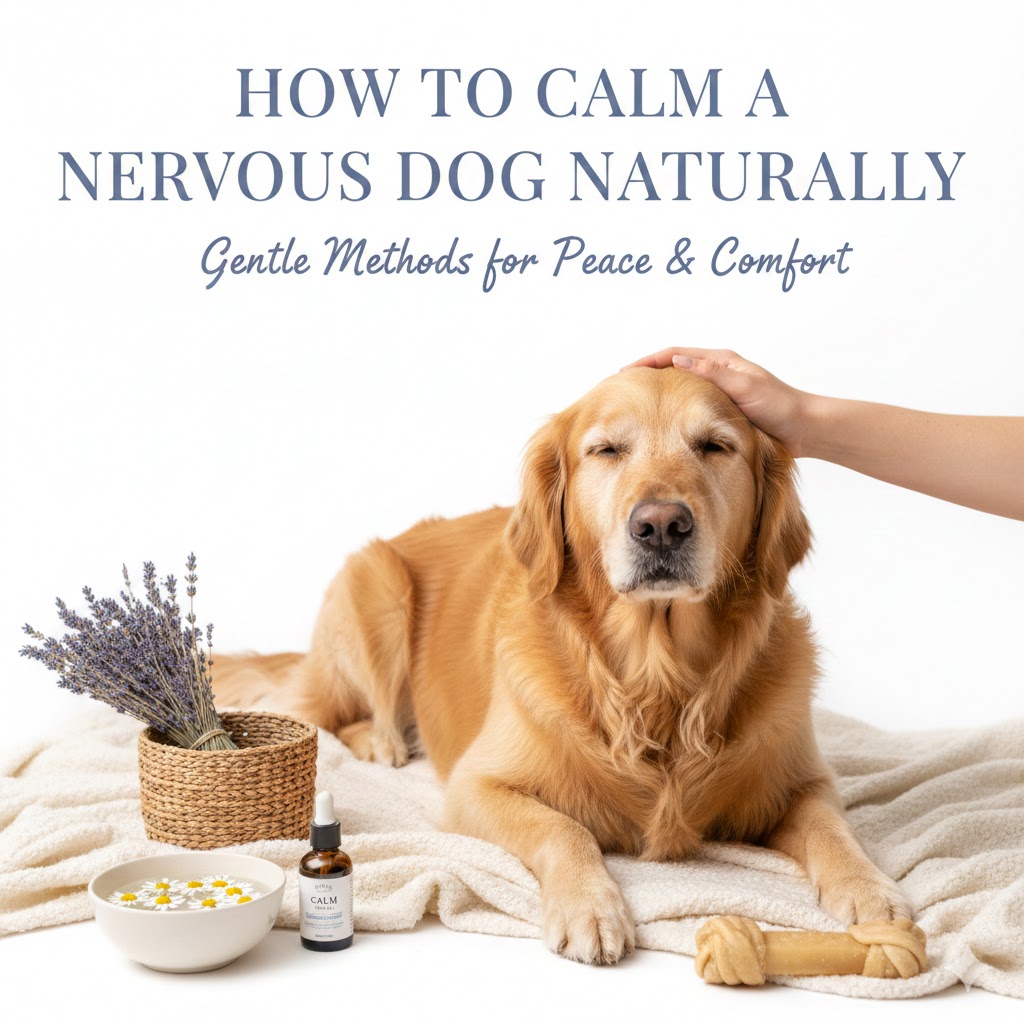
Certain scents have calming effects on dogs. Lavender, chamomile, and valerian are commonly used in natural dog aromatherapy.
How to use:
- Try a dog-safe essential oil diffuser (never use undiluted oils directly on pets)
- Use a calming spray on your dog’s bedding or collar
- Look for natural calming products approved for pet use
Always consult your vet before introducing essential oils and avoid using them around cats, as many oils are toxic to felines.
3. Try Natural Supplements
There are natural supplements that support relaxation and emotional balance in dogs. Look for products containing ingredients like:
- L-theanine
- Chamomile
- CBD (hemp-based and vet-approved)
- Valerian root
- Passionflower
These can be found in chewable treats, tinctures, or powders. Always purchase from reputable brands and confirm dosage with your vet.
4. Provide Physical and Mental Exercise
A tired dog is generally a calmer dog. Regular physical activity helps reduce built-up anxiety.
- Walks, playtime, or light agility exercises
- Puzzle toys or scent-based games for mental stimulation
- Training sessions that boost confidence and focus
Make sure the activities match your dog’s energy level and avoid overstimulation.
5. Practice Calm Reinforcement and Body Language
Dogs pick up on your mood. Stay calm, speak in a soft tone, and avoid reinforcing fearful behavior with excessive petting or high-pitched reassurance when they are anxious.
Instead:
- Reward calm behavior with treats and affection
- Use gentle petting or massage to soothe
- Maintain a relaxed posture around your dog
Teaching your dog to associate calm behavior with positive outcomes encourages emotional stability.
6. Consider Calming Products
There are various natural calming aids on the market that don’t involve medication. These include:
- Thundershirts: Compression garments that reduce anxiety through gentle pressure
- Herbal calming collars
- Natural pheromone sprays or diffusers
These tools can be especially helpful during storms, travel, or when left alone.
7. Stick to a Routine
Dogs thrive on predictability. Try to:
- Feed, walk, and sleep at consistent times
- Avoid surprises or sudden changes to environment
- Introduce new experiences gradually
A structured routine helps reduce uncertainty and supports a sense of safety.
Final Thoughts
Helping a nervous dog feel calm doesn’t always require medication. Natural techniques—when used consistently and thoughtfully—can significantly ease anxiety and improve your dog’s quality of life. Always observe your dog’s behavior closely, and consult with a veterinarian or certified behaviorist if symptoms persist or worsen. PetsDogPuppy