
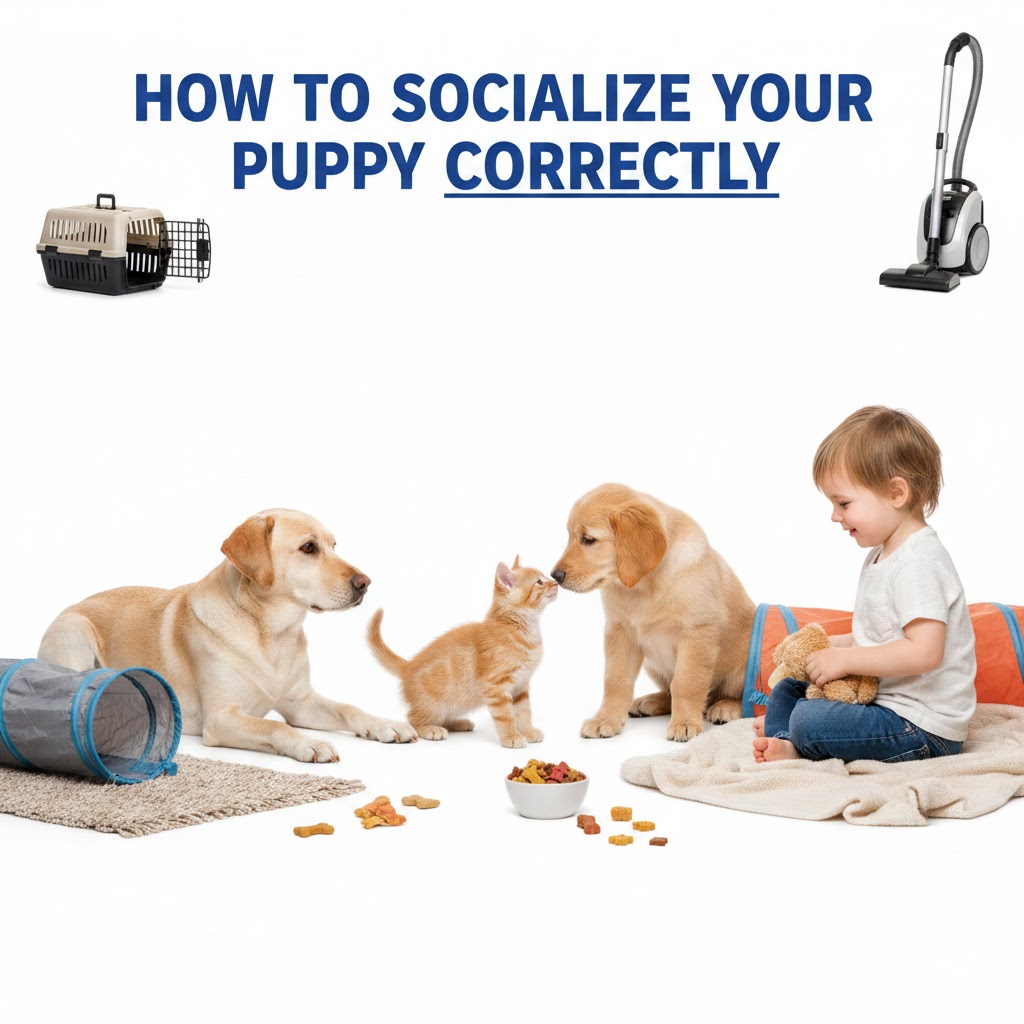
Proper socialization is one of the most important steps in raising a confident, well-adjusted dog. When done correctly, it helps puppies grow into adults who are friendly, calm, and resilient in a wide range of environments and situations. Poor socialization, on the other hand, can lead to fear, aggression, and anxiety.
Here’s a practical guide to socializing your puppy the right way, starting from the early weeks of life.
1. Start Early — But Safely
The ideal socialization window for puppies is between 3 to 14 weeks of age. During this period, puppies are more open to new experiences and less likely to react with fear. However, because their immune systems are still developing, avoid high-risk areas like dog parks until they’ve had their first set of vaccinations.
Start with:
- Gentle handling by different people (age, gender, ethnicity)
- Exposure to household noises (TVs, vacuums, doorbells)
- Walks in a secure, low-traffic environment
2. Introduce New People and Animals Gradually
Your puppy should meet a variety of people and other animals in controlled settings. Avoid overwhelming them by moving too fast.
Tips:
- Arrange short visits with friends, especially those with calm dogs
- Reward calm, friendly behavior with treats and praise
- Keep meetings short and positive; avoid forcing interactions
3. Expose Them to Different Environments
Help your puppy get used to various surroundings such as:
- Grass, gravel, hardwood floors, tile
- Sidewalks, elevators, stairs, and cars
- Crowded places (from a safe distance) like markets or cafes
This helps them feel secure no matter where they go later in life.
4. Use Positive Reinforcement
Every new experience should be paired with something positive:
- Offer treats when your puppy approaches a new object
- Praise calm responses to new sounds or sights
- Let them explore at their own pace
Avoid punishment or scolding during socialization—it can create negative associations.
5. Enroll in Puppy Socialization Classes
Supervised puppy classes offer safe playtime and learning with other dogs. Benefits include:
- Practicing polite behavior with peers
- Building confidence in unfamiliar settings
- Early exposure to training cues with distractions
Make sure the class is well-managed and prioritizes positive reinforcement.
6. Handle With Care
Get your puppy comfortable with being touched all over—paws, ears, mouth, tail, and belly. This will make vet visits and grooming much easier later.
Practice gentle handling every day. Give rewards when they remain calm, and stop if they seem overwhelmed. Build tolerance gradually.
7. Watch for Overstimulation or Fear
Not all dogs are equally social, and every puppy has limits. Signs your puppy may be overstimulated or afraid include:
- Cowering or hiding
- Growling or snapping
- Excessive panting or yawning
- Trying to escape
In these cases, take a step back. Slow down the exposure and give your puppy time to decompress.
8. Keep It Going After Puppyhood
Socialization doesn’t end at 14 weeks—it’s a lifelong process. Continue:
- Meeting new dogs and people
- Going to new places
- Practicing calm behavior in unfamiliar situations
This helps prevent behavioral regression and keeps your dog mentally healthy.
Final Thoughts
Socializing your puppy correctly sets the foundation for a lifetime of good behavior, confidence, and emotional balance. Start early, move at your puppy’s pace, and always keep things positive. With consistency and patience, your puppy will grow into a friendly and well-mannered adult dog. PetsDogPuppy