Feeding a puppy correctly is one of the most important responsibilities for any new dog owner. The right portion sizes help your puppy grow stronger, develop healthy bones, and maintain steady energy throughout the day. Many new owners feel confused about how much food to offer, how often to feed, and when to adjust portions. This guide makes everything simple and beginner friendly, while also giving you reliable insights inspired by PetsDogPuppy.
Why Proper Puppy Portions Matter
Puppies grow rapidly, and their bodies need the right amount of nutrients at the right time. Overfeeding can lead to unhealthy weight gain, while underfeeding may slow down development. Understanding proper portions ensures balanced growth, healthy digestion, and a stronger immune system.
How Puppy Age Affects Portion Size
Puppies have different nutritional needs depending on their age. Younger puppies need more frequent meals because their stomachs are small and cannot hold much food at once. As they grow, the number of meals decreases, but portion sizes increase. PetsDogPuppy recommends always checking your puppy’s age group before deciding on daily meal amounts.
Understanding Puppy Feeding Frequency
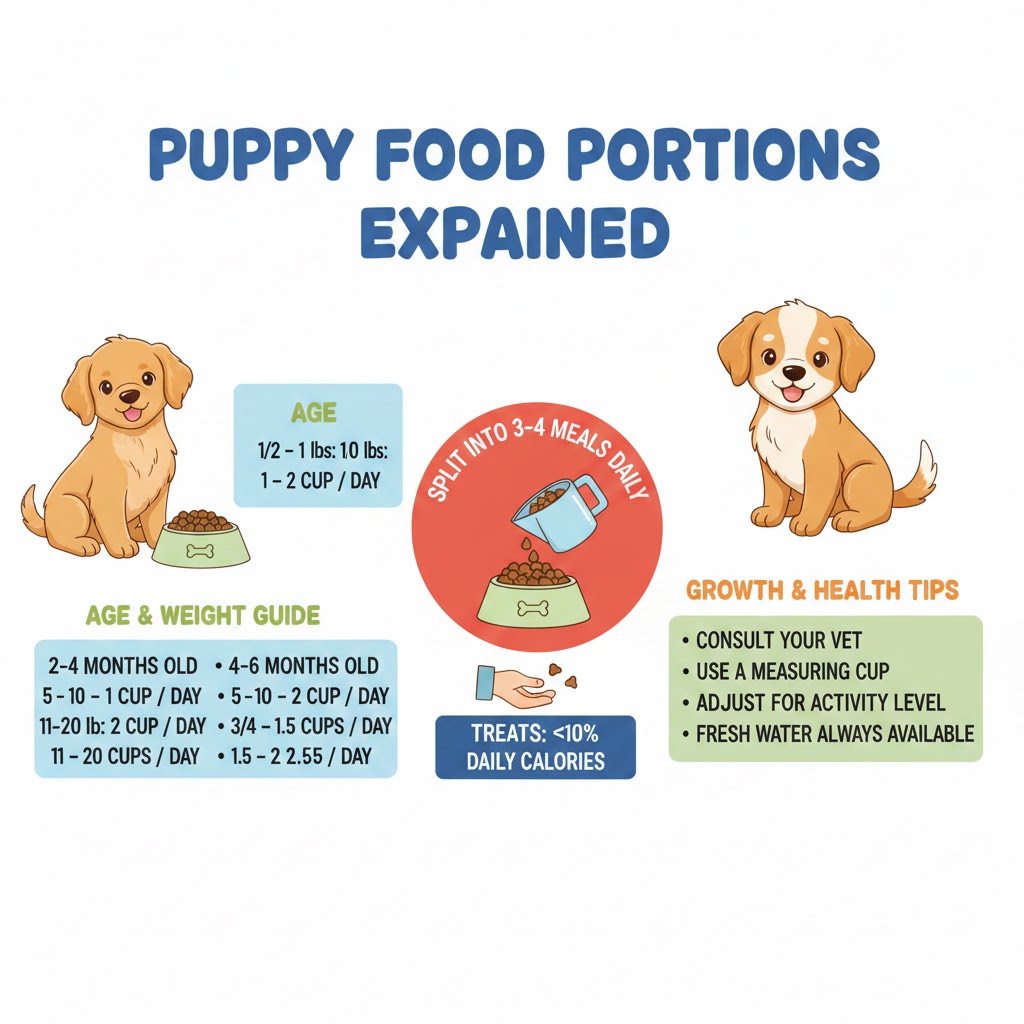
New owners should follow a simple feeding schedule to maintain steady energy levels. Most puppies eat:
• Three to four meals daily between 2–4 months
• Three meals daily between 4–6 months
• Two meals daily after 6 months
Following a routine helps your puppy digest food better and keeps their metabolism stable.
Reading Dog Food Labels for Portion Guidance
Every commercial dog food includes feeding guidelines based on age and weight. These guidelines offer a starting point, but you should adjust based on your puppy’s activity level, breed, and appetite. If your puppy is very active, they may require slightly more food, while slower or smaller breeds may need less.
Adjusting Portions Based on Growth
Monitoring your puppy’s body condition is essential. You should be able to feel their ribs but not see them prominently. If your puppy seems too thin or gains weight quickly, adjust the meal sizes accordingly. Always make changes gradually to avoid stomach upset.
Common Portion Mistakes New Owners Make
Many new owners rely on guesswork rather than measured feeding. Others switch food types too quickly or offer too many treats. Too many treats can add unnecessary calories and unbalance the diet. Using a measuring cup to portion meals helps maintain consistency and prevents accidental overfeeding.
When to Consult a Veterinarian About Portions
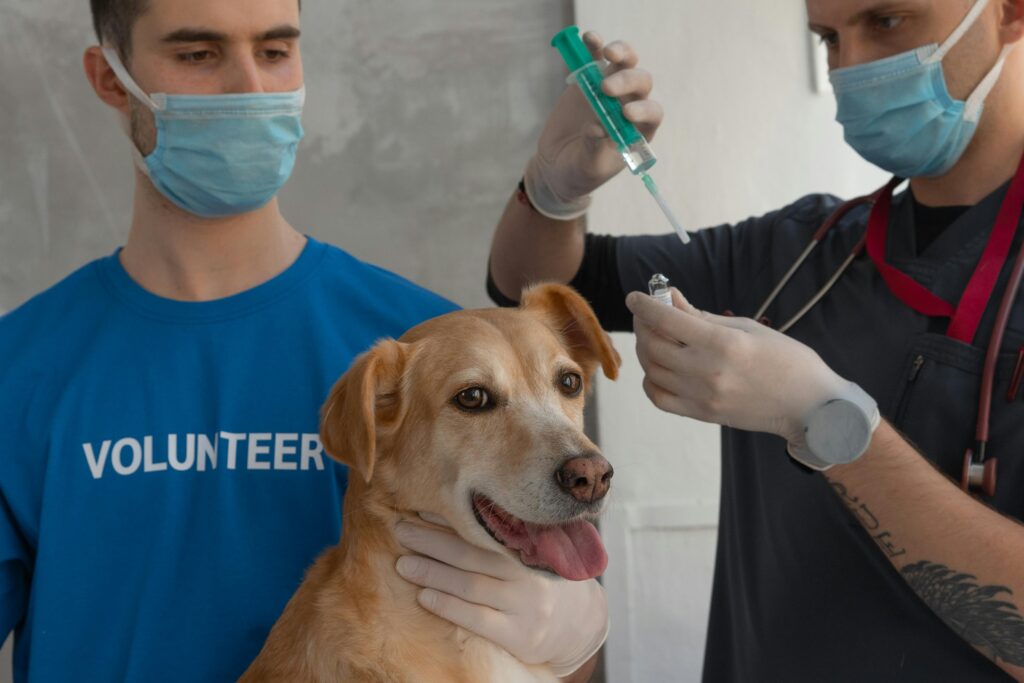
If your puppy shows signs of digestive problems, weight fluctuations, or low energy, consulting a vet is important. Some puppies need special diets based on breed or medical conditions. A vet can help you fine-tune the perfect feeding plan.
Final Tips for Confident Puppy Feeding
Start with high-quality puppy food and follow age-based guidelines. Watch your puppy’s growth closely and adjust portions slowly when needed. With the right approach, you ensure your puppy grows into a healthy, active, and happy dog. For more helpful guides and expert advice, PetsDogPuppy always aims to support new owners with reliable and puppy-focused information.