
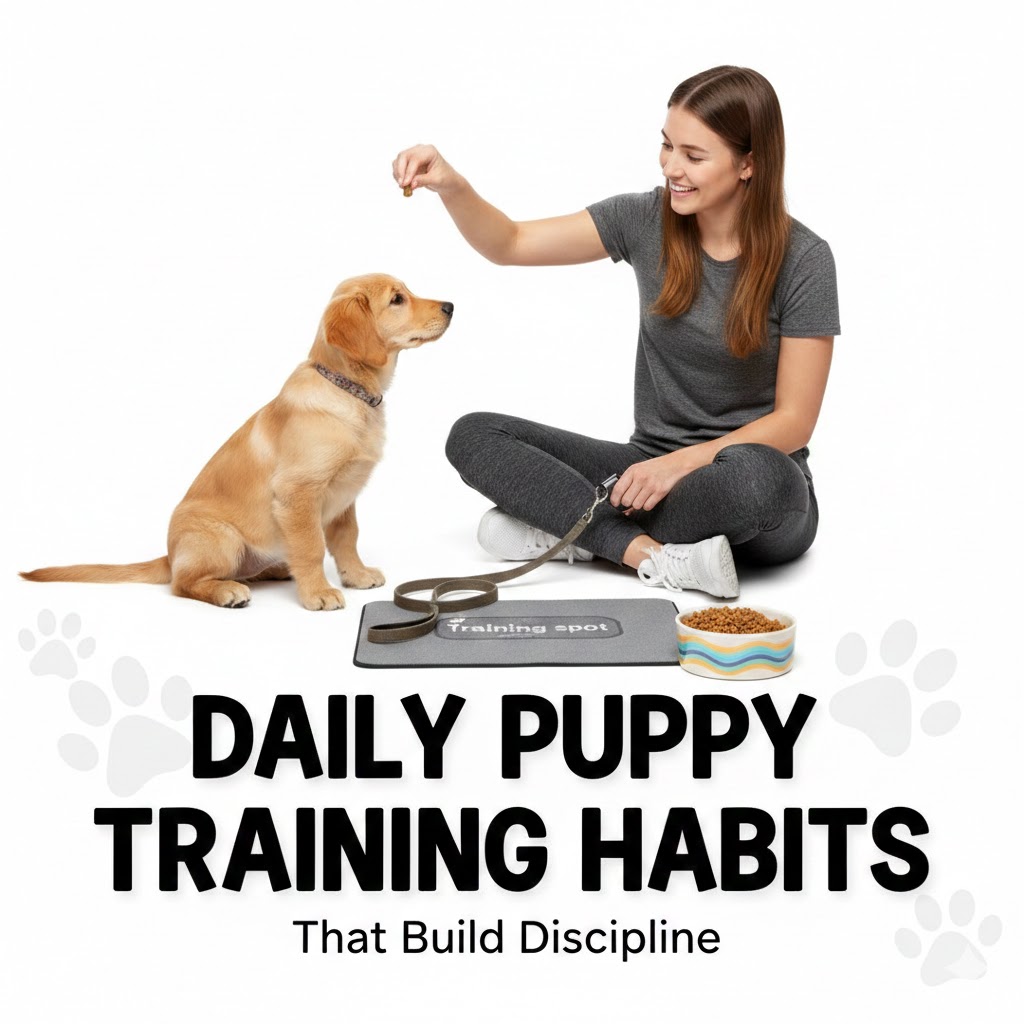
Training your puppy every day is one of the most effective ways to shape good behavior, build discipline, and create a strong bond. Puppies learn quickly when routines are consistent, clear, and rewarding. Simple daily habits help them understand expectations and grow into well-mannered adult dogs.
Establishing a Consistent Daily Routine
Puppies feel more secure when they know what to expect. Setting daily times for meals, potty breaks, play, and training sessions gives your puppy structure. Consistency helps reduce anxiety and prevents unwanted behaviors. Many new owners find routine-building guides on PetsDogPuppy helpful when planning their puppy’s schedule.
Short Training Sessions to Keep Puppies Focused
Puppies have short attention spans, so brief training sessions work best. Five to ten minutes of training two or three times a day is enough to teach commands without overwhelming them. Simple commands like sit, stay, come, and down form the foundation of discipline and safety.
Reward-Based Methods for Better Learning
Positive reinforcement is the most effective way to train puppies. Rewarding good behavior with treats, praise, or affection helps them repeat desirable actions. Avoid punishment, as it can create fear and confusion. Rewards make learning fun and strengthen your relationship.
Teaching Leash Manners Early
Daily leash training helps puppies learn patience and self-control. Start indoors where distractions are low, then gradually move outdoors. Teach your puppy to walk beside you without pulling. Practicing leash manners every day ensures smoother walks as your puppy grows.
Encouraging Calm Behavior at Home
Puppies can become overstimulated easily, so teaching moments of calmness is important. Encourage your puppy to sit quietly before meals, before going outside, or before receiving attention. These micro-training moments help build patience and discipline throughout the day.
Socialization as a Daily Habit
Introducing your puppy to new people, gentle dogs, sights, and sounds teaches confidence and prevents fear-based behaviors. Even simple exposure, like hearing traffic or meeting a neighbor, supports good manners. Controlled socialization helps puppies feel comfortable in different environments.
Setting Clear Boundaries Around the House
Boundaries teach discipline. Use gates or designated puppy zones to control movement. Guide your puppy gently away from forbidden areas or objects. Clear limits help puppies understand what is acceptable and what is not.
Practicing Recall for Safety and Obedience
Calling your puppy by name and rewarding them when they come builds a strong recall. Practicing this daily helps in parks, open spaces, or any situation where safety depends on obedience. Recall training also strengthens trust between you and your puppy.
Using Playtime as a Training Opportunity
Play sessions teach puppies impulse control, sharing, and good manners. Games like fetch, tug with rules, and hide-and-seek add fun to daily discipline. Structured play also helps release energy, making puppies more receptive to training.
Final Thoughts
Daily training habits create a strong foundation for discipline, confidence, and trust. With consistent routines, positive reinforcement, and gentle guidance, your puppy will quickly learn to behave well at home and outdoors. Owners often turn to PetsDogPuppy for reliable training advice, helping them build these habits with ease and confidence.