Climate and weather conditions play a major role in a puppy’s overall health and comfort. Puppies are more sensitive to environmental changes than adult dogs because their immune systems and temperature regulation are still developing. Sudden shifts in temperature, humidity, and seasonal conditions can directly impact a puppy’s growth, behavior, and well-being.
Temperature Sensitivity in Growing Puppies
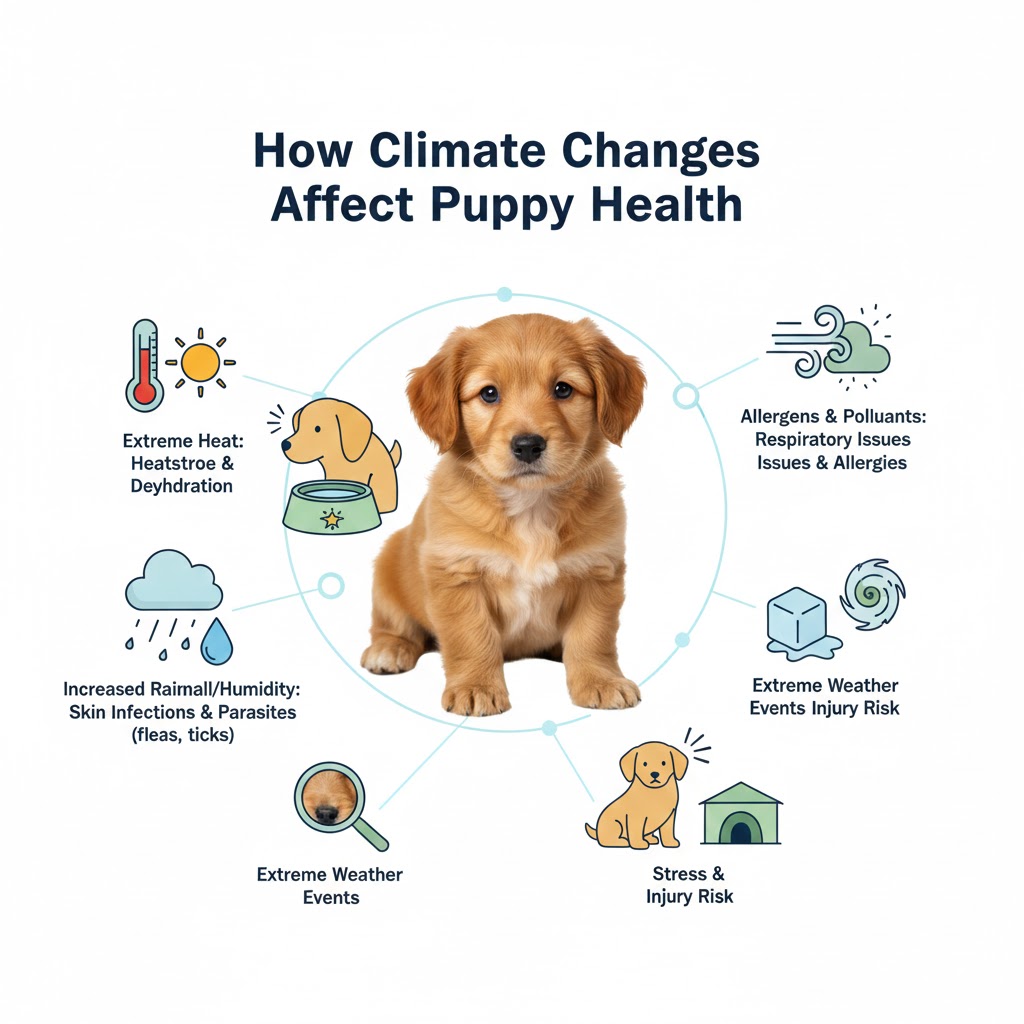
Puppies struggle to regulate body temperature efficiently. Extreme heat can cause dehydration, heat exhaustion, and low energy, while cold weather may lead to shivering, weakened immunity, or joint stiffness. Smaller breeds and short-haired puppies are especially sensitive to cold, whereas thick-coated breeds may suffer more during hot weather.
Effects of Heat and Humidity on Puppies
High temperatures combined with humidity increase the risk of overheating. Puppies may pant excessively, become lethargic, or lose appetite. Dehydration is a common issue during warmer months, making constant access to fresh water essential. Adjusting outdoor activity times and feeding lighter meals helps puppies stay comfortable. Many owners find seasonal care tips on PetsDogPuppy helpful when managing puppies during extreme heat.
Cold Weather Challenges for Puppy Health
Cold climates can weaken a puppy’s immune system if not managed properly. Puppies may experience dry skin, respiratory discomfort, or slower movement during winter. Providing warm bedding, limiting exposure to cold surfaces, and ensuring adequate nutrition helps protect puppies during colder months.
Seasonal Allergies and Environmental Changes
Changes in climate often bring pollen, dust, mold, and other allergens. Puppies may show signs such as itching, sneezing, watery eyes, or skin irritation. Regular grooming, cleaning living areas, and monitoring reactions help reduce allergy discomfort. Early detection prevents long-term skin or respiratory problems.
Impact of Rainy and Humid Conditions
Excess moisture increases the risk of fungal infections, ear infections, and paw irritation. Wet fur and damp environments allow bacteria to thrive. Drying your puppy thoroughly after walks and maintaining clean living spaces reduces health risks during rainy seasons.
Adjusting Diet Based on Weather Conditions
Weather changes can affect a puppy’s appetite and digestion. In hot weather, puppies may eat less and require more hydration, while colder climates increase calorie needs to maintain body warmth. Balanced seasonal diet adjustments support steady growth and energy levels. Educational resources on PetsDogPuppy often guide owners through climate-based feeding choices.
Exercise and Activity Adjustments by Climate
Outdoor exercise routines should match weather conditions. Short walks during early mornings or evenings are best during hot months, while indoor play helps during extreme cold or heavy rain. Safe activity planning prevents fatigue, injury, and stress.
Supporting Immunity Through Climate Changes
Strong immunity helps puppies adapt better to environmental changes. Proper vaccination, balanced nutrition, clean living spaces, and reduced stress support immune health. Puppies that receive consistent care adjust more easily to climate shifts.
Final Thoughts
Climate changes influence every aspect of a puppy’s health, from energy levels to immune strength. Understanding how weather impacts your puppy allows you to make timely adjustments in care, feeding, grooming, and activity. With awareness and preventive steps, puppies can remain healthy and comfortable throughout every season.