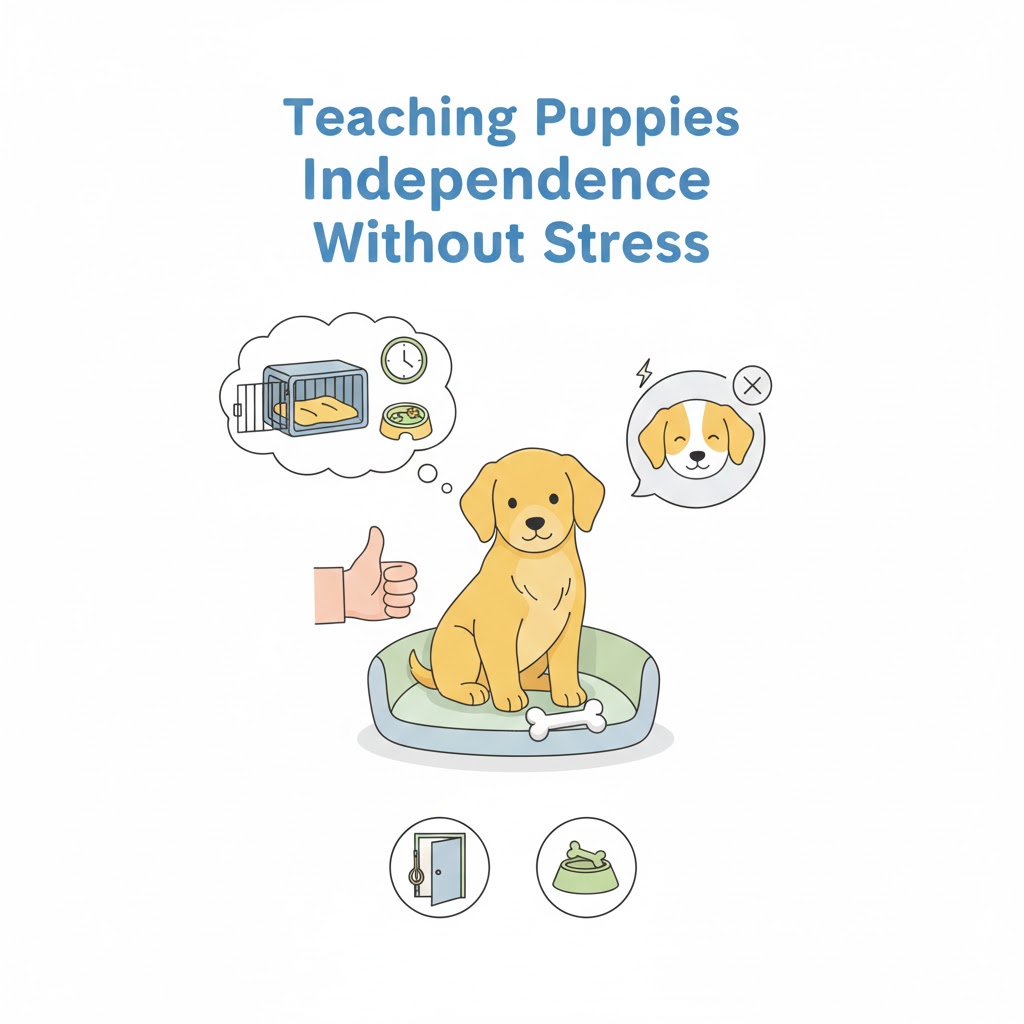
Helping a puppy learn independence is an important part of their emotional development. Puppies naturally seek comfort and security from their owners, but they also need to feel confident when alone. Teaching independence the right way prevents separation anxiety, builds emotional balance, and supports healthy behavior as your puppy grows.
Why Independence Matters for Puppies
Independent puppies are calmer, more confident, and better able to handle changes in routine. When puppies learn that being alone is safe, they are less likely to develop destructive behaviors like excessive barking, chewing, or whining. Gradual independence builds trust rather than fear, which is essential for long-term emotional stability.
Start With Short Alone-Time Sessions
Begin by leaving your puppy alone for very short periods, even just a few minutes. Stay within the home at first so your puppy still senses your presence. Gradually increase the time as they become more comfortable. This slow approach helps puppies understand that you always return, reducing stress and fear.
Create a Safe and Comfortable Space
Designate a calm area where your puppy feels secure when alone. This could be a crate, playpen, or a quiet room with their bed, toys, and water. A familiar environment helps puppies relax. Many owners find helpful setup tips on PetsDogPuppy to create stress-free comfort zones for young pups.
Avoid Over-Attention Before Leaving
Making a big emotional moment before leaving can increase anxiety. Keep departures calm and simple. Avoid excessive cuddling or dramatic goodbyes. When leaving feels normal and uneventful, puppies are less likely to panic when you step away.
Use Toys and Activities for Distraction
Interactive toys, chew items, and puzzle feeders help keep puppies mentally occupied when alone. These activities shift their focus away from your absence and encourage self-entertainment. Over time, puppies learn to enjoy their own company.
Encourage Calm Behavior, Not Clinginess
Reward your puppy when they stay calm on their own. Avoid reinforcing clingy behavior by constantly responding to every whine or demand for attention. Calm independence should be praised, while anxious behavior should be gently redirected.
Practice Leaving and Returning Naturally
Come and go without excitement. When you return, wait a moment before greeting your puppy. This teaches them that your arrival is normal, not a big event. Calm reunions help prevent emotional dependence and overstimulation.
Maintain a Predictable Daily Routine
Puppies feel safer when they know what to expect. Regular feeding times, play sessions, training, and rest periods help reduce anxiety. Structured routines build trust and stability. Many training guides on PetsDogPuppy emphasize how consistency supports emotional growth.
Recognize Signs of Stress Early
Watch for signs like pacing, excessive barking, drooling, or destructive chewing. These behaviors may indicate that independence training is progressing too quickly. If stress appears, slow down and reduce alone time before gradually building again.
Final Thoughts
Teaching puppies independence without stress requires patience, consistency, and understanding. By introducing alone time gradually, maintaining calm routines, and providing comfort, puppies learn confidence at their own pace. Healthy independence leads to happier behavior, emotional balance, and a stronger bond between you and your puppy.