
Moving to a new home can be exciting for people but confusing and stressful for puppies. New smells, unfamiliar sounds, and different routines can make a puppy feel unsure or anxious. With patience, consistency, and the right care, you can help your puppy settle in comfortably and feel safe in their new environment.
Understanding Why Puppies Struggle With Change
Puppies rely heavily on familiarity. A new home means new rooms, new noises, and sometimes new people or pets. This sudden change can lead to clinginess, reduced appetite, accidents, or restlessness. Recognizing that these behaviors are normal helps owners respond calmly and supportively.
Creating a Safe and Familiar Space
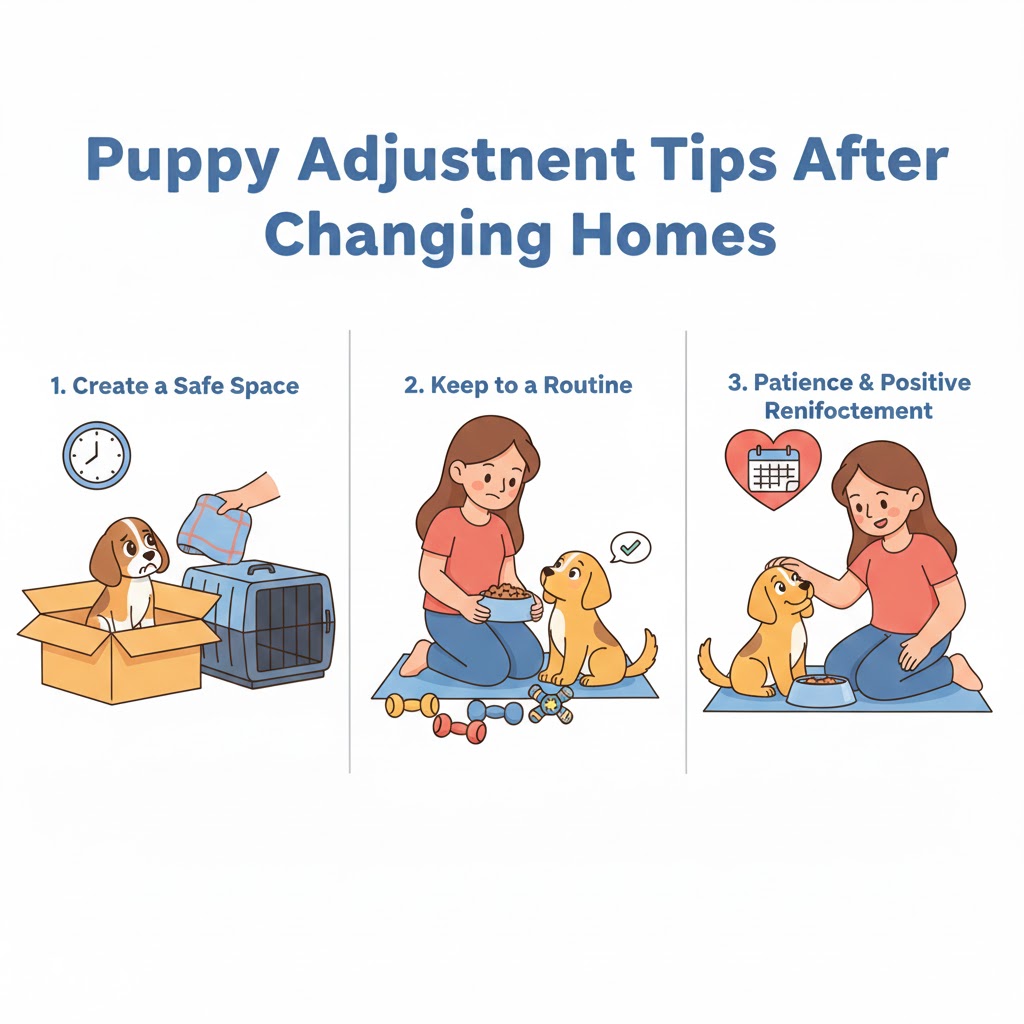
Start by setting up a quiet, dedicated area just for your puppy. Use familiar items like their bed, blanket, toys, or crate from the previous home. Familiar scents provide comfort and help your puppy feel secure. Avoid overwhelming them with too much space at once; let them explore gradually.
Maintaining a Consistent Daily Routine
Consistency builds trust and reduces stress. Feed, walk, play, and put your puppy to sleep at the same times each day. A predictable routine helps puppies understand what to expect and reassures them that they are safe. Many owners use adjustment guides from PetsDogPuppy to maintain structure during transitions.
Introducing the New Environment Slowly
Allow your puppy to explore the new home step by step. Start with one or two rooms and gradually introduce the rest of the house. Supervised exploration prevents fear and accidents while helping your puppy build confidence in the new surroundings.
Managing Separation and Anxiety Gently
Some puppies become extra attached after a move and may show signs of separation anxiety. Practice short absences and reward calm behavior when you return. Avoid dramatic goodbyes or greetings, as these can increase anxiety. Calm, steady behavior from you helps your puppy relax.
Using Positive Reinforcement for Confidence
Reward your puppy for calm behavior, exploring new areas, and following routines. Treats, praise, and gentle play help your puppy associate the new home with positive experiences. Positive reinforcement speeds up emotional adjustment and builds confidence.
Monitoring Eating, Sleeping, and Behavior
Temporary changes in appetite or sleep are common after moving. Keep an eye on your puppy’s eating habits, energy levels, and bathroom routines. If stress-related behaviors continue for more than a couple of weeks, consider consulting a vet or trainer. Resources on PetsDogPuppy often help owners identify when extra support is needed.
Introducing New People and Pets Carefully
If your new home includes additional family members or pets, make introductions slow and calm. Give your puppy space to observe before interacting. Controlled, positive introductions reduce fear and prevent behavioral issues later.
Being Patient During the Adjustment Period
Every puppy adjusts at a different pace. Some settle in within days, while others need weeks. Avoid punishment for accidents or nervous behavior. Patience, reassurance, and consistency are the most important tools during this phase.
Final Thoughts
Adjusting to a new home is a big step for a puppy, but with thoughtful care, the transition can be smooth and positive. By providing structure, familiarity, and gentle encouragement, you help your puppy feel secure and confident in their new surroundings. A calm start lays the foundation for a happy and trusting relationship that lasts a lifetime.