
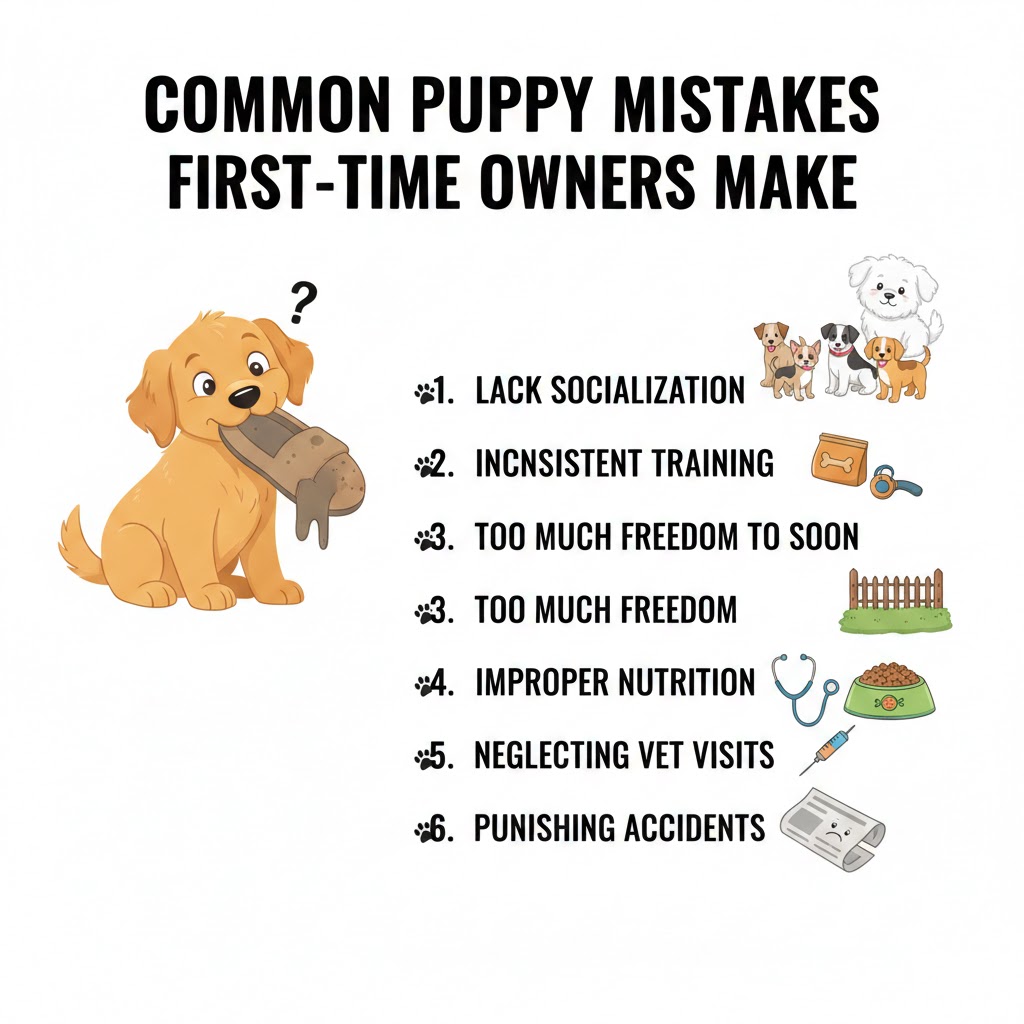
Bringing home a puppy is an exciting and emotional experience. For first time dog owners, it often feels like a mix of joy, responsibility, and uncertainty. Puppies are adorable and full of energy, but they also require structure, patience, and informed care. Many new owners unintentionally make mistakes that can affect a puppy’s behavior, health, and long-term development.
Understanding these common puppy mistakes helps first time owners avoid unnecessary stress and build a stronger, healthier bond with their dog from the beginning.
Expecting Puppies To Automatically Behave Well
One of the most common mistakes is assuming puppies naturally understand how to behave in a human household. Puppies do not instinctively know where to potty, what they are allowed to chew, or how to walk politely on a leash. These behaviors must be taught gradually and consistently.
When owners expect immediate good behavior, frustration builds quickly. This frustration can lead to inconsistent training or punishment, which often confuses puppies instead of helping them learn. Realistic expectations are essential. Puppies are learning everything for the first time, and mistakes are part of the process.
Inconsistent Training Rules
Many first time owners unintentionally send mixed signals. For example, allowing a puppy on the couch sometimes but scolding them at other times creates confusion. Puppies learn best when rules are clear and consistent.
If one family member allows jumping while another discourages it, the puppy struggles to understand what is acceptable. Consistency across all household members is critical. Clear boundaries help puppies feel secure and make training far more effective.
Delaying Training Until Puppies Are Older
Some owners believe puppies are too young to train. In reality, training should begin the moment a puppy comes home. Early training focuses on simple skills such as name recognition, basic commands, and appropriate behavior.
Delaying training allows bad habits to form, making them harder to correct later. Early positive training builds confidence and creates a foundation for lifelong learning. Even short, gentle sessions can make a big difference.
Overusing Punishment Instead Of Guidance
Punishment-based training is a common mistake among inexperienced owners. Yelling, scolding, or physical corrections may stop a behavior temporarily, but they do not teach puppies what to do instead.
Punishment can increase fear and anxiety, damaging trust between owner and puppy. Positive reinforcement, where good behavior is rewarded, is far more effective. Puppies respond better to encouragement and clear guidance than to fear-based methods.
Ignoring Socialization During Early Stages
Proper socialization is one of the most important aspects of raising a well-adjusted dog. Many first time owners either overprotect their puppies or fail to introduce them to new experiences early enough.
Socialization includes exposure to different people, sounds, environments, and other animals in a safe and controlled way. Puppies that miss this critical period may grow into fearful or reactive adults. Gradual, positive exposure helps puppies develop confidence and adaptability.
Allowing Too Much Freedom Too Soon
Giving a puppy full access to the house immediately is another common mistake. Puppies are curious and explore with their mouths, which often leads to chewing furniture, cords, or household items.
Limiting access using crates, baby gates, or playpens helps keep puppies safe and prevents destructive behavior. As puppies learn boundaries and develop self-control, their freedom can gradually increase.
Neglecting Mental Stimulation
Many owners focus on physical exercise while overlooking mental stimulation. Puppies need opportunities to think, solve problems, and engage their brains. Without mental enrichment, puppies may become bored and develop unwanted behaviors such as excessive barking or chewing.
Puzzle toys, basic training sessions, and interactive play provide mental challenges that tire puppies in a healthy way. Mental stimulation is just as important as physical activity for balanced development.
Feeding Improper Portions Or Diets
Nutrition mistakes are common, especially with conflicting advice online. Overfeeding can lead to obesity, while underfeeding may affect growth and energy levels. Feeding table scraps or inappropriate foods can also cause digestive issues.
Puppies need age-appropriate, balanced diets tailored to their size and breed. Measuring portions and sticking to a consistent feeding schedule helps maintain healthy growth. Reliable resources like PetsDogPuppy often emphasize the importance of proper nutrition during early development.
Skipping Routine Veterinary Care
Some first time owners delay vet visits unless a problem arises. Regular veterinary care is essential for vaccinations, parasite prevention, and early detection of health issues.
Puppies grow quickly, and routine checkups ensure they are developing properly. Establishing a relationship with a veterinarian early also makes future visits less stressful for both the puppy and owner.
Misunderstanding Puppy Energy Levels
Puppies have bursts of energy followed by periods of rest. Some owners misinterpret hyperactivity as a need for more exercise, when the puppy is actually overstimulated or overtired.
Overexercising young puppies can strain developing joints and lead to behavioral issues. Structured play, short walks, and adequate rest create a healthier balance. Understanding natural energy cycles helps owners respond appropriately.
Not Teaching Calm Behavior
Many owners unintentionally reward excitement by giving attention when puppies jump, bark, or demand interaction. While enthusiasm is cute at first, it can become problematic as puppies grow.
Teaching calm behavior is just as important as teaching commands. Rewarding moments of relaxation, quiet behavior, and self-settling encourages emotional balance. Calm puppies are easier to train and live with long term.
Comparing Their Puppy To Others
Every puppy develops at a different pace. Comparing one puppy’s progress to another’s often leads to unnecessary worry or unrealistic expectations. Breed traits, personality, and environment all influence development.
Focusing on individual progress rather than comparison allows owners to appreciate small improvements. Patience and consistency matter more than speed.
Overlooking The Importance Of Routine
Puppies thrive on routine. Inconsistent feeding times, irregular potty breaks, and unpredictable schedules can cause anxiety and confusion. Routine helps puppies understand what to expect and when.
A structured day supports potty training, sleep habits, and overall behavior. Even simple routines provide a sense of stability that puppies need during early development.
Failing To Prepare For Teething
Teething is a natural but challenging phase. Many owners are unprepared for increased chewing and discomfort. Without appropriate outlets, puppies may chew furniture, shoes, or hands.
Providing safe chew toys and rotating them regularly helps soothe teething discomfort. Redirecting chewing behavior teaches puppies what is acceptable and prevents damage to household items.
Expecting Puppies To Outgrow Bad Habits
Some owners assume puppies will naturally grow out of undesirable behaviors such as jumping, nipping, or pulling on the leash. While some behaviors change with maturity, many become ingrained habits without proper guidance.
Addressing issues early prevents them from becoming long-term problems. Training during puppyhood is far easier than correcting behavior in adulthood.
Underestimating The Time Commitment
Puppies require significant time and attention. First time owners sometimes underestimate the daily commitment involved in training, supervision, and care.
Understanding that puppyhood is temporary helps owners stay patient. The effort invested early leads to a more relaxed and well-behaved adult dog.
Learning From Trusted Resources
Raising a puppy is a learning process, and mistakes happen even with the best intentions. Seeking guidance from reliable sources helps owners make informed decisions and avoid common pitfalls.
Educational platforms like PetsDogPuppy provide practical insights that support new owners through each stage of puppy development.
Final Thoughts On Avoiding Common Puppy Mistakes
First time puppy owners often make mistakes not because they do not care, but because they are learning alongside their puppy. Awareness, patience, and consistency go a long way in preventing problems before they start.
By setting realistic expectations, providing structure, and focusing on positive guidance, owners can raise confident, healthy, and well-adjusted dogs. Puppyhood is a foundation stage, and thoughtful choices made early shape a lifetime of companionship and trust.