
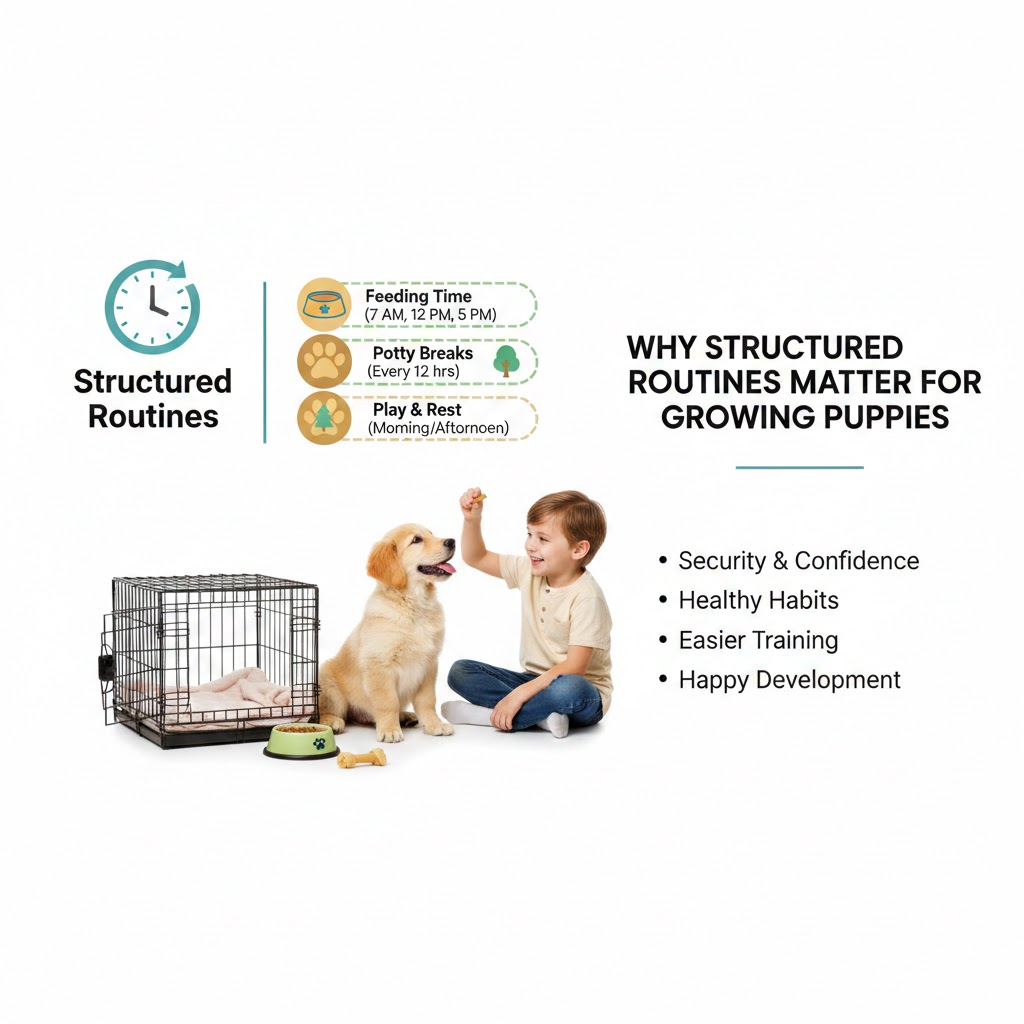
Raising a puppy is exciting, but it can also feel overwhelming. Puppies are constantly learning about the world around them, and without guidance, that learning can become chaotic. One of the most effective ways to support a puppy’s physical, mental, and emotional development is by establishing a structured daily routine. Routines provide clarity, reduce stress, and help puppies understand what is expected of them as they grow.
A structured routine is not about rigid control. Instead, it creates predictability that allows puppies to feel safe, confident, and ready to learn. From feeding and training to playtime and rest, routines shape how puppies behave now and how they mature into adult dogs.
How Puppies Experience The World Through Patterns
Puppies do not understand time the way humans do, but they quickly learn patterns. When events happen in a predictable order, puppies begin to anticipate what comes next. This anticipation helps them stay calm and focused instead of anxious or overstimulated.
Without structure, puppies may feel unsure about when they will eat, go outside, play, or rest. This uncertainty can lead to frustration, attention-seeking behaviors, or anxiety. A routine helps puppies relax because their basic needs are consistently met.
The Role Of Routine In Puppy Behavior Development
Behavior is shaped by repetition. When puppies experience the same schedule daily, positive behaviors are reinforced naturally. For example, if potty breaks happen at consistent times, puppies learn faster where and when to relieve themselves.
Similarly, regular training sessions help puppies understand commands more clearly. Inconsistent routines can confuse puppies, making them seem stubborn or uncooperative when they are simply unsure of expectations.
Structured routines reduce unwanted behaviors such as excessive barking, chewing, jumping, or restlessness. Puppies thrive when they know what is coming next.
Feeding Schedules And Their Importance
Consistent feeding times are a foundational part of any puppy routine. Regular meals support healthy digestion and make potty training more predictable. When puppies eat at the same times every day, their bodies adjust accordingly, making bathroom breaks easier to manage.
Feeding schedules also help puppies learn impulse control. Waiting calmly for meals teaches patience and reinforces positive habits. Over time, this discipline carries into other areas of training.
Potty Training Becomes Easier With Structure
Potty training is one of the biggest challenges for new puppy owners. Structured routines significantly reduce accidents by aligning potty breaks with natural puppy needs.
Most puppies need to go outside after waking up, eating, drinking, or playing. When these moments happen on a consistent schedule, puppies quickly associate certain times and actions with going outdoors. This clarity accelerates the learning process and reduces stress for both puppy and owner.
Training Sessions Benefit From Predictable Timing
Short, consistent training sessions are more effective than long, irregular ones. Puppies have limited attention spans, and structured routines help them learn when it is time to focus.
Training at similar times each day creates a mental cue that signals learning mode. Puppies become more responsive and eager because they know what to expect. Over time, training becomes smoother and more enjoyable.
At PetsDogPuppy, experienced trainers emphasize that structure is often more important than the length of training sessions when working with young puppies.
Balancing Playtime And Calm Activities
Play is essential for a puppy’s development, but too much unstructured play can lead to overstimulation. A structured routine balances active play with calm periods, teaching puppies how to regulate their energy.
When playtime is scheduled, puppies learn that excitement has boundaries. Calm activities such as gentle interaction, chewing safe toys, or quiet time help puppies develop emotional control. This balance is especially important for preventing hyperactivity and frustration.
How Routines Support Emotional Stability
Puppies experience rapid emotional changes as they grow. New environments, sounds, people, and experiences can be overwhelming. A predictable routine acts as an anchor, providing stability amid constant change.
Emotionally secure puppies are less likely to develop anxiety-related behaviors. Knowing when they will be fed, exercised, trained, and rested reduces uncertainty and builds trust between puppy and owner.
This emotional stability lays the groundwork for confident adult dogs.
Socialization Works Better With Structure
Socialization is most effective when introduced gradually and consistently. A routine allows owners to plan controlled social experiences, such as meeting new people, encountering other dogs, or exploring new places.
When socialization is part of a structured schedule, puppies are less likely to feel overwhelmed. They learn to adapt calmly instead of reacting with fear or excitement. Over time, this leads to better social behavior and confidence.
Preventing Problem Behaviors Before They Start
Many behavior problems develop not from disobedience, but from confusion and unmet needs. Puppies that lack routine may become destructive, vocal, or overly demanding.
Structured routines reduce boredom and frustration by ensuring puppies receive enough mental stimulation, physical activity, and rest. When needs are met consistently, puppies are less likely to develop negative habits.
Early structure is far easier than trying to correct ingrained behaviors later in life.
Adjusting Routines As Puppies Grow
Routines should evolve as puppies mature. Younger puppies need more frequent meals, potty breaks, and rest periods. As they grow, schedules can gradually shift to reflect increased independence and stamina.
The key is consistency, not rigidity. Observing a puppy’s behavior helps owners adjust routines without losing structure. Flexibility within a predictable framework allows routines to remain effective throughout development.
The Connection Between Routine And Trust
Trust is built through reliability. When puppies experience consistent care, they learn that their owner is dependable. This trust strengthens the human-dog bond and makes training more effective.
Puppies that trust their owners are more willing to follow guidance, explore new environments, and recover from stressful situations. Routine reinforces this trust daily.
Long-Term Benefits Of Structured Puppy Routines
The benefits of structured routines extend far beyond puppyhood. Dogs raised with consistent schedules tend to be calmer, more adaptable, and easier to manage as adults.
They are better at handling changes because they have learned self-regulation and emotional control early in life. These dogs are also more responsive to commands and less prone to anxiety-driven behaviors.
Resources like PetsDogPuppy help dog owners understand how small daily habits can shape a puppy’s long-term success.
Final Thoughts On Structured Routines For Puppies
Structured routines matter because they provide puppies with clarity, security, and guidance during a critical stage of development. From feeding and potty training to play and socialization, routines influence nearly every aspect of puppy behavior.
By creating predictable daily patterns, owners help puppies grow into confident, well-adjusted dogs. Structure does not limit freedom; it creates the foundation that allows puppies to thrive. Investing in routine early is one of the most valuable decisions a puppy owner can make.