Emergency vet near me
It’s 11:42 PM. You just found the empty pill bottle, the torn chocolate wrapper, or the half-eaten sock on the kitchen floor — and your dog is looking at you like nothing happened. Your heart is racing. You grab your phone and type the same three words thousands of panicked pet owners type every night: “emergency vet near me.”
Take a breath. The next 15 minutes matter more than the next 15 Google searches. Here’s exactly what to do, in order.
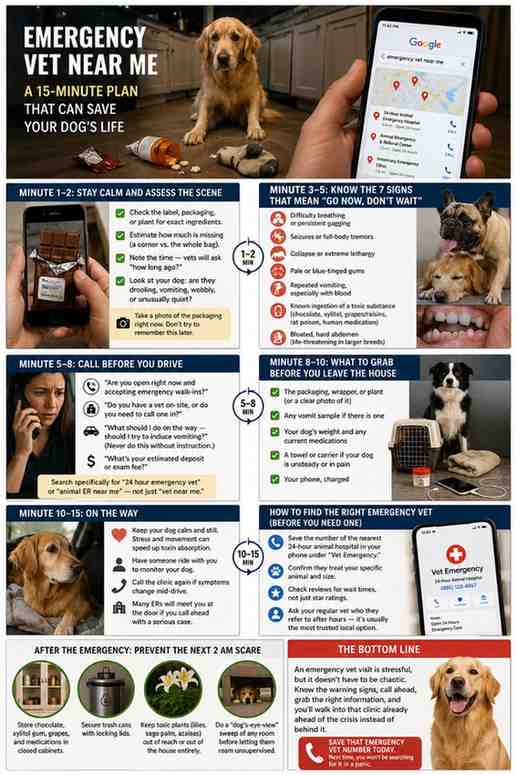
Minute 1–2: Stay Calm and Assess the Scene
Before you do anything else, figure out what your dog got into and how much. This single piece of information will shape every decision the vet makes.
- Check the label, packaging, or plant for exact ingredients.
- Estimate how much is missing (a corner of a bar vs. the whole bag matters).
- Note the time — vets will ask “how long ago?”
- Look at your dog: are they drooling, vomiting, wobbly, or unusually quiet?
Do NOT try to remember this later. Take a photo of the packaging right now with your phone. It sounds unnecessary in the moment — it’s not.
Minute 3–5: Know the 7 Signs That Mean “Go Now, Don’t Wait”
Not every incident needs an ER visit at midnight. But these symptoms mean you skip the phone call and go straight to the car:
- Difficulty breathing or persistent gagging
- Seizures or full-body tremors
- Collapse or extreme lethargy
- Pale or blue-tinged gums
- Repeated vomiting, especially with blood
- Known ingestion of a toxic substance — chocolate, xylitol (found in gum and peanut butter), grapes/raisins, rat poison, or human medication
- Bloated, hard abdomen — a classic sign of a life-threatening condition in larger breeds
If none of these apply and your dog seems alert and normal, a call to a vet or poison hotline (not a frantic drive) may be the right next step. When in doubt, call — don’t guess.
Minute 5–8: Call Before You Drive
This is the step most people skip in a panic, and it’s the one that saves the most time once you arrive. Call ahead and ask:
- “Are you open right now and accepting emergency walk-ins?”
- “Do you have a vet on-site, or do you need to call one in?” (Some 24-hour clinics are technically “open” but short-staffed overnight.)
- “What should I do on the way — should I try to induce vomiting?” (Never do this without instruction — some substances cause more damage coming back up.)
- “What’s your estimated deposit or exam fee?” so you’re not blindsided at the front desk.
If your regular vet’s clinic is closed, search specifically for “24 hour emergency vet” or “animal ER near me” rather than just “vet near me” — general listings often include daytime-only clinics that won’t pick up.
Minute 8–10: What to Grab Before You Leave the House
Thirty extra seconds now saves confusion later:
- The packaging, wrapper, or plant (or a clear photo of it)
- Any vomit sample if there is one (yes, really — vets can test it)
- Your dog’s weight and any current medications
- A towel or carrier if your dog is unsteady or in pain
- Your phone, charged, in case the clinic calls you en route
Minute 10–15: On the Way
Keep your dog as calm and still as possible — movement and stress can speed up how fast a toxin absorbs. If someone else is home, have them ride with you to monitor your dog while you drive. Call the clinic again if symptoms change mid-drive; many ERs will meet you at the door if you call ahead with a serious case.
How to Actually Find the Right Emergency Vet (Before You Need One)
Searching “emergency vet near me” at midnight is the worst time to discover that the closest listed clinic closed two years ago. Do this now, while you’re calm:
- Save the number of the nearest 24-hour animal hospital in your phone under “Vet Emergency.”
- Confirm they treat your specific animal and size — some ERs limit large-breed or exotic pet capacity.
- Check reviews for wait times, not just star ratings — during a crisis, speed matters more than ambiance.
- Ask your regular vet who they refer to after hours — it’s usually the most trusted local option, not just the top Google result.
After the Emergency: Prevent the Next 2 AM Scare
Most poisoning and foreign-object emergencies are repeat offenders — the same household risks trip up dogs again and again:
- Store chocolate, xylitol gum, grapes, and medications in closed cabinets, not counters
- Secure trash cans with locking lids
- Keep toxic plants (lilies, sago palm, azaleas) out of reach or out of the house entirely
- Do a “dog’s-eye-view” sweep of any room before letting them roam unsupervised
The Bottom Line
An emergency vet visit is stressful, but it doesn’t have to be chaotic. Know the warning signs, call ahead, grab the right information, and you’ll walk into that clinic already ahead of the crisis instead of behind it. And once tonight is handled — save that emergency vet number. Next time, you won’t be searching for it in a panic.