
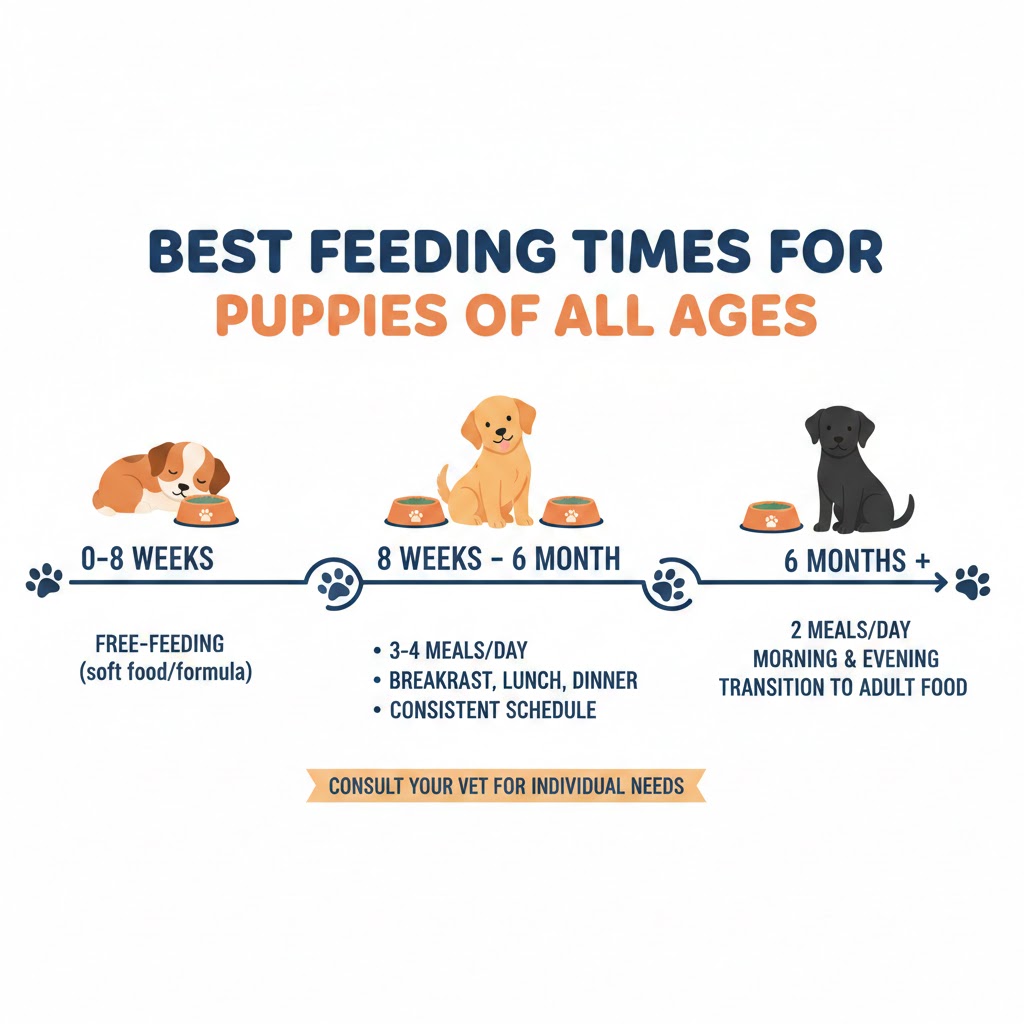
Feeding your puppy at the right times plays an important role in their growth, digestion, and energy levels. Puppies depend on routine, and a consistent feeding schedule helps them develop healthy habits as they grow. This guide explains how often puppies should eat at different ages and how to build a schedule that works for both you and your dog.
Why Feeding Schedules Matter
A predictable feeding routine helps regulate your puppy’s metabolism, reduces digestive issues, and supports house-training. Puppies that eat at consistent times are more likely to maintain steady energy and avoid overeating or hunger-related behaviors.
Feeding Schedule for 6 to 8 Week Old Puppies
Very young puppies need small, frequent meals to support rapid development. At this stage, most puppies eat three to four times a day. Their meals should be soft, easy to digest, and high in nutrients. Puppies at this age are transitioning from mother’s milk, so gentle formulas or softened kibble work best.
Feeding Schedule for 2 to 3 Month Old Puppies
As puppies grow, their feeding schedule becomes slightly more structured. Most puppies do well with three meals a day during this stage. Regular morning, afternoon, and evening feedings help maintain healthy weight and steady energy. Consistency also helps with early house-training.
Feeding Schedule for 4 to 5 Month Old Puppies
By this age, puppies are more active and developing stronger digestive systems. Many puppies can continue with three meals a day, but some may transition to two meals depending on breed size and appetite. Monitor your puppy’s weight and adjust portions accordingly.
Feeding Schedule for 6 Months and Older
Most puppies can shift to two meals per day once they reach six months of age. Larger breeds may continue needing more calories split into two or three meals. Smaller breeds may still prefer three smaller meals to maintain stable blood sugar levels. Feeding twice a day helps prevent overeating and supports long-term digestive health.
Morning vs Evening Feeding
Feeding your puppy in the morning helps boost their energy for the day ahead. The evening meal should be given several hours before bedtime to prevent nighttime accidents. Avoid feeding right before intense play or exercise, as this can cause stomach discomfort.
Adjusting Feeding Times Based on Breed and Activity
Active puppies may need slightly earlier meals or additional small snacks to fuel high energy levels. Smaller breeds can benefit from feeding times that prevent dips in blood sugar. Large breeds may require slower, more controlled feeding to reduce risks like bloating.
Signs Your Feeding Schedule May Need Adjustment
If your puppy seems excessively hungry, loses weight, gains weight too fast, or has digestive issues, their schedule or portion size may need changes. Observing your puppy’s behavior and adjusting as needed ensures they receive the right amount of nutrition.
Maintaining Fresh Water Access
Regardless of feeding times, fresh water should always be available. Hydration supports digestion, metabolism, and overall health at every stage of puppy growth.
Conclusion
Choosing the best feeding times for puppies depends on their age, breed, and activity level. A consistent feeding routine supports healthy development, good digestion, and balanced energy. As your puppy grows, adjusting the schedule ensures they continue receiving the right nourishment for their needs. With a reliable routine, you can help your puppy stay happy, healthy, and thriving at every stage. PetsDogPuppy