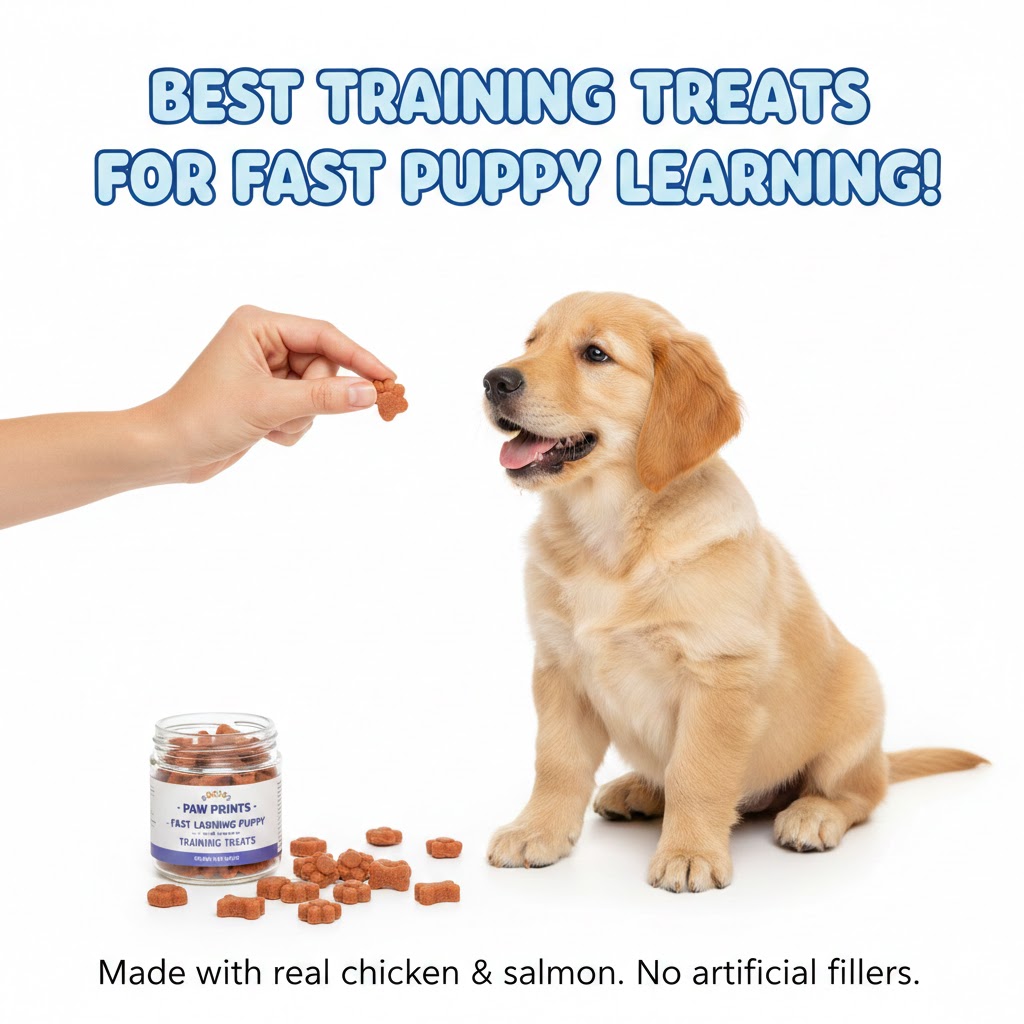
Training a puppy is much easier and more effective when you use the right treats. Treats reward good behavior and encourage your puppy to learn commands quickly. Choosing treats that are healthy, tasty, and easy to handle will speed up training and build a strong bond between you and your dog.
What Makes a Good Training Treat
A good training treat should be small, soft, and highly palatable — so your puppy doesn’t get full quickly and stays motivated. Soft treats are easier on puppy teeth, and small size helps you give multiple rewards during one session. Treats with strong smell or flavor are more noticeable, making them great for recall or focus training.
Healthy & Nutritious Ingredients
Treats should ideally be made from real meat or wholesome ingredients rather than fillers or artificial additives. Real chicken, turkey, fish, or lamb — or eggs — provide beneficial proteins. Avoid treats with excessive salt, sugar, artificial colors, or preservatives, which may upset your puppy’s digestion or long-term health.
Low-Calorie Treats for Frequent Training
Frequent training sessions can add up in calories. Choose low-calorie treats so your puppy doesn’t gain unnecessary weight. If you train many times a day, consider breaking treats into smaller bits or use small pieces of healthy food like boiled chicken, carrot slices, or small fish.
Treats Ideal for Young Puppies
Young puppies have sensitive stomachs and developing teeth. Soft, easily digestible treats or small pieces of cooked lean meat are ideal. If you switch treats often, you can test what your puppy likes and what their digestive system tolerates best.
Specialty Treats for Different Training Goals
Depending on your training — basic commands, recall, potty training, or focus building — treat types may vary. For focus and recall training, high-value treats (strong scent or taste, like small bits of cooked fish) keep the puppy focused. For routine training, simple healthy treats or small meat pieces work well.
Homemade vs Commercial Treats
Homemade treats (like small cooked chicken pieces, boiled eggs, or lightly steamed vegetables) can be a healthy, cost-effective alternative to store-bought treats. They let you control ingredients and avoid additives. Commercial treats made for puppies are convenient and usually balanced — but always check the ingredient list and avoid cheap fillers.
When and How Often to Use Treats
Use treats during training sessions — not just randomly — so your puppy learns that treats follow good behavior. Reward immediately after the desired action so the puppy links behavior and reward. For multiple short sessions, use very small treats or parts to avoid overfeeding.
Monitoring Health While Treating
Keep an eye on your puppy’s weight, coat, energy, and digestion. Too many treats — even healthy ones — can lead to weight gain or digestive upset. Make treats only a small portion of daily calories and rely on balanced meals for main nutrition.
Conclusion
Best training treats — small, soft, tasty and nutritious — make puppy learning easier, faster, and more effective. Whether homemade or commercial, healthy treats help reinforce good behavior and strengthen your bond. With careful use, treats become a powerful tool for building a well-trained, happy companion. PetsDogPuppy