
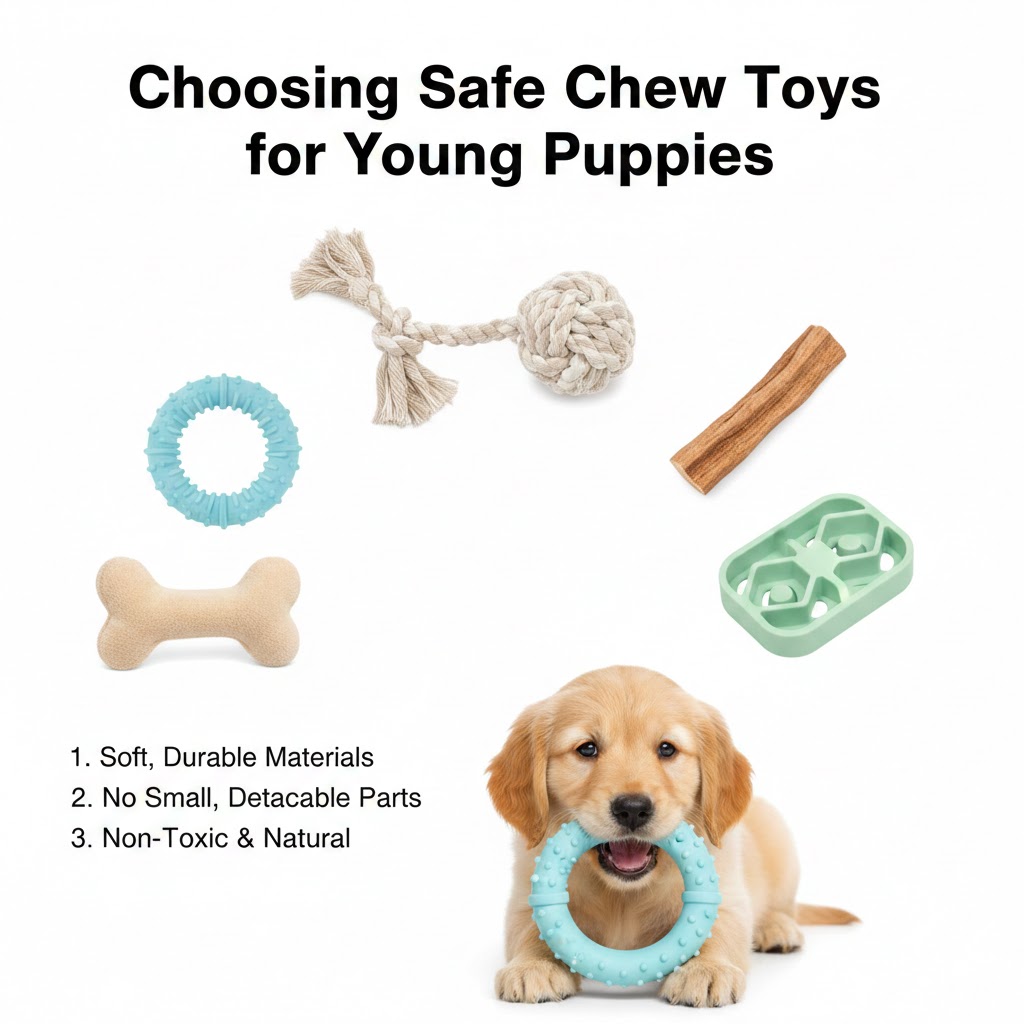
Chewing is a natural habit for puppies, especially during teething. The right chew toys help soothe their gums, protect your furniture, and support healthy jaw development. But choosing safe toys is important because puppies explore the world with their mouths. This guide explains what to look for when selecting safe chew toys, with helpful insights inspired by resources shared on PetsDogPuppy.
Why Puppies Need Safe and Durable Chew Toys
Young puppies chew for several reasons: teething discomfort, boredom, curiosity, and growing jaw strength. A good chew toy keeps them entertained while preventing accidental choking or dental injuries. Safe toys also reduce destructive behavior as puppies learn what is okay to chew.
Materials That Are Safe For Puppy Chewing
Look for toys made from non-toxic rubber, soft nylon, or natural fabrics like cotton rope. These materials are gentle on puppy teeth yet durable enough to resist tearing. Avoid toys that are too hard, as they can cause fractures or gum injuries.
Avoiding Toys That Pose Health Risks
Some toys may look fun but can be dangerous. Stay away from toys with small detachable parts, sharp edges, or cheap plastic that breaks easily. Anything that can be swallowed whole or shredded into tiny pieces is unsafe for young puppies. Checking product labels for safety standards is a smart step before buying.
Size Matters When Choosing Puppy Toys
Always choose toys that match your puppy’s size. Small toys can become choking hazards for medium or large-breed puppies, while oversized toys may be too heavy or intimidating for tiny breeds. A toy should fit comfortably in your puppy’s mouth without slipping down the throat.
Popular Safe Toy Options for Teething Puppies
Some reliable options include soft rubber bones, teething rings, rope toys, and gentle chew sticks specifically designed for puppies. These toys soothe sore gums and encourage healthy chewing habits. Many new puppy owners explore trusted toy suggestions through PetsDogPuppy to make sure they pick safe and effective options.
Keeping Toys Clean for Puppy Health
Puppy toys need regular cleaning to remove dirt, drool, and bacteria. Rubber toys can be washed with mild soap and warm water, while rope toys can sometimes be machine-washed. Clean toys last longer and reduce the risk of infections.
When to Replace Old or Damaged Toys
Even the strongest toys wear out over time. If a toy becomes torn, frayed, or starts shedding pieces, replace it immediately. Damaged toys are more likely to cause swallowing hazards or dental problems.
Final Thoughts
Safe chew toys play an important role in a puppy’s development, comfort, and behavior. By choosing durable materials, proper sizes, and high-quality designs, you help your puppy stay entertained and protected. The right toys also support mental stimulation and reduce destructive habits, making your home a better environment for both you and your young puppy.