
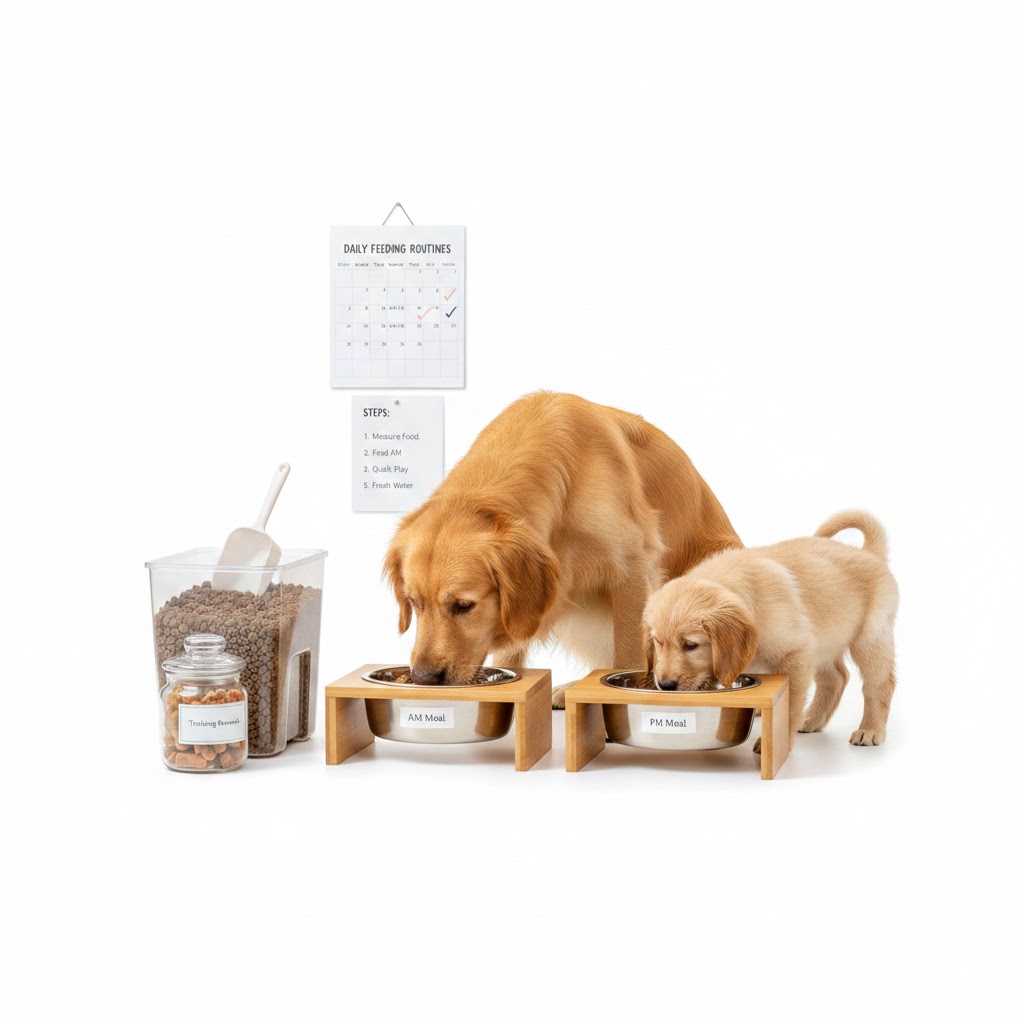
Caring for a dog brings joy, companionship, and responsibility. One of the most important daily responsibilities is feeding, yet it is often treated as a rushed task. In reality, daily feeding routines play a major role in simplifying dog care, improving health, and reducing stress for owners. When feeding is consistent and well planned, it becomes a smooth part of the day rather than a constant concern.
This rewritten guide explains how structured feeding routines make dog care easier, more predictable, and healthier for both dogs and owners.
Why a Daily Feeding Routine Is So Important
Dogs are routine-oriented animals. They feel safest when their day follows a predictable pattern. Feeding at consistent times helps regulate digestion, energy levels, mood, and overall behavior. When meals are irregular, dogs may feel anxious, beg excessively, or show signs of digestive discomfort.
A feeding routine also benefits owners. Knowing exactly when and how much to feed removes uncertainty and prevents common mistakes such as skipping meals or overfeeding during busy moments.
Feeding Consistency Supports Emotional Stability
Dogs often show behavioral changes when feeding times are inconsistent. Unpredictable meals can lead to restlessness, pacing, whining, or food guarding. A stable routine helps dogs feel secure because they know their needs will be met.
Calmer dogs are easier to train, easier to manage, and more relaxed throughout the day. Feeding routines quietly support emotional balance without requiring extra effort from owners.
Selecting a Feeding Schedule That Works
The best feeding schedule is one that fits both the dog’s needs and the owner’s lifestyle. Puppies usually require three to four meals per day to support growth and stable energy. Adult dogs typically do well with two meals daily, while senior dogs may benefit from adjusted portions or timing based on health needs.
The most important factor is consistency. Feeding at the same times every day trains the dog’s internal clock and makes daily planning easier.
Portion Control Makes Feeding Simple
Portion size is just as important as food quality. Overfeeding can lead to weight gain, joint problems, and long-term health issues. Underfeeding can cause low energy and nutritional deficiencies.
Pre-measuring food removes daily guesswork. Many owners prepare portions in advance, making mealtime quick and accurate. This method ensures dogs receive the right amount of nutrition without constant calculations.
Educational resources like PetsDogPuppy often emphasize that correct portion control is one of the easiest ways to maintain long-term dog health.
Digestive Health Improves With Routine
Dogs digest food more efficiently when meals arrive at predictable times. Sudden changes in timing or portion size can disrupt digestion and cause upset stomachs or irregular stools.
A steady feeding routine supports smoother digestion, better nutrient absorption, and fewer stomach issues. This is especially beneficial for dogs with sensitive digestion or food sensitivities.
Saving Time Through Organized Feeding Habits
A feeding routine reduces daily decision-making. Instead of repeatedly asking when or what to feed, owners simply follow the plan. This saves time and mental energy.
Helpful habits include:
Preparing meals ahead of time
Using measured scoops or containers
Keeping food and bowls in one location
Setting reminders during busy days
These simple systems make feeding automatic and stress-free.
Reducing Daily Stress for Busy Owners
Many owners feel pressure when feeding becomes rushed or inconsistent. A solid routine removes that pressure. When feeding is planned, there is no scrambling, guilt, or second-guessing.
This structure allows owners to focus on quality time instead of logistics. Dogs also respond positively to calm, confident care. Many busy owners discover through PetsDogPuppy that routines are key to balancing responsible pet care with a demanding lifestyle.
Feeding Routines and Training Success
Structured feeding supports training in powerful ways. Dogs are naturally more focused and motivated around mealtimes. Training sessions scheduled before meals often result in better attention and faster learning.
Using part of the daily meal for training rewards also reduces the need for extra treats, helping maintain healthy weight and balanced nutrition.
Adjusting Feeding Routines Without Stress
Life changes are unavoidable, but feeding routines don’t need to disappear during transitions. Schedule changes, travel, or new work hours can be managed with gradual adjustments.
Shifting feeding times slowly helps dogs adapt without anxiety. Maintaining structure, even with small changes, helps dogs stay calm and secure.
Simplifying Care in Multi-Dog Homes
Feeding routines are especially valuable in homes with more than one dog. Scheduled meals reduce competition, anxiety, and food-related conflict.
Clear routines help each dog understand expectations. Feeding in separate areas and sticking to consistent schedules turns mealtime into a smooth, controlled process instead of a chaotic one.
Long-Term Health Benefits of Feeding Structure
Consistent feeding supports long-term wellness. Dogs fed on a schedule are more likely to maintain a healthy weight, experience fewer digestive issues, and show stable energy levels.
Routines also make it easier to notice health changes. When eating habits suddenly change, owners can spot potential issues early and seek help promptly.
Common Feeding Mistakes to Avoid
Some habits unintentionally disrupt feeding simplicity. These include feeding at random times, switching foods frequently without transition, and offering excessive snacks outside meals.
Another common mistake is allowing feeding to depend on mood or availability. Dogs thrive when meals are predictable, not flexible based on daily chaos.
Keeping routines simple prevents confusion and improves overall care.
Creating a Calm Feeding Environment
A peaceful feeding space reinforces routine benefits. Feeding in a quiet area without distractions allows dogs to eat comfortably and calmly.
Avoid rushing or interrupting meals. Let dogs eat at their own pace. A relaxed environment supports digestion and positive associations with feeding time.
Feeding as a Bonding Experience
Feeding is more than a task. It is a daily opportunity to build trust. Dogs associate consistent care with safety and reliability.
Over time, a predictable routine strengthens the bond between dog and owner. Dogs feel secure, and owners gain confidence in their caregiving.
Final Thoughts
Daily feeding routines are one of the most effective ways to simplify dog care. With consistent timing, accurate portions, and thoughtful planning, feeding becomes effortless instead of stressful.
A structured routine supports better digestion, improved behavior, easier training, and long-term health. For busy owners, it removes guesswork and creates a reliable system that works every day.
Simple routines lead to calmer dogs, smoother days, and a more enjoyable dog ownership experience overall.