Understanding early puppy behavior is one of the most important parts of raising a healthy, well-adjusted dog. Puppies communicate through their actions long before they learn commands. Recognizing these patterns early helps owners guide their puppies toward good habits, prevent unwanted behaviors, and build a strong bond based on trust. With awareness and patience, you can support your puppy’s emotional and physical development from the very beginning.
Why Early Behavior Awareness Matters
Puppies go through rapid developmental stages where they learn how to interact with people, other animals, and their surroundings. Observing their behavior helps you address concerns early, reinforce positive habits, and understand their needs better. Many new owners rely on PetsDogPuppy for guidance to navigate these early behavioral stages with confidence.
Normal Play vs. Rough Play
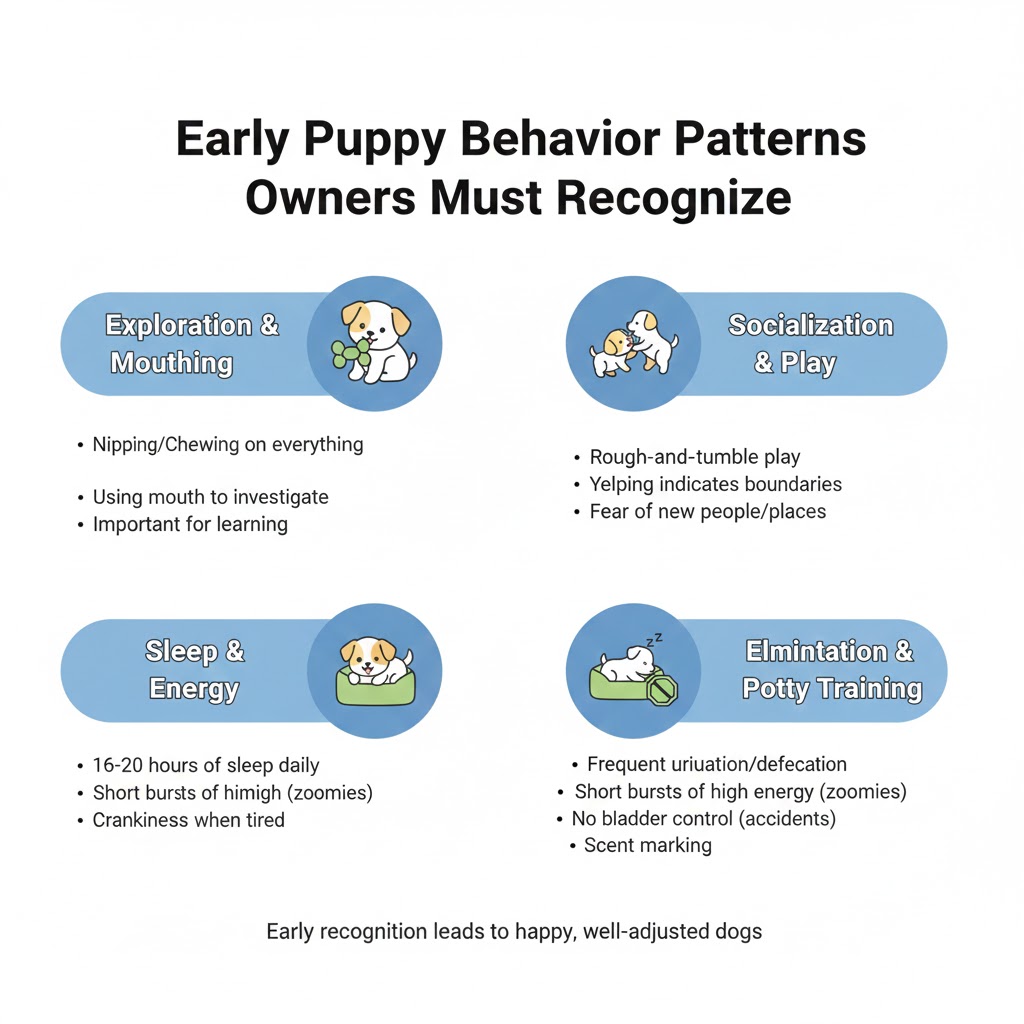
Puppies bite, jump, and chase as part of natural play. Gentle biting is normal, but hard biting or overly aggressive behavior requires correction. Teach bite control using soft redirection, toys, and calm responses. Learning the difference between playful excitement and rough behavior helps prevent future aggression.
Signs of Fear or Anxiety
Some puppies show fear by hiding, trembling, avoiding eye contact, or whining. These reactions often occur during loud noises, new environments, or unfamiliar people. Early recognition allows owners to provide comfort and gradual exposure, helping the puppy build confidence over time.
Early Social Curiosity
Curiosity is a healthy part of development. Puppies sniff, explore, and investigate everything around them. Encouraging safe exploration helps them understand the world and develop sensory confidence. Rewarding calm bravery helps reinforce positive discovery.
Attention-Seeking Behaviors
Whining, pawing, or following you around are common signs your puppy wants attention. This behavior is normal, but it’s important to reinforce calm interactions instead of rewarding demanding actions. Teaching independence early helps prevent future separation anxiety.
Early Signs of Dominance or Stubbornness
While puppies do not typically show true dominance, some may test boundaries through persistent ignoring, guarding toys, or pushing for control. Consistent training, clear rules, and positive reinforcement help shape cooperative, respectful behavior.
Sleep and Rest Patterns
Puppies sleep a lot—often 16 to 18 hours a day. Sudden changes in sleep patterns or excessive lethargy may indicate stress, illness, or overstimulation. Observing rest habits helps maintain a balanced routine that supports healthy growth.
Early Toilet Training Signals
Puppies often circle, sniff the floor, whine, or walk toward the door when they need to relieve themselves. Recognizing these early signals helps speed up potty training and prevents accidents in the home.
Monitoring Growth and Activity Changes
Changes in energy levels, appetite, or behavior should be monitored closely. Healthy puppies are playful, curious, and active. Consistent patterns of withdrawal or lack of interest may signal underlying concerns, and checking trusted resources like PetsDogPuppy can provide quick insights.
Final Thoughts
Early puppy behavior patterns are windows into your dog’s development. By recognizing and responding to these signals, you can guide your puppy toward confidence, good manners, and emotional stability. A patient and observant approach creates a strong foundation for a well-behaved and happy adult dog.