
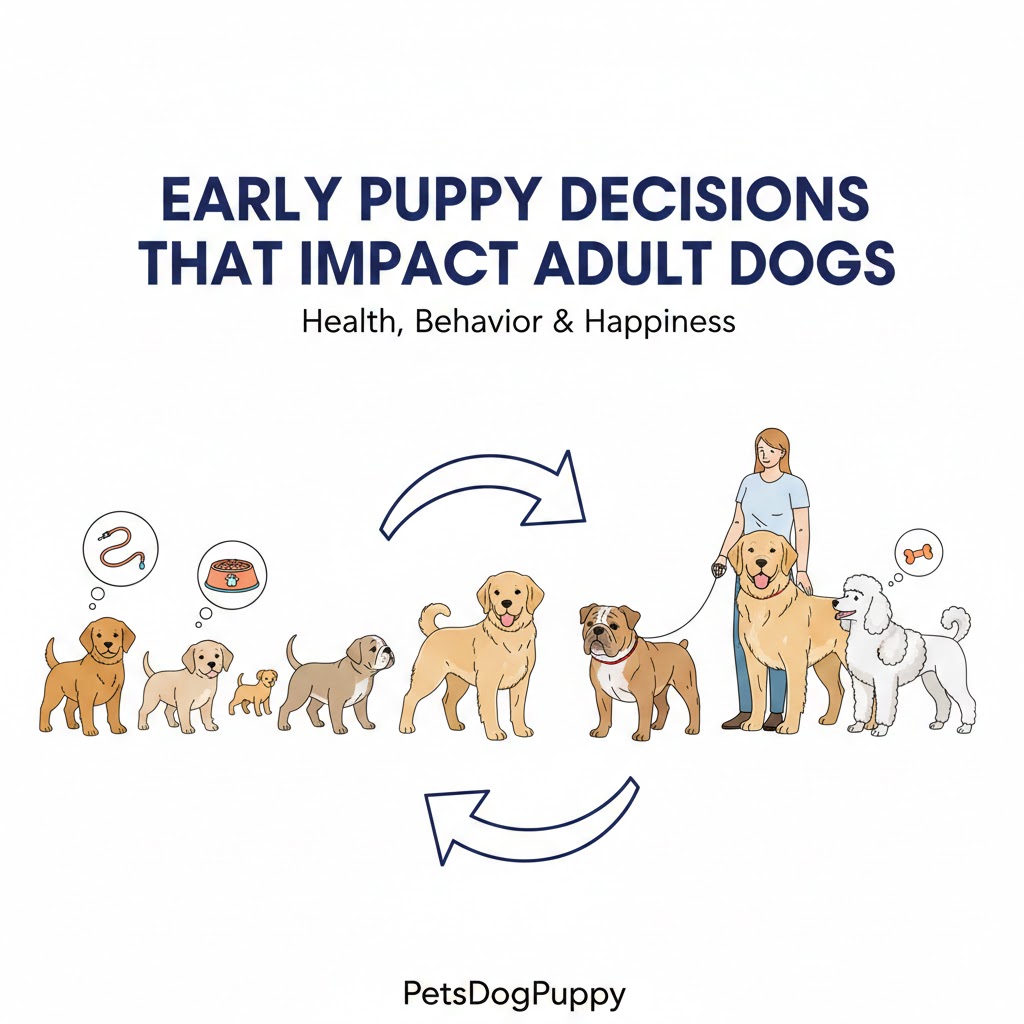
The choices made during a puppy’s early weeks and months shape the dog they will become as an adult. Many long-term behavior, health, and lifestyle outcomes are influenced not by genetics alone, but by daily decisions owners make early on. From training habits to social exposure, nutrition, and routine structure, early puppy decisions have lasting effects that continue well into adulthood.
Understanding these critical early choices helps dog owners raise confident, healthy, and well-adjusted adult dogs.
Choosing The Right Socialization Window
Socialization during puppyhood plays a major role in determining how a dog reacts to the world later in life. Puppies are most receptive to new experiences between three and sixteen weeks of age. During this time, exposure to different people, environments, sounds, and animals helps build confidence.
When puppies miss positive social experiences during this period, they may grow into adults who are fearful, reactive, or anxious. Safe and controlled introductions to everyday situations such as car rides, visitors, and household noises can prevent many behavioral challenges.
Establishing Consistent Daily Routines
Early routines teach puppies what to expect from their environment. Feeding times, potty breaks, training sessions, and rest periods create structure and predictability. Dogs raised with clear routines tend to be calmer and more adaptable as adults.
Inconsistent schedules during puppyhood can lead to confusion and stress, which may appear later as separation anxiety or attention-seeking behavior. Simple routines help puppies learn self-control and emotional regulation.
Early Training Habits And Long-Term Behavior
The way training is handled during puppyhood strongly affects adult behavior. Puppies who are taught using positive reinforcement learn to associate humans with trust and guidance. This builds a foundation for lifelong learning.
Ignoring early training or relying on harsh corrections can result in fear-based behaviors and resistance to learning. Even basic cues like sit, come, and leash manners, when introduced early, shape how a dog interacts with people and surroundings as an adult.
Handling And Touch Desensitization
Early handling teaches puppies to accept human touch calmly. Gently handling paws, ears, mouth, and body helps puppies become comfortable with grooming and veterinary care.
Dogs that are not properly handled early may resist nail trimming, brushing, or medical examinations later in life. Regular, positive handling experiences during puppyhood reduce stress and improve cooperation as adults.
Nutrition Choices During Growth Stages
Nutrition during early development influences a dog’s long-term health. Feeding a balanced diet appropriate for a puppy’s breed size supports healthy bone growth, joint development, and immune function.
Poor nutritional choices can contribute to obesity, joint issues, or digestive problems later in life. Establishing healthy feeding habits early also helps prevent food-related behavior problems such as begging or food guarding.
Bite Inhibition And Mouth Control
Puppies naturally explore the world with their mouths. Teaching bite inhibition early helps them learn how to control the pressure of their bite. Gentle redirection and consistency are key.
Puppies who are not guided in mouth control may grow into adults with rough play habits or inappropriate biting behavior. Learning bite inhibition early promotes safe interactions with people and other animals.
Social Experiences With Other Dogs
Positive interactions with well-mannered dogs teach puppies important communication skills. These experiences help puppies learn boundaries, body language, and play etiquette.
Lack of dog-to-dog interaction or negative encounters can lead to adult dogs that struggle in social settings. Carefully supervised play with calm dogs helps puppies develop appropriate social behavior.
Building Independence Early On
Encouraging independence during puppyhood prevents clingy behavior later. Teaching puppies to spend short periods alone helps them learn that separation is temporary and safe.
Puppies that are never given space may develop separation anxiety as adults. Gradual independence training supports emotional stability and confidence.
Exposure To Environmental Stimuli
Early exposure to different environments helps puppies adapt to change. Surfaces, sounds, weather, and public spaces introduce puppies to real-world situations they will encounter as adults.
Avoiding environmental exposure may result in dogs that are easily overwhelmed. Controlled exposure builds resilience and adaptability.
Setting Boundaries From The Start
Clear boundaries help puppies understand acceptable behavior. Allowing jumping, barking, or resource guarding during puppyhood can lead to serious issues later.
Consistency in rules teaches puppies how to interact appropriately with people and other pets. Boundaries provide security rather than restriction.
Managing Fear Periods Properly
Puppies experience developmental fear stages. How owners respond during these times affects long-term confidence. Forcing puppies into frightening situations can reinforce fear responses.
Calm reassurance and gradual exposure help puppies recover and build trust. Mishandling fear periods may result in lifelong phobias or reactivity.
Veterinary Care And Preventive Health Decisions
Early veterinary care supports long-term health. Vaccinations, parasite prevention, and regular checkups help puppies grow into healthier adults.
Skipping preventive care can increase the risk of chronic health problems. Early health monitoring also helps identify genetic or developmental issues.
Training Focus On Mental Stimulation
Mental enrichment during puppyhood strengthens problem-solving skills. Puzzle toys, short training games, and exploration activities keep puppies engaged.
Dogs raised with mental stimulation are less likely to develop destructive behaviors. A mentally fulfilled puppy grows into a more balanced adult dog.
Owner Mindset And Expectations
Owner expectations influence how puppies develop. Unrealistic demands may lead to frustration and inconsistent training. Understanding that puppies learn gradually creates a healthier relationship.
Patience and education allow owners to guide puppies effectively. Supportive resources like PetsDogPuppy help owners make informed decisions during these critical early stages.
Long-Term Effects Of Early Lifestyle Choices
Lifestyle decisions such as exercise levels, social exposure, and living environment shape adult behavior. Puppies raised in stimulating environments with balanced activity develop better coping skills.
Neglecting these areas can lead to boredom-related behaviors in adulthood. Thoughtful lifestyle planning supports lifelong well-being.
Final Thoughts On Early Puppy Decisions
Early puppy decisions impact every aspect of a dog’s adult life. Training approach, social exposure, nutrition, boundaries, and emotional support all contribute to long-term outcomes.
By making informed choices during puppyhood, owners can prevent many common behavior and health issues. Guidance from trusted platforms like PetsDogPuppy empowers owners to raise confident, healthy dogs who thrive throughout adulthood.