
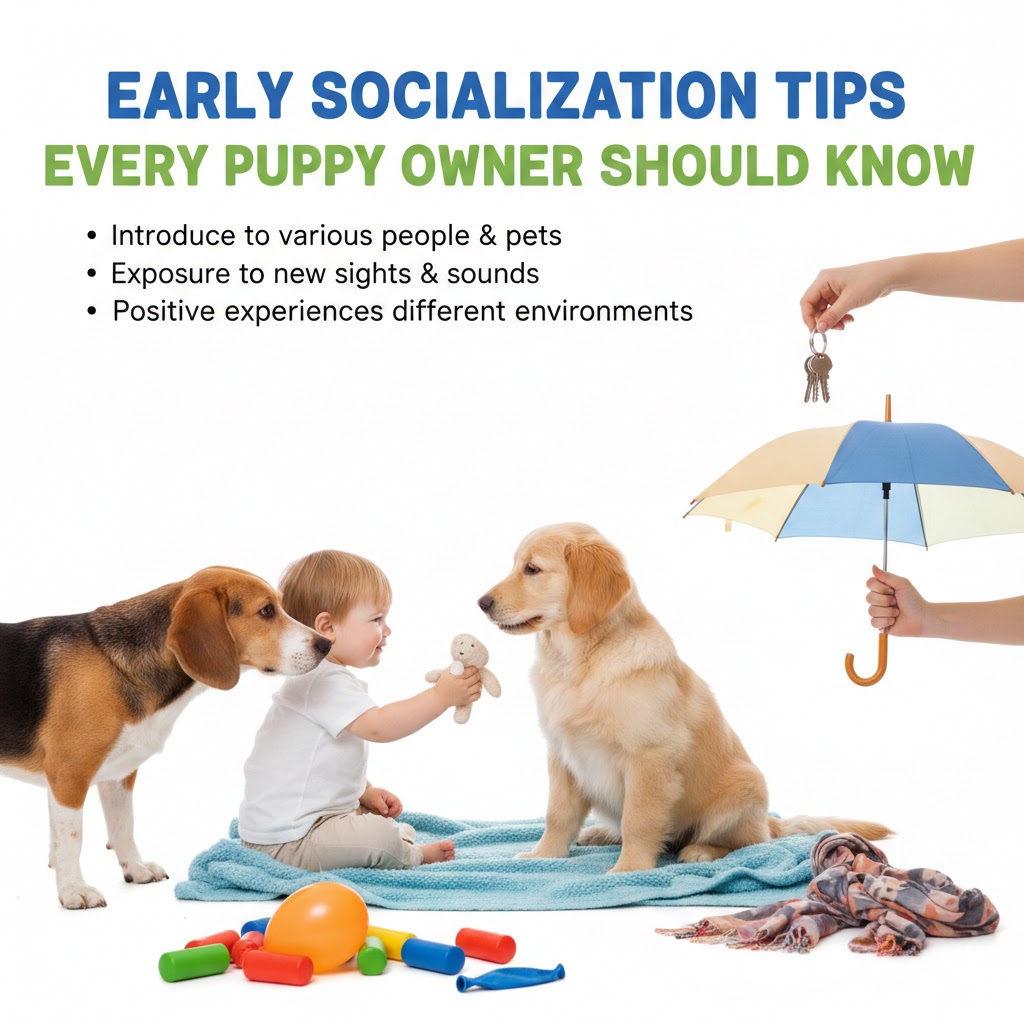
Early socialization is one of the most important steps in raising a confident, well-behaved puppy. Introducing your puppy to new sights, sounds, people, and environments helps shape their long-term behavior and emotional stability. Proper socialization reduces fear, builds trust, and prevents behavioral problems as your puppy grows. Here are essential tips every owner should follow during the early stages.
Start Socialization as Early as Possible
Puppies learn rapidly between eight and sixteen weeks of age. This period is known as the critical socialization window. Introducing positive experiences during this stage helps your puppy become adaptable and confident. Even simple interactions, like meeting calm guests at home or hearing household sounds, make a big difference.
Expose Your Puppy to Different Environments
Take your puppy to different places such as parks, sidewalks, pet-friendly stores, or quiet neighborhoods. Each new environment helps them adjust to unfamiliar surroundings. Start with calm locations and gradually introduce busier ones as your puppy becomes more confident.
Introduce a Variety of Sounds
Puppies can become sensitive or fearful if they are not exposed to common sounds early. Gradually introduce noises like traffic, vacuum cleaners, doorbells, children playing, and household appliances. Keep the volume low at first and increase it slowly to help your puppy adjust safely.
Allow Safe and Controlled Interactions With People
Introducing your puppy to people of different ages, appearances, and behaviors helps prevent fear or aggression later. Let them meet men, women, children, and elderly individuals in a calm, positive way. Ensure each interaction is gentle and controlled to build trust.
Socialize With Other Dogs and Pets
Meeting well-behaved, vaccinated dogs teaches your puppy proper social skills. Playdates with friendly pets help reduce fear and improve confidence. Avoid overly dominant or aggressive dogs that may intimidate your puppy. Gradual, supervised interactions work best for healthy development.
Use Positive Reinforcement During Socialization
Reward your puppy with praise or treats when they respond well to new experiences. Positive reinforcement helps them associate new environments and interactions with safety and comfort. Avoid forcing your puppy into situations they fear, as this can create long-term anxiety.
Introduce Different Surfaces and Textures
Let your puppy walk on grass, gravel, tile, sand, carpet, and wooden floors. This helps them adapt to different textures and improves their physical coordination. The more surfaces they experience early on, the more confident they become in various environments.
Handle Your Puppy Daily
Regularly touching your puppy’s paws, ears, tail, and mouth helps them get used to handling. This makes grooming, vet visits, and nail trims much easier as they grow. Gentle daily handling builds trust and reduces stress during routine care.
Monitor Your Puppy’s Reactions
Every puppy reacts differently to new experiences. Watch for signs of stress such as shaking, hiding, or whining. If your puppy becomes overwhelmed, step back, offer comfort, and introduce the experience again more gradually. Socialization should always feel safe and positive.
Keep Sessions Short and Positive
Short, frequent socialization sessions work better than long, overwhelming ones. A few minutes of exposure each day teaches your puppy far more effectively than a single long session. Consistency builds confidence without creating stress.
Conclusion
Early socialization shapes the foundation of your puppy’s personality and behavior. By introducing new experiences, environments, sounds, and interactions in a calm and positive way, you help your puppy grow into a confident, stable, and well-mannered adult dog. Proper socialization is an investment in your puppy’s lifelong well-being and happiness. PetsDogPuppy