
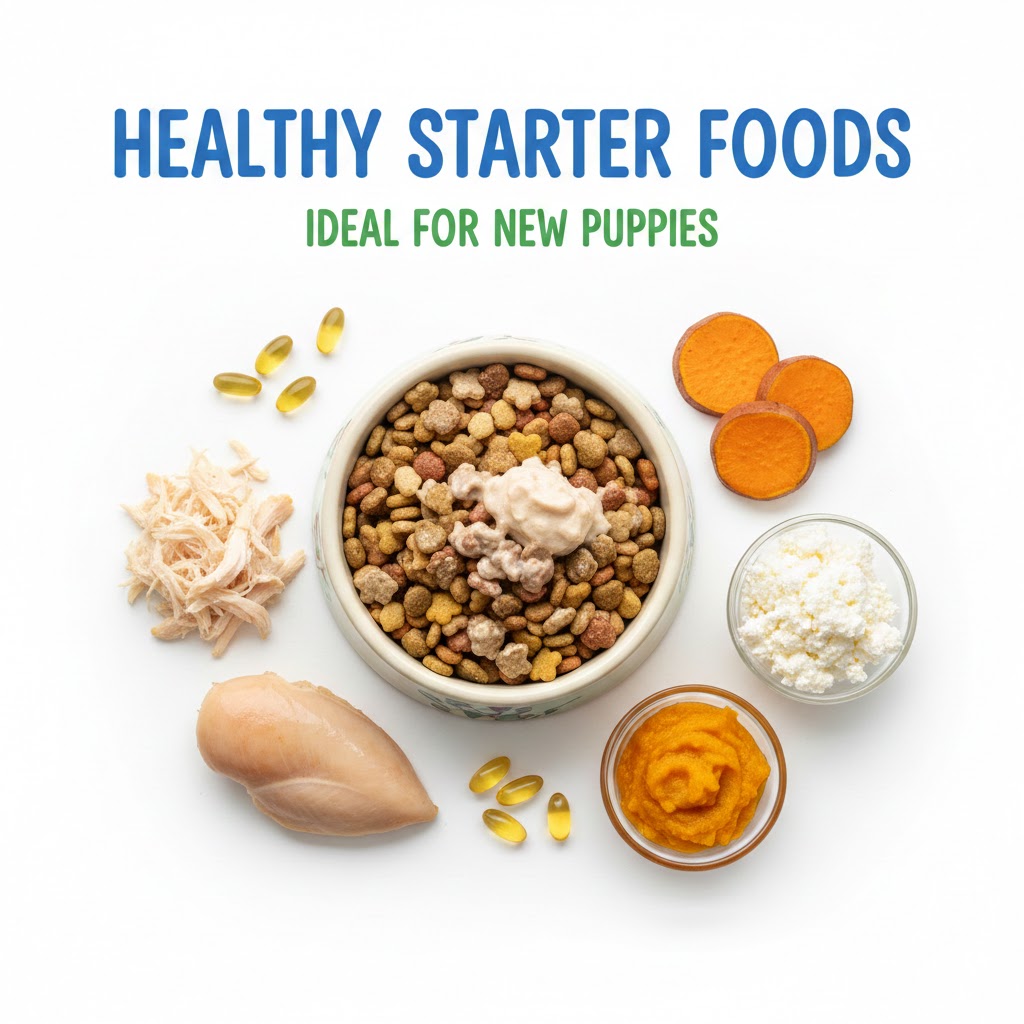
New puppies need the right nutrition from their very first weeks to build strong bones, healthy muscles, and a powerful immune system. Choosing starter foods that support early development plays a major role in shaping how your puppy grows, learns, and stays active. This guide highlights safe, nutritious, and beginner-friendly foods every new puppy owner should know.
Understanding Why Starter Foods Matter
Starter foods are specially formulated to match a puppy’s early growth needs. At this age, puppies require balanced nutrients packed into small meals because their digestive systems are still developing. Proper starter nutrition ensures healthy weight gain, stable energy, and better developmental progress in the first months of life.
Choosing High-Quality Commercial Puppy Starter Food
Commercial starter foods are designed to give puppies everything they need in one complete meal. Look for options made with real meat, DHA for brain development, calcium for bone strength, and antioxidants for immune support. Many owners visit PetsDogPuppy to compare trusted starter foods that suit different breeds and growth stages.
Safe Homemade Foods That Support Early Growth
Homemade foods can be great additions if prepared safely. Some healthy starter options include boiled chicken, mashed pumpkin, scrambled eggs without seasoning, rice, sweet potato, and finely chopped carrots. These foods are gentle on the stomach and provide natural vitamins and minerals essential for young puppies.
Introducing Wet Food for Easier Digestion
Wet starter food is often easier for puppies to chew and digest. The moist texture helps during teething stages and keeps puppies hydrated. Mixing wet food with dry kibble is a simple way to transition your puppy to regular meals over time.
Benefits of Goat Milk for Young Puppies
Goat milk is a popular, gentle option for new puppies because it is easier to digest than cow’s milk. It supports gut health, offers essential nutrients, and can be used as a temporary supplement during weaning. Always give it in moderation and gradually reduce once the puppy adjusts to solid food.
Adding Puppy-Friendly Supplements When Needed
Some puppies need extra nutritional support. Supplements such as probiotics, omega fatty acids, and calcium-rich chews can help strengthen immunity, digestion, and joint health. These should only be added with guidance from a veterinarian to avoid over-supplementation.
Feeding Schedule for New Puppy Starters
Young puppies thrive on small, frequent meals. Most experts recommend feeding three to four times a day, ensuring each meal is fresh and appropriately portioned. Consistency in feeding times helps puppies build healthy eating habits and avoid digestive discomfort.
Avoiding Foods That Are Unsafe for Puppies
New puppy owners must stay cautious about harmful foods. Avoid chocolate, onion, garlic, grapes, raisins, salty snacks, and seasoned meals. Puppies have sensitive systems, and even small amounts of toxic foods can cause serious problems. Staying informed through helpful platforms like PetsDogPuppy ensures safer feeding choices.
Final Thoughts
Healthy starter foods give your puppy the perfect beginning, supporting strong growth and lifelong health. With nutritious commercial diets, gentle homemade meals, and the right feeding routine, your puppy can develop comfortably and confidently. The key is understanding their needs early and choosing foods that nourish them in every stage of growth.