Dog parenting today looks very different from what it did even a decade ago. Puppies are no longer seen as just household pets; they are treated as family members whose emotional, physical, and mental well-being matter deeply. This shift has transformed how people raise, train, feed, and care for their dogs. Modern dog parenting is influenced by lifestyle changes, urban living, digital access to information, and evolving attitudes toward animal welfare.
Understanding these changes helps new and experienced dog owners make better decisions that support healthier, happier dogs.
Dogs Are Now Considered Family Members
One of the biggest changes in modern dog parenting is the emotional bond between humans and dogs. Many owners now refer to themselves as pet parents rather than pet owners. Dogs are included in daily routines, family outings, and even major life events.
This mindset has led to more attention being given to a dog’s emotional needs. Separation anxiety, stress, and fear-based behaviors are taken seriously rather than dismissed as bad habits. Owners are more willing to seek professional help to improve their dog’s quality of life.
Shift From Punishment To Positive Training
Traditional dog training often relied on punishment-based methods. Modern dog parenting favors positive reinforcement, focusing on rewarding good behavior rather than correcting mistakes harshly.
Positive training methods build trust and improve communication between dogs and humans. Puppies trained with rewards, consistency, and patience tend to be more confident and eager to learn. This shift reflects a deeper understanding of canine psychology and learning processes.
Early Socialization Is A Priority
Today’s dog parents place strong emphasis on early socialization. Puppies are exposed to different environments, people, sounds, and other animals during their developmental stages. This helps prevent fear-based behaviors later in life.
Modern owners understand that socialization is not just about meeting other dogs. It includes exposure to car rides, grooming routines, city noises, and handling by different people. Structured puppy classes and controlled experiences are more common than ever.
Nutrition Has Become More Personalized
Dog food choices have expanded dramatically. Modern dog parenting involves reading ingredient labels, understanding nutritional needs, and selecting food based on age, size, and activity level.
Some owners opt for fresh food, raw diets, or subscription-based meal plans designed for their dog’s specific needs. While trends vary, the focus has shifted toward transparency, quality ingredients, and balanced nutrition rather than convenience alone.
Technology Is Changing Dog Care
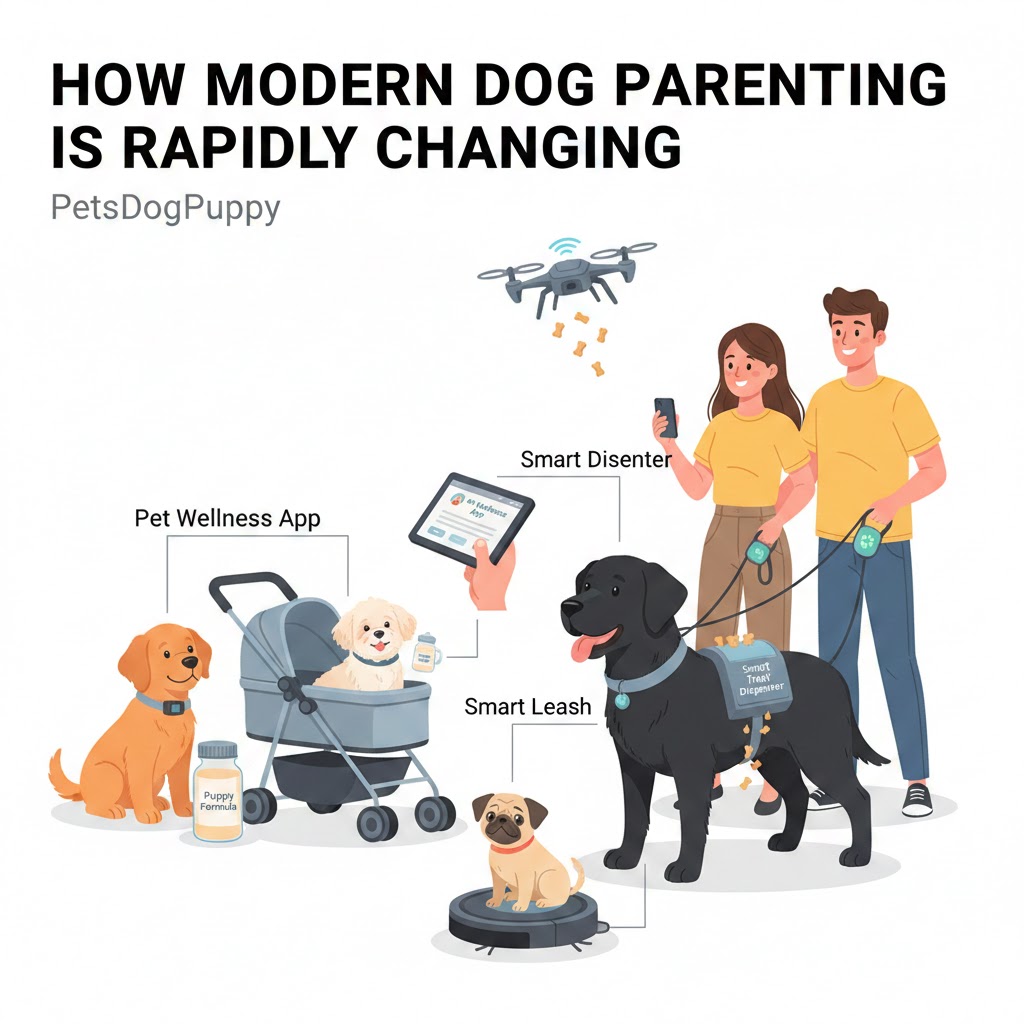
Technology plays a major role in how people care for their dogs today. Smart feeders, GPS collars, pet cameras, and activity trackers allow owners to monitor their dogs remotely.
Mobile apps provide access to training tips, health records, and veterinary advice. Online platforms and communities also help dog parents stay informed and connected. Resources like PetsDogPuppy make expert-backed information accessible to owners seeking guidance at every stage of puppy development.
Urban Living Is Influencing Dog Parenting
As more people live in apartments and cities, dog parenting has adapted to limited space and busy schedules. Walks are more structured, mental stimulation is emphasized, and enrichment toys are commonly used to prevent boredom.
Dog-friendly parks, cafes, and public spaces are increasingly popular. City dog parents are also more mindful of leash manners, noise sensitivity, and social behavior due to close living environments.
Mental Stimulation Is As Important As Exercise
Modern dog parenting recognizes that physical exercise alone is not enough. Mental stimulation is now considered essential for preventing behavioral issues.
Puzzle toys, scent games, obedience training, and interactive play help keep dogs mentally engaged. This approach reduces destructive behavior and supports emotional balance, especially in high-energy breeds.
Veterinary Care Has Become Preventive
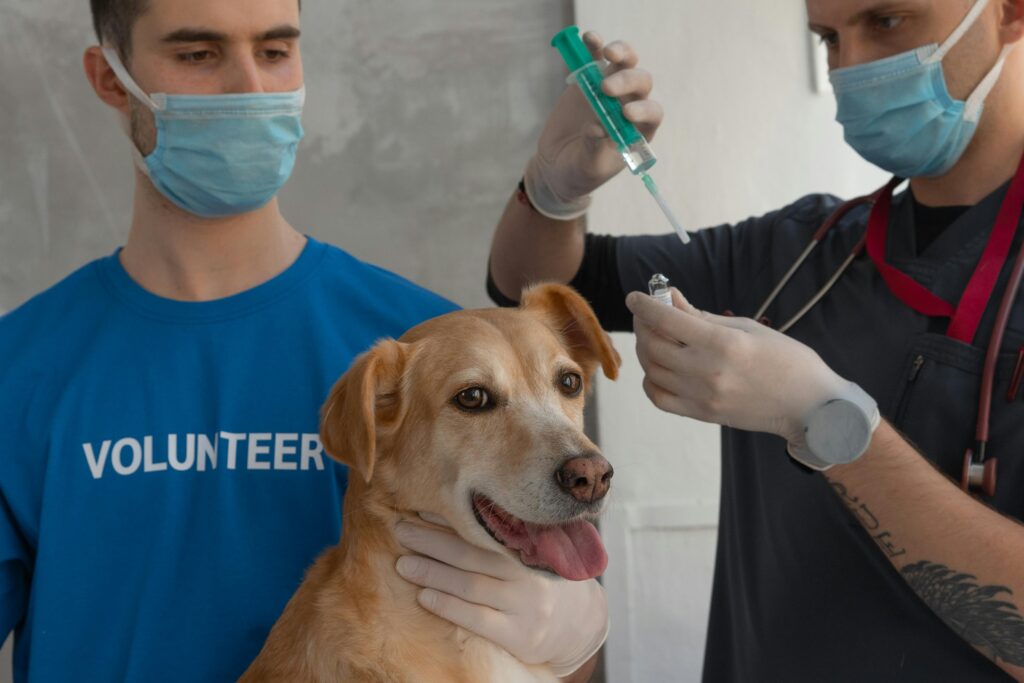
Instead of visiting the vet only when a dog is sick, modern owners focus on preventive care. Regular wellness checkups, vaccinations, dental care, and parasite prevention are standard practices.
There is also increased awareness around spaying, neutering, and early detection of health conditions. Preventive care helps dogs live longer, healthier lives and reduces long-term medical costs.
Dog Behavior Is Better Understood
Access to information has changed how owners interpret dog behavior. Growling, barking, and chewing are no longer automatically labeled as bad behavior. Many owners now try to understand the root cause, whether it is fear, boredom, anxiety, or lack of training.
This shift encourages compassionate responses rather than punishment. Understanding behavior leads to more effective solutions and a stronger human-dog bond.
Work From Home Has Changed Daily Routines
Remote work has significantly influenced modern dog parenting. Many dogs now spend more time with their owners, leading to stronger bonds but also new challenges.
Dogs accustomed to constant companionship may struggle when left alone. As a result, owners are more aware of separation training and independence-building techniques. Structured alone time is now considered part of healthy dog development.
Puppy Classes And Professional Guidance Are More Common
Modern dog parents are more open to seeking professional help. Puppy classes, behaviorists, and trainers are seen as investments rather than last resorts.
Early guidance helps prevent long-term behavior problems and builds confidence in both dogs and owners. Platforms like PetsDogPuppy support this approach by offering reliable, easy-to-understand information tailored to real-life puppy challenges.
Ethical And Responsible Dog Ownership Is Emphasized
There is growing awareness around ethical breeding, adoption, and responsible ownership. Many dog parents research breeders carefully or choose to adopt from shelters.
Responsible ownership also includes proper training, lifetime commitment, and understanding breed-specific needs. This shift reflects a more thoughtful and informed approach to bringing a dog into the family.
Social Media Is Shaping Dog Parenting Trends
Social media has influenced dog parenting in both positive and negative ways. Educational content helps spread awareness about training, nutrition, and health. At the same time, viral trends can create unrealistic expectations.
Modern dog parents are learning to evaluate online advice carefully and prioritize what works best for their individual dog rather than following every trend.
Balancing Human Lifestyle With Canine Needs
One of the defining aspects of modern dog parenting is balance. Owners strive to meet their dog’s needs while maintaining their own lifestyle, careers, and responsibilities.
This balance involves planning routines, setting boundaries, and making thoughtful choices. Dogs thrive when expectations are clear and care is consistent.
The Future Of Dog Parenting
Modern dog parenting continues to evolve as research, technology, and cultural attitudes change. The focus is shifting toward empathy, education, and long-term well-being rather than control or convenience.
Dogs benefit from this evolution through better care, deeper bonds, and healthier lives. As understanding grows, dog parenting becomes more intentional and informed.
Final Thoughts
How modern dog parenting is rapidly changing reflects a broader shift in how humans view their relationship with animals. Today’s dog parents are more informed, compassionate, and proactive than ever before.
By embracing positive training, preventive care, mental enrichment, and ethical responsibility, owners create environments where dogs can thrive. Staying informed and adapting to these changes helps ensure that puppies grow into confident, well-adjusted adult dogs.