
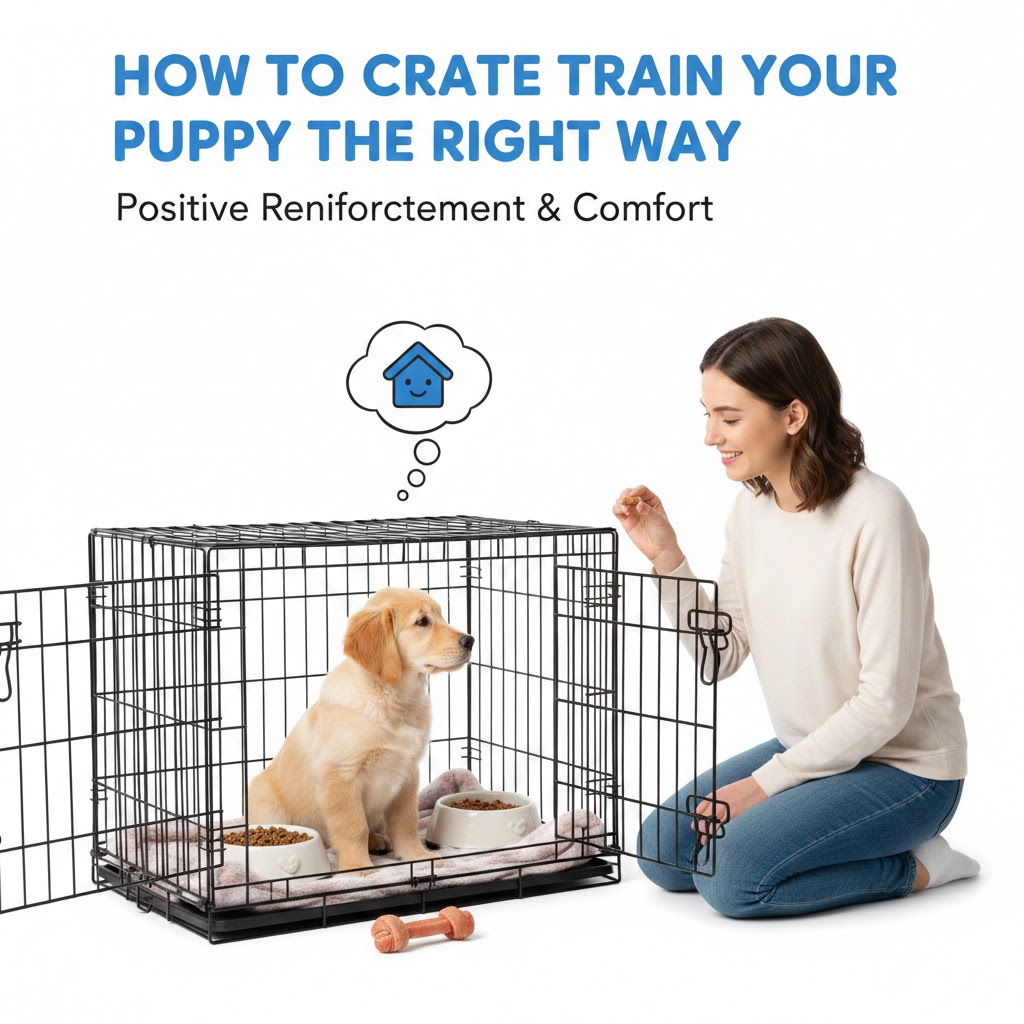
Crate training is one of the most effective ways to help your puppy build good habits, learn boundaries, and feel secure. When done correctly, a crate becomes a safe, comfortable space your puppy naturally enjoys. This guide explains how to crate train your puppy the right way, step by step, so the process is smooth and stress-free.
Choose the Right Size Crate
A crate should be spacious enough for your puppy to stand, turn around, and lie down comfortably. However, it shouldn’t be too large, or your puppy may use one corner as a bathroom. Many crates come with dividers so you can adjust the size as your puppy grows.
Make the Crate Comfortable and Inviting
Create a positive environment inside the crate by adding soft bedding, safe toys, and a light blanket. The goal is to make the crate feel like a cozy den. Avoid placing anything your puppy might chew and swallow, especially during the early stages.
Introduce the Crate Slowly
Start by letting your puppy explore the crate at their own pace. Keep the door open and allow them to sniff, walk in, and walk out without pressure. Placing treats inside helps build positive associations. Never force your puppy inside, as this can create fear.
Use Mealtime to Build Positive Associations
Feeding your puppy inside the crate helps them connect it with something enjoyable. Begin by placing the food bowl near the entrance. Gradually move it inside as your puppy becomes more comfortable. Close the door only for short periods during meals, slowly increasing the duration.
Start Short Crate Sessions During the Day
Once your puppy enters the crate willingly, begin short training sessions. Close the door for a few minutes while you stay nearby. Gradually increase the time as your puppy relaxes. Provide verbal reassurance if needed, but avoid excessive attention that encourages whining.
Ignore Whining Unless It’s Necessary
Puppies may whine when adjusting to the crate. If your puppy is safe and recently relieved, avoid opening the door immediately. Doing so teaches them that whining gets attention. Stay patient and wait for a moment of quiet before letting them out. If the whining is urgent or unusual, check if your puppy needs something.
Create a Consistent Crate Schedule
Crates work best when part of a routine. Use the crate during naps, nighttime sleep, and short daytime rests. Consistency helps your puppy understand when it’s time to relax and prevents overdependence on your presence.
Avoid Using the Crate for Punishment
A crate should always feel safe, not scary. Never send your puppy to the crate as punishment or timeout. Negative associations can make your puppy fearful or anxious, making crate training harder over time.
Gradually Increase Alone Time
Once your puppy stays comfortably in the crate while you’re nearby, begin stepping away for short intervals. This helps build independence and reduces separation anxiety. Increase your distance and time away slowly until your puppy can rest quietly without you in view.
Use the Crate for Nighttime Training
Crate training is extremely helpful for nighttime routines. Place the crate in your bedroom or nearby so your puppy feels secure. Take them for a late bathroom break and then settle them into the crate. Consistent nighttime crate use promotes better sleep habits and faster house training.
Conclusion
Crate training works best when approached with patience, consistency, and positive reinforcement. By creating a safe, inviting space and building a gradual routine, your puppy will learn to love their crate and use it as a comfortable place to rest. With the right approach, crate training will support better behavior, faster house training, and a more confident, secure puppy. PetsDogPuppy