
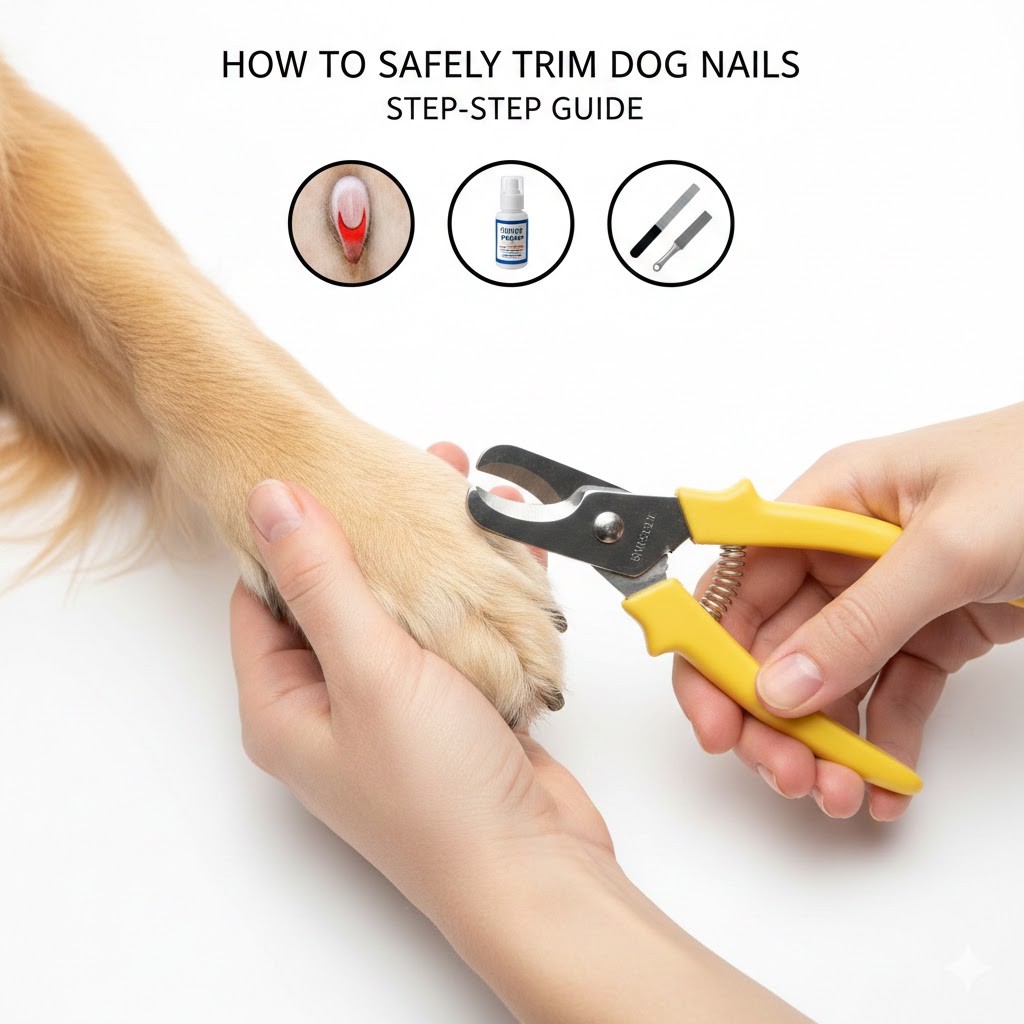
Trimming your dog’s nails is an essential part of grooming and health care. Overgrown nails can lead to discomfort, joint strain, or even injury. However, many pet owners feel nervous about doing it themselves. With the right tools and technique, nail trimming can be safe, stress-free, and even routine.
Why Nail Trimming Matters
When a dog’s nails grow too long, they can:
- Cause pain while walking or running
- Lead to posture problems
- Split or break, causing bleeding or infection
- Curl into the paw pad if left unattended
Regular trimming keeps your dog comfortable and mobile.
How Often Should You Trim?
Most dogs need their nails trimmed every 3–6 weeks. Active dogs walking on hard surfaces may naturally wear down their nails, while indoor or small breed dogs may require more frequent trimming.
Tools You’ll Need
- Dog nail clippers (scissor-style or guillotine-style)
- Styptic powder or cornstarch (to stop bleeding if you cut too short)
- Nail file or grinder (optional, for smoothing rough edges)
- Treats for positive reinforcement
Avoid using human nail clippers—dog nails are thicker and shaped differently.
Steps to Trim Dog Nails Safely
- Choose a quiet, well-lit space
Calm surroundings help reduce your dog’s anxiety. - Inspect each paw
Check for dirt, debris, or irritation. Hold the paw gently but firmly. - Locate the quick
The quick is the pink area inside the nail that contains blood vessels and nerves. On light-colored nails, it’s visible. On dark nails, trim little by little to avoid cutting it. - Cut small amounts at a time
Trim just the curved tip of the nail, avoiding the quick. If your dog has black nails, stop when you see a gray or white center. - Use styptic powder if bleeding occurs
If you accidentally cut into the quick, apply styptic powder to stop the bleeding and soothe the area. - Reward your dog
Give praise and treats after each paw to create a positive association.
Tips for Success
- Start slow if your dog is anxious—trim one or two nails per session.
- Use a grinder if your dog dislikes clippers or if you prefer a rounded finish.
- Practice handling your dog’s paws regularly to build comfort.
- Keep nail trimming part of your regular grooming schedule.
When to Seek Professional Help
If your dog is fearful, aggressive, or has severely overgrown nails, consider visiting a professional groomer or veterinarian. They have the tools and experience to trim nails safely and efficiently.
Final Thoughts
Trimming your dog’s nails doesn’t have to be stressful. With patience, the right tools, and consistent handling, you can make nail care a regular and safe part of your dog’s grooming routine. PetsDogPuppy