
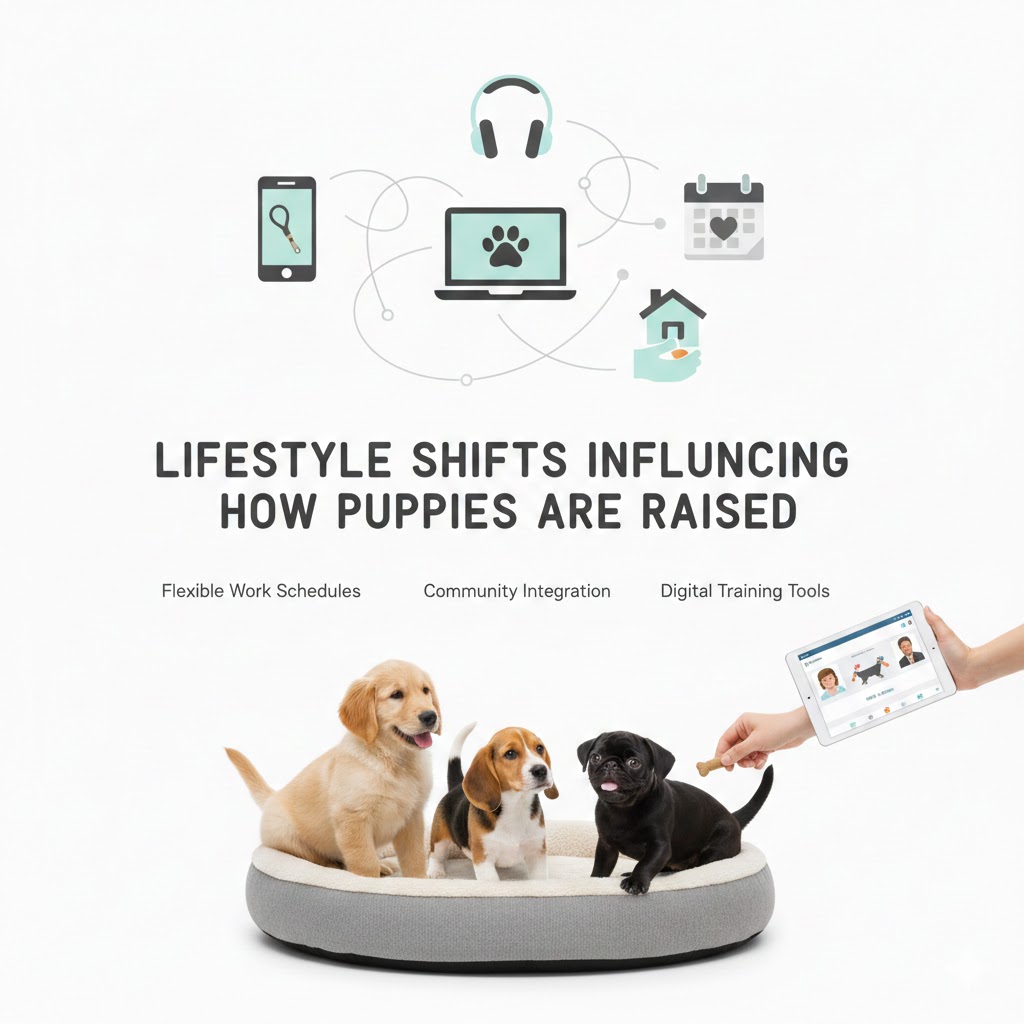
The way puppies are raised today looks very different from even a decade ago. Changes in work culture, living environments, technology, and human attitudes toward pets have significantly influenced modern puppy care. Puppies are no longer simply household animals; they are family members whose physical, emotional, and social needs are taken seriously. These lifestyle shifts are reshaping how owners approach training, nutrition, routines, and long-term wellness.
Understanding these changes helps puppy owners adapt their care methods to better suit both modern life and their puppy’s developmental needs.
Urban Living And Limited Space
One of the most impactful lifestyle shifts is the rise of urban living. More people are raising puppies in apartments, condos, and smaller homes rather than large houses with yards. This has changed how puppies are exercised, socialized, and trained.
Without access to private outdoor spaces, owners rely more on structured walks, dog parks, indoor enrichment activities, and scheduled playtimes. Puppies raised in urban settings are often exposed earlier to noises, crowds, elevators, and traffic, which influences socialization strategies and confidence building.
This shift has also increased demand for leash training, impulse control, and calm behavior indoors.
Remote Work And Increased Human Presence
Remote and hybrid work models have dramatically changed daily puppy routines. With owners spending more time at home, puppies now receive more consistent supervision, interaction, and bonding opportunities during their early months.
This increased presence allows owners to notice behavioral cues sooner, reinforce training consistently, and establish structured routines. However, it also presents new challenges, such as preventing separation anxiety when puppies eventually need to be left alone.
Modern puppy raising now includes intentional alone-time training to help puppies develop independence despite constant human companionship.
Humanization Of Pets
Pets are increasingly viewed as family members rather than property. This emotional shift has led to more thoughtful decision-making around puppy care, from nutrition and veterinary care to emotional well-being.
Owners are more likely to invest in high-quality food, training programs, enrichment toys, and preventative healthcare. Emotional needs such as comfort, security, and mental stimulation are now considered just as important as physical needs.
This humanization has also encouraged positive reinforcement training methods, replacing outdated punishment-based approaches.
Busy Schedules And Structured Routines
Despite increased time at home for some, many households still juggle busy schedules. As a result, structured routines have become essential in puppy raising. Puppies thrive on predictability, and modern owners are more intentional about scheduling feeding times, training sessions, walks, and rest periods.
Technology such as reminders, feeding trackers, and training apps helps owners stay consistent. A well-structured day reduces anxiety and behavioral issues, especially in multi-person households where routines can easily become inconsistent.
Resources like PetsDogPuppy help owners design routines that balance modern lifestyles with puppy developmental needs.
Changing Approaches To Training
Training philosophies have evolved alongside lifestyle changes. Owners today are more informed and selective about training methods. Positive reinforcement, reward-based training, and early socialization are now widely accepted best practices.
Group puppy classes, online training programs, and behavior-focused education have become more accessible. Owners are also more willing to seek professional help early rather than waiting for problems to escalate.
Training is no longer viewed as a short-term task but as an ongoing process integrated into daily life.
Technology And Digital Influence
Technology plays a growing role in how puppies are raised. From smart feeders and pet cameras to GPS collars and training apps, digital tools support modern puppy care.
Owners can monitor feeding habits, track activity levels, and observe behavior when away from home. Online communities and educational platforms provide instant access to advice, though this also requires owners to evaluate information carefully and rely on credible sources.
The digital age has empowered owners with knowledge but also increased the importance of critical thinking in puppy care decisions.
Nutrition Shaped By Lifestyle Choices
Lifestyle shifts have influenced feeding habits as well. Busy schedules and increased awareness of nutrition have led to interest in fresh food options, subscription-based feeding services, and breed-specific diets.
Owners now consider ingredient quality, sourcing, and portion control more carefully. Feeding is no longer just about convenience; it is part of a broader wellness plan designed to support growth and long-term health.
This intentional approach reflects a larger trend toward preventative care rather than reactive treatment.
Socialization In A Changing World
Modern social environments affect how puppies are socialized. Puppies are now exposed to a wider variety of people, dogs, and settings earlier in life, especially in urban and social households.
Dog-friendly cafes, workplaces, and public spaces allow puppies to experience diverse environments. However, this also requires careful management to prevent overstimulation and ensure positive experiences.
Owners are learning that quality socialization matters more than quantity, focusing on controlled, positive exposures rather than constant interaction.
Increased Focus On Mental Stimulation
As physical space becomes more limited, mental stimulation has become a key part of puppy raising. Puzzle toys, scent games, basic training exercises, and enrichment activities are now common tools used to keep puppies engaged.
Mental exercise helps prevent boredom-related behaviors such as chewing, barking, and restlessness. This shift highlights a deeper understanding of canine intelligence and emotional needs.
Mental enrichment is now seen as essential, not optional, especially for high-energy or intelligent breeds.
Health Awareness And Preventative Care
Modern lifestyles have also increased awareness of puppy health and preventative care. Owners are more proactive about vaccinations, parasite prevention, dental care, and regular vet checkups.
Early detection of health issues is prioritized, and puppies are often introduced to grooming and handling routines early to reduce stress later in life.
Educational platforms like PetsDogPuppy contribute by helping owners understand health milestones and preventative strategies in a clear, practical way.
Adapting To Smaller Families And Single Owners
Smaller households and single-person living arrangements influence puppy raising dynamics. Puppies may rely more heavily on one primary caregiver, which strengthens bonds but also requires intentional social exposure to other people and environments.
Owners in these situations often focus on building balanced independence while maintaining strong attachment. Training and routines are adjusted to ensure puppies are comfortable with visitors, new settings, and time alone.
Long-Term Impact Of These Lifestyle Shifts
The cumulative effect of these lifestyle changes is a more thoughtful, informed approach to puppy raising. Puppies raised under modern care models often receive better nutrition, more consistent training, and stronger emotional support.
However, these benefits depend on balance. Over-involvement, inconsistent boundaries, or excessive stimulation can create challenges if not managed carefully.
The goal of modern puppy raising is not perfection but adaptability, understanding, and responsiveness to a puppy’s evolving needs.
Final Thoughts On Modern Puppy Raising
Lifestyle shifts influencing how puppies are raised reflect broader changes in how humans live, work, and connect. Urbanization, technology, evolving work habits, and deeper emotional bonds with pets have transformed puppy care into a more intentional and informed practice.
By recognizing these shifts and adapting responsibly, puppy owners can create environments that support healthy development, emotional stability, and long-term well-being. Modern puppy raising is about aligning everyday life with the needs of a growing dog, ensuring that both puppy and owner thrive together.