
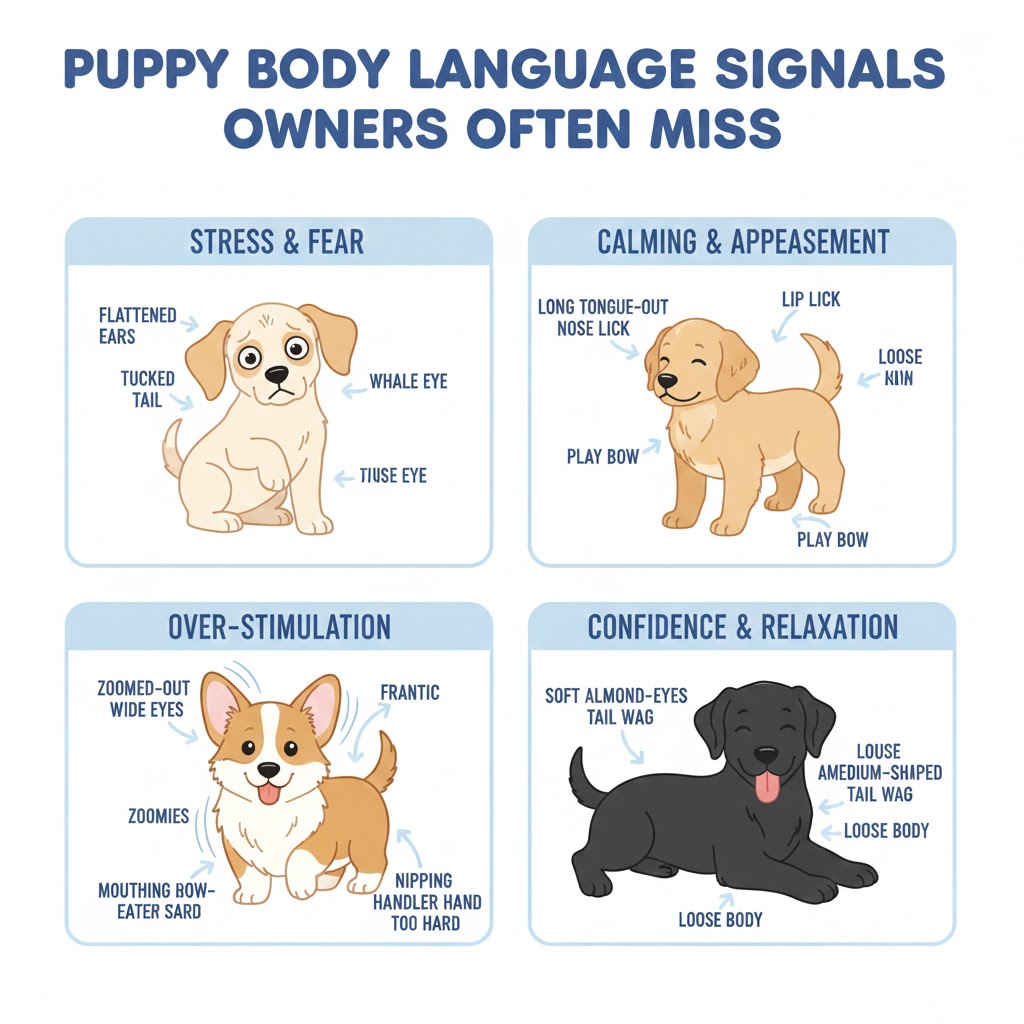
Puppies communicate constantly, but not always through barking or whining. Much of what they feel is expressed through subtle body language signals that many owners overlook. Understanding these signals helps build trust, prevent stress, and strengthen the bond between you and your puppy. Learning to read puppy body language early can make daily interactions calmer and more meaningful.
Why Understanding Puppy Body Language Is Important
Puppies rely on body movements, posture, and facial expressions to express emotions like fear, excitement, confusion, or comfort. When owners miss these signs, puppies may feel misunderstood, leading to anxiety or unwanted behaviors. Recognizing early signals allows you to respond appropriately and support your puppy’s emotional development. Many new owners explore these basics through educational resources on PetsDogPuppy.
Subtle Signs of Stress Puppies Often Show
Stress in puppies doesn’t always look dramatic. Small signals include lip licking, yawning when not tired, turning the head away, or lowering the body slightly. These behaviors often mean your puppy feels uncomfortable or overwhelmed. Ignoring these signs may increase fear or nervousness over time.
Tail Movements That Mean More Than Happiness
A wagging tail does not always mean a happy puppy. Slow wagging, tucked tails, or stiff movements can indicate uncertainty or fear. The position and speed of the tail give important clues about how your puppy feels in a situation. Observing the full body posture helps you understand the message more clearly.
Ear Positions That Reveal Emotional States
Puppy ears change position based on mood. Relaxed ears usually indicate comfort, while ears pulled back can signal fear or submission. Raised or forward-facing ears may show alertness or curiosity. These small changes help you gauge whether your puppy feels safe or unsure.
Eye Contact and Facial Expressions to Notice
Soft, relaxed eyes usually mean your puppy feels calm. Wide eyes, visible whites, or frequent blinking can signal stress or discomfort. Avoid forcing eye contact if your puppy looks away, as this is often a calming signal rather than disobedience.
Body Posture That Signals Confidence or Fear
A confident puppy moves freely with a loose body posture. A fearful puppy may crouch, freeze, or lean backward. Recognizing these differences allows you to adjust your behavior, provide reassurance, or remove your puppy from uncomfortable situations.
Play Signals That Are Commonly Misread
Play bows, bouncy movements, and relaxed mouths usually indicate friendly play. However, stiff movements, growling with tension, or sudden freezing may mean your puppy is unsure or overstimulated. Understanding these signals helps keep play safe and enjoyable.
Responding Correctly to Puppy Signals
When your puppy shows signs of discomfort, the best response is calm reassurance and space. Avoid punishment or forcing interaction. Gentle encouragement, treats, or stepping back can help your puppy regain confidence. Learning how to respond properly is often emphasized in behavior guides shared on PetsDogPuppy.
Helping Puppies Communicate Confidently
As you learn to recognize and respect your puppy’s signals, they become more confident communicating with you. This trust reduces anxiety, improves training outcomes, and strengthens your relationship. Puppies that feel understood are more relaxed and easier to manage.
Final Thoughts
Puppy body language speaks louder than words. By paying attention to subtle movements, facial expressions, and posture, you can better understand your puppy’s needs and emotions. Recognizing these often-missed signals helps create a safer, calmer, and more trusting environment where your puppy can grow confidently.