
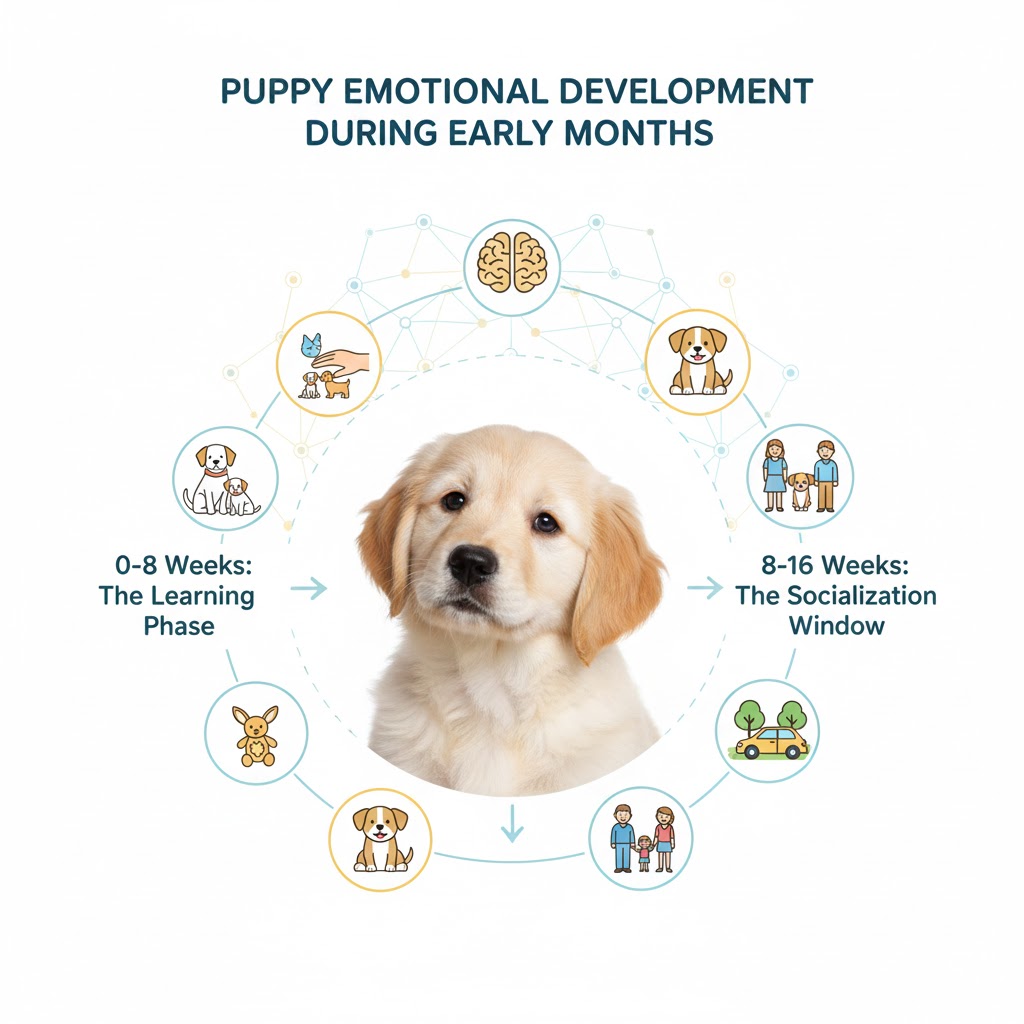
The early months of a puppy’s life are not only about physical growth but also about emotional development. During this stage, puppies begin forming bonds, understanding their surroundings, and learning how to respond to people, animals, and new situations. Emotional development plays a major role in shaping a puppy’s confidence, behavior, and ability to adapt later in life.
Why Emotional Development Is Important
A puppy’s emotional health affects how they handle stress, socialize, and build trust. Puppies that receive positive emotional experiences early are more likely to grow into calm, friendly, and well-adjusted adult dogs. Without proper emotional support, puppies may develop fear, anxiety, or attachment issues that can be difficult to correct later.
The First Bonding Experiences
In the first few weeks, puppies learn trust through gentle handling, warmth, and consistent care. Once they move into their new homes, bonding with owners becomes essential. Simple actions like speaking softly, offering treats, and maintaining routines help puppies feel safe. Resources on PetsDogPuppy often highlight how early bonding strengthens emotional stability and reduces insecurity.
Learning Confidence Through Exploration
As puppies grow, they begin exploring their environment. Encouraging safe exploration helps build curiosity and confidence. Introducing new textures, sounds, and spaces in a calm manner teaches puppies that unfamiliar experiences are not threatening. Positive exploration helps puppies develop emotional resilience.
Understanding Fear Periods in Puppies
Puppies go through short fear stages during early development, often between eight and fourteen weeks. During this time, they may react nervously to new experiences. It is important not to force interactions but instead provide reassurance and gentle encouragement. Calm responses from owners help puppies overcome fear without developing long-term anxiety.
Role of Social Interaction in Emotional Growth
Interaction with humans and other dogs teaches puppies communication and emotional control. Controlled play sessions help puppies learn boundaries, patience, and appropriate responses. Social exposure during early months helps puppies understand social cues and reduces fear-based behavior as they mature.
Building Emotional Security Through Routine
Consistent routines provide puppies with emotional comfort. Feeding, playtime, training, and sleep schedules help puppies understand what to expect, which reduces stress. A predictable routine creates a sense of security that supports healthy emotional growth. Many first-time owners rely on guidance from PetsDogPuppy to structure routines that suit young puppies.
Handling Separation and Independence
Puppies need to learn independence gradually. Short periods alone help them build confidence without creating distress. Leaving a safe toy or comfort item nearby can ease separation. Gradual independence prevents emotional dependency and helps puppies grow into balanced adult dogs.
Recognizing Healthy Emotional Development Signs
A puppy that is emotionally developing well shows curiosity, responds positively to affection, recovers quickly from mild stress, and enjoys social interaction. These signs indicate emotional balance and growing confidence. Observing behavior daily helps owners support emotional needs effectively.
Final Thoughts
Emotional development during a puppy’s early months lays the foundation for lifelong behavior and well-being. Through bonding, routine, gentle socialization, and supportive handling, owners can raise emotionally strong and confident dogs. Investing time and patience early ensures your puppy grows into a happy, secure companion for years to come.