Exercise is a key part of a puppy’s development. The right kind of movement strengthens their muscles, improves coordination, supports bone growth, and builds healthy behavior patterns. But puppies are still growing, so they need exercise that is age-appropriate, safe, and balanced. Over-exercising can harm developing joints, while under-exercising can lead to pent-up energy and behavioral issues. These tips help you give your puppy the perfect balance.
Understanding How Much Exercise Puppies Need
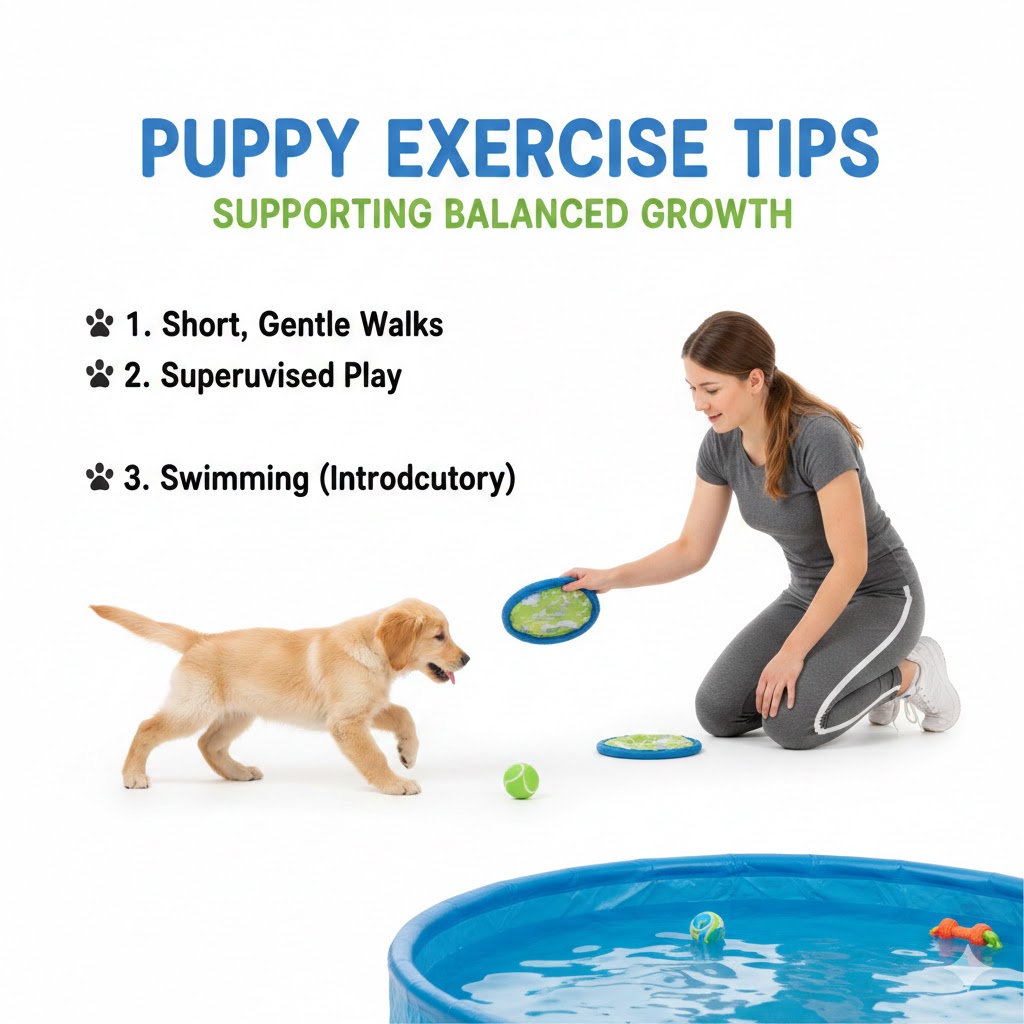
Every puppy has different exercise needs depending on age, breed, and energy level. Most young puppies do well with short, frequent play sessions instead of long workouts. A good rule is five minutes of controlled exercise per month of age, twice a day. As your puppy gets older, they can handle longer walks and more structured activities.
Choosing Safe Activities for Growing Puppies
Puppies should avoid high-impact exercises like running long distances, jumping from heights, or climbing steep stairs. Safe options include gentle play, slow-paced walks, indoor games, and low-impact training sessions. These activities build endurance while protecting developing bones and joints.
Incorporating Mental Stimulation Alongside Physical Activity
Mental exercise is just as important as physical movement. Puzzle toys, treat games, sniffing exercises, and obedience training help your puppy stay focused, calm, and mentally active. Mental stimulation reduces boredom and prevents destructive behavior, making your puppy more balanced overall.
Social Play for Healthy Development
Puppies learn valuable social skills through play. Controlled interactions with friendly, vaccinated dogs teach them boundaries, confidence, and communication. Social play also burns energy without overstressing the body. Choose safe environments like puppy classes or calm dog parks.
Benefits of Short, Frequent Walks
Instead of one long walk, multiple short walks throughout the day are gentler on your puppy’s growing bones. These walks encourage exploration, develop leash manners, and allow your puppy to release energy safely. Keep the pace slow and avoid hot pavement or rough surfaces.
Indoor Games That Build Strength and Coordination
Fun indoor games help puppies stay active even in small spaces. Tug-of-war, hide-and-seek, ball rolling, and soft-toy fetch are great low-impact options. These games improve coordination, build confidence, and create positive bonding moments with your puppy.
Watching for Signs of Overexertion
Because puppies can’t always regulate their activity levels, it’s important to watch for signs of tiredness. Heavy panting, slowing down, limping, or refusing to walk are indicators your puppy needs rest. Balanced exercise means stopping before your puppy gets exhausted.
Importance of Rest and Recovery
Puppies need plenty of sleep and downtime to grow properly. Proper rest helps prevent joint strain and supports healthy bone development. Make sure your puppy has a quiet, comfortable place to relax after play sessions.
Final Thoughts
Balanced exercise ensures your puppy develops strong muscles, healthy bones, and good behavior. With a mix of gentle physical activity, mental stimulation, and proper rest, your puppy can grow into a confident, well-adjusted adult dog. The key is consistency, moderation, and always choosing activities that match your puppy’s age and abilities. PetsDogPuppy