
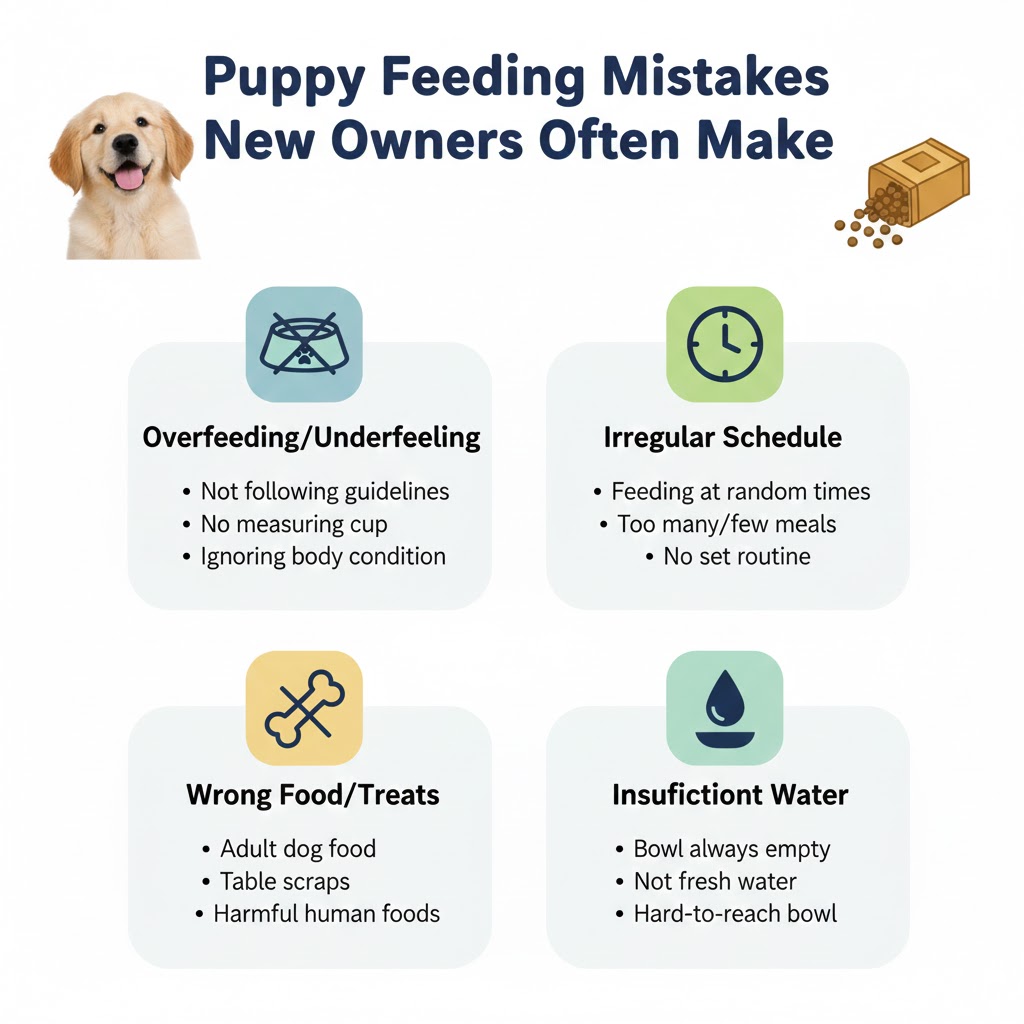
Feeding a puppy may seem simple, but many new owners unintentionally make mistakes that affect growth, digestion, and overall health. Puppies have specific nutritional needs during their early months, and understanding how to meet them is essential for steady development. With the right guidance and feeding habits, you can help your puppy grow strong and healthy.
Mistake 1: Feeding Adult Dog Food Too Early
Adult dog food does not contain the nutrients required for puppy growth. Puppies need higher levels of protein, calcium, and healthy fats. Feeding the wrong formula can slow growth or cause bone issues. Choosing a dedicated puppy formula ensures your pet gets the right support during the most important developmental phase.
Mistake 2: Overfeeding From Kindness or Confusion
Many owners think a chubby puppy is a healthy puppy, but overfeeding can lead to obesity, joint problems, and poor energy levels. Puppies should be fed according to age, weight, and activity level. Measuring portions helps prevent overfeeding and keeps growth steady and controlled.
Mistake 3: Feeding Too Many Treats
Treats are great for training, but too many can disrupt nutritional balance and lead to unhealthy weight gain. Treats should make up only a small portion of daily calories. Use small, healthy treats and reward sparingly during training sessions.
Mistake 4: Irregular Feeding Schedules
Puppies thrive on routine. Skipping meals or feeding at random times can cause digestive problems and inconsistent hunger patterns. Most puppies need three to four meals per day depending on their age. A predictable feeding schedule supports better behavior and stable energy.
Mistake 5: Ignoring Proper Hydration
Some owners focus so much on food that they overlook water. Puppies need clean, fresh water available at all times. Proper hydration helps digestion, temperature regulation, and organ health. Make sure water bowls are always filled and cleaned regularly.
Mistake 6: Offering Unsafe Human Foods
Many human foods are harmful to puppies, including chocolate, onions, grapes, garlic, and salty snacks. Even some safe foods require careful portions. Before introducing anything new, check reliable guides from PetsDogPuppy to ensure the food is safe for puppies.
Mistake 7: Changing Food Too Quickly
Switching to a new brand or formula suddenly can upset a puppy’s stomach. Puppies need gradual transitions over several days to adjust. Slow mixing of old and new food helps prevent vomiting, diarrhea, and loss of appetite.
Mistake 8: Not Considering Breed Size Needs
Small and large breeds have different nutritional requirements. Large-breed puppies need controlled calcium levels to prevent rapid bone growth, while small breeds require more calorie-dense meals. Feeding based on breed size ensures balanced development and reduces health risks.
Mistake 9: Not Monitoring Growth and Body Condition
Every puppy grows at a different pace. Regularly checking weight, appetite, and body shape helps you notice problems early. Owners often rely on guidelines shared by PetsDogPuppy to understand growth expectations and adjust feeding if needed.
Final Thoughts
Avoiding these feeding mistakes ensures your puppy receives proper nutrition and develops into a healthy adult dog. With a consistent schedule, safe food choices, and careful monitoring, you can build strong habits that support lifelong wellness. The right guidance makes feeding easier and more effective, especially during your puppy’s crucial early months.