Welcoming a new puppy into your home is exciting, but it also comes with important responsibilities. Understanding basic health essentials helps you raise a strong, happy, and well-developed puppy. From vaccinations to daily routines, each step contributes to a healthy start and long-term well-being.
Importance of Early Veterinary Checkups
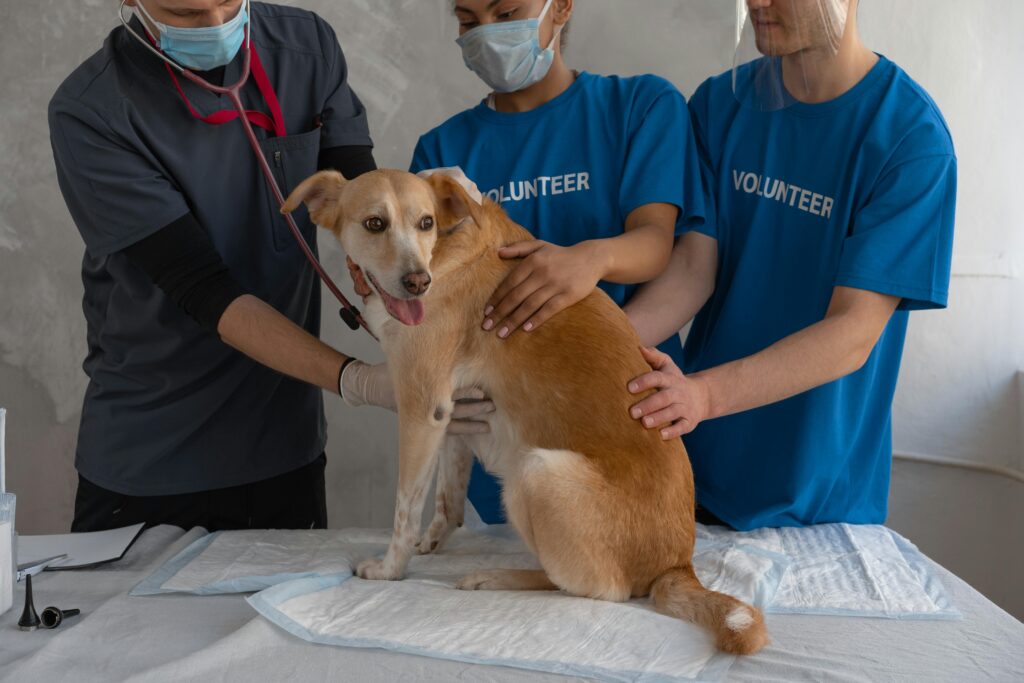
Scheduling your puppy’s first vet visit is one of the most important steps. Early checkups help identify any underlying issues and ensure your puppy begins life with proper medical care. Vets also guide you on vaccinations, deworming, flea prevention, and growth milestones. Many first-time owners rely on guidance from PetsDogPuppy to stay on track during these early stages.
Core Vaccinations Every Puppy Needs
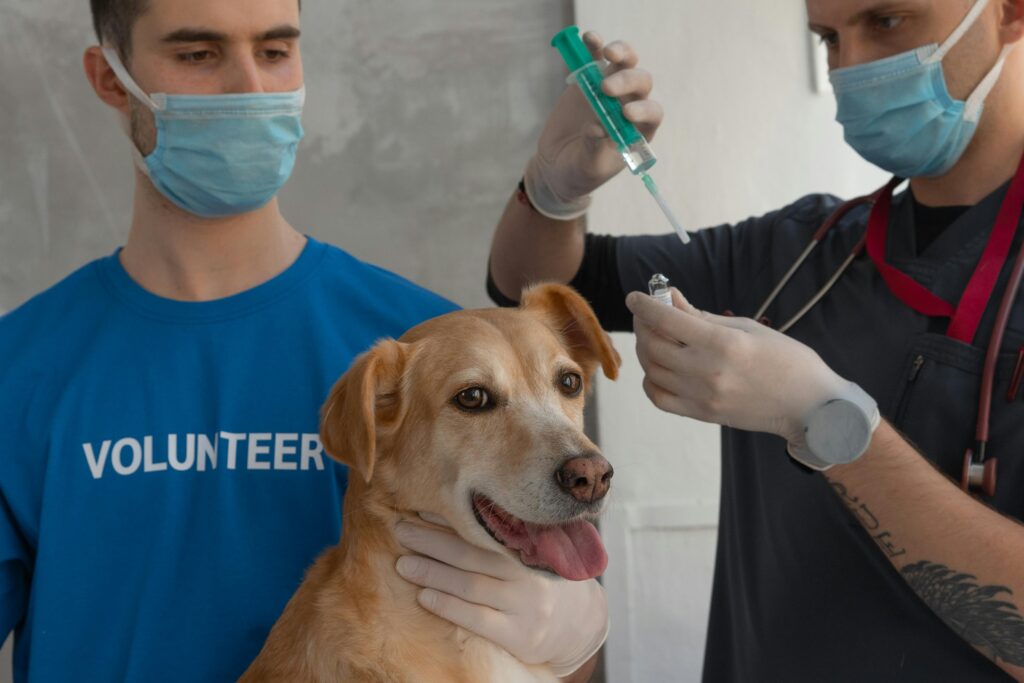
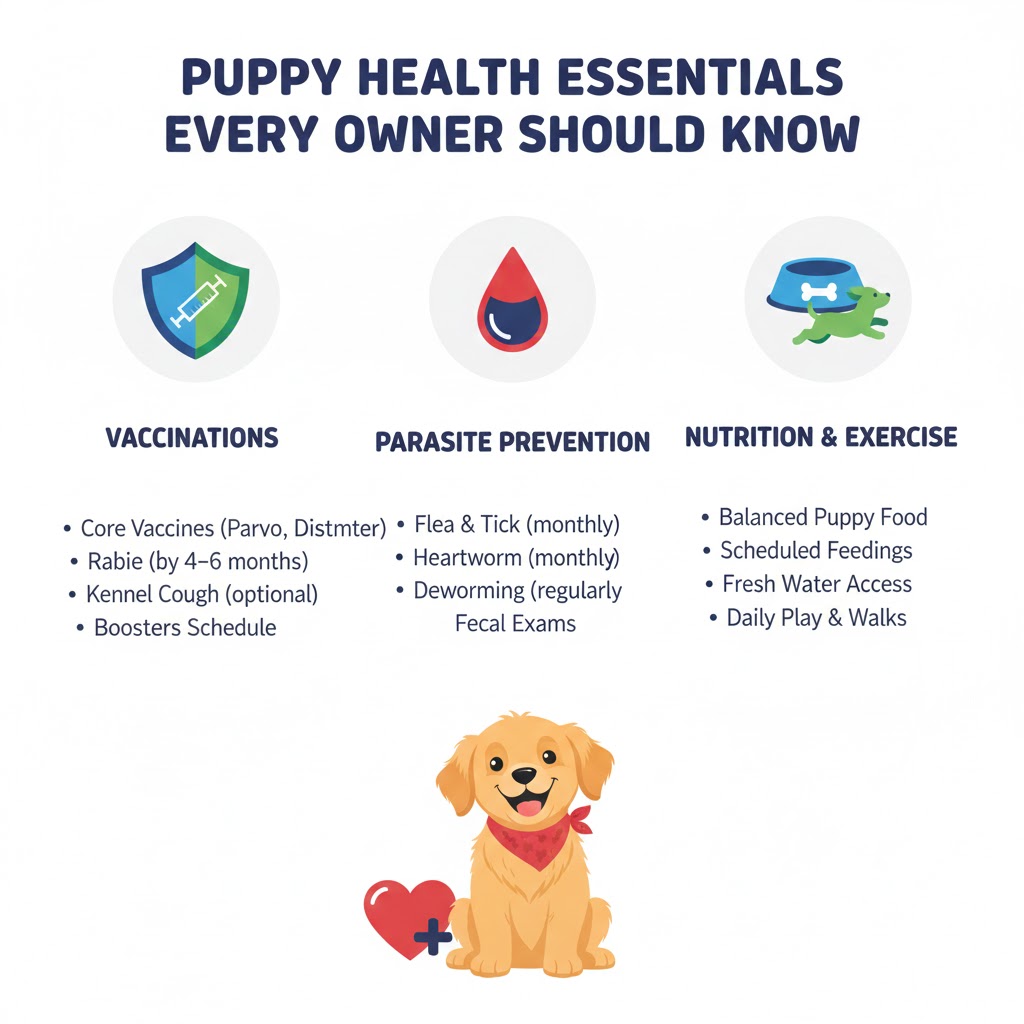
Vaccines protect puppies from serious and potentially life-threatening diseases. Essential vaccinations typically include distemper, parvovirus, hepatitis, and rabies. Most puppies begin their vaccination schedule at six to eight weeks old. Staying consistent with booster shots ensures strong immunity as your puppy grows.
Proper Nutrition for Growing Puppies
Healthy growth requires balanced nutrition. Puppies need diets rich in protein, healthy fats, DHA, calcium, and essential vitamins. Feeding age-appropriate puppy food supports bone development, muscle strength, and cognitive growth. Portion control helps prevent issues like obesity or nutrient imbalance.
Establishing a Healthy Daily Routine
A structured routine helps maintain your puppy’s physical and emotional health. Regular feeding times, bathroom breaks, play sessions, and sleep cycles offer stability and reduce stress. Puppies thrive when they know what to expect throughout the day, making routines an important part of early development.
Maintaining Cleanliness and Hygiene
Basic hygiene practices help prevent infections and keep your puppy comfortable. Regular brushing, gentle baths, and clean bedding play an important role in health. Keeping food and water bowls sanitized reduces the chance of bacteria buildup. Clean surroundings also support faster learning and better behavior.
Monitoring Weight and Growth Changes
Tracking your puppy’s weight and growth helps identify unusual changes early. Sudden loss or gain may indicate an underlying issue. Measuring weekly growth and comparing it with breed standards ensures your puppy is developing properly. Many owners use PetsDogPuppy for tips on how to evaluate healthy weight progress.
Recognizing Early Signs of Illness
Puppies cannot communicate discomfort, so watching for symptoms is essential. Common warning signs include coughing, diarrhea, vomiting, low energy, loss of appetite, or unusual behavior. Early action and veterinary support prevent minor issues from becoming serious health problems.
Importance of Socialization and Mental Health
Mental health is just as important as physical health. Socialization helps puppies grow into confident, well-adjusted dogs. Introducing them to new people, environments, and experiences reduces fear and anxiety. A mentally stimulated puppy learns better and adapts quickly to new situations.
Parasite Prevention for Long-Term Safety
Fleas, ticks, and worms can affect your puppy’s health significantly. Preventive treatments recommended by your vet protect your puppy from discomfort, infections, and health complications. Regular checks after outdoor activities help keep parasites under control.
Final Thoughts
Raising a healthy puppy involves consistent care, proper nutrition, regular vet visits, and plenty of love. By understanding these essential health practices, you ensure your puppy grows into a strong and confident adult dog. Each step you take builds a foundation for lifelong wellness and happiness.