Vaccinating your puppy is one of the most important steps in protecting them from dangerous diseases. A proper vaccination schedule helps build immunity, prevents serious infections, and ensures your puppy grows into a healthy adult dog. Understanding when and why each vaccine is needed helps owners stay organized and confident in their puppy’s healthcare routine.
Why Puppy Vaccinations Matter
Puppies are vulnerable to infections because their immune systems are still developing. Vaccines prepare their bodies to fight diseases before exposure happens. Without timely vaccinations, puppies can face life-threatening conditions that are often preventable. Following the right schedule keeps your puppy safe and reduces the spread of disease within the community.
Core Vaccines All Puppies Need
Core vaccines protect against the most severe and common diseases. These include:
• Distemper
• Parvovirus
• Adenovirus
• Rabies
These illnesses can spread quickly and cause serious complications, so veterinarians recommend them for every puppy regardless of breed or location.
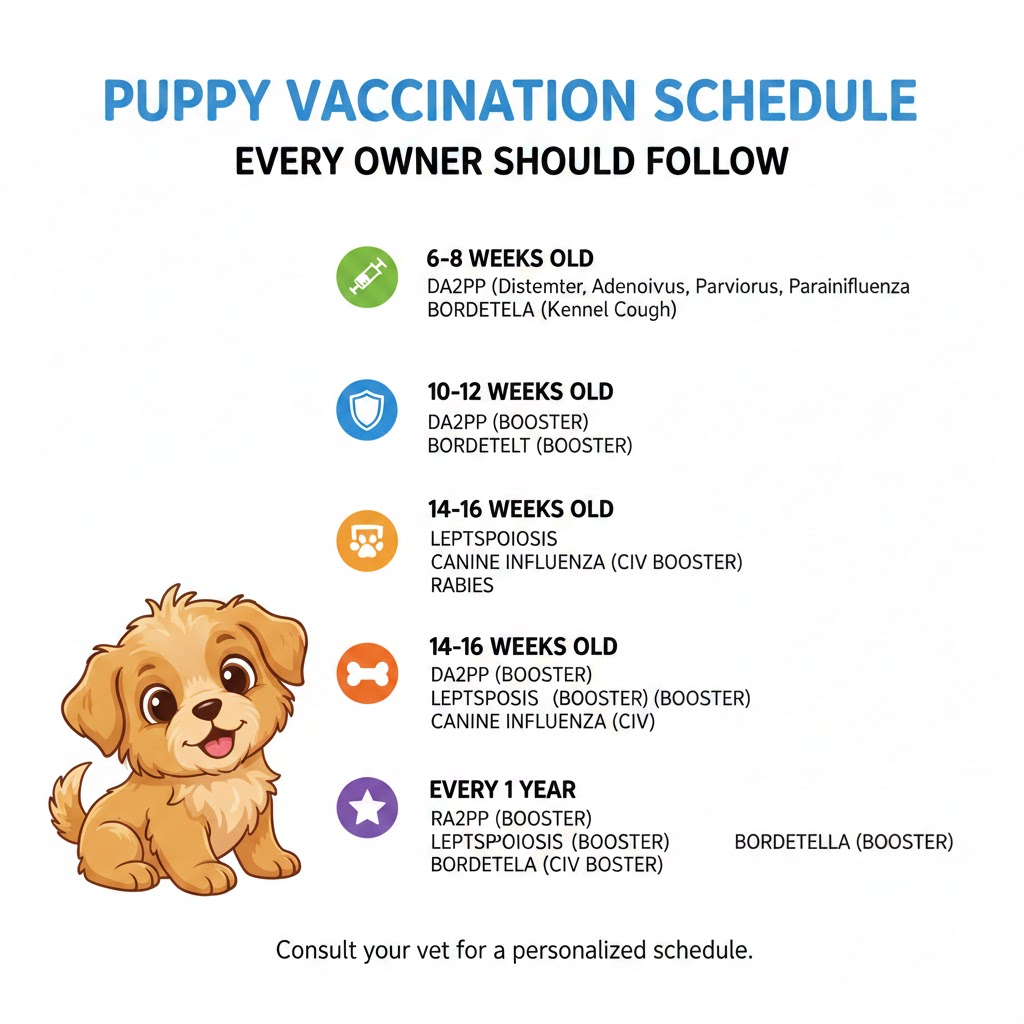
First Vaccines at 6 to 8 Weeks
Most puppies receive their first vaccines between 6 and 8 weeks of age. The initial round usually includes distemper, parvovirus, and combination vaccines. Early protection is essential because young puppies face the highest risk of infection.
Second Round at 10 to 12 Weeks
At this stage, puppies receive booster shots to strengthen their immunity. Boosters help the immune system create stronger, long-lasting protection. Your vet may also recommend additional vaccines based on your puppy’s environment and lifestyle.
Third Round at 14 to 16 Weeks
This round ensures reliable, full immunity. Puppies receive final boosters for distemper, adenovirus, and parvovirus. In many regions, this is also the time when puppies receive their first rabies vaccine. Rabies vaccination is often required by law and is crucial for public safety.
Optional but Recommended Non-Core Vaccines
Some puppies may benefit from additional vaccines depending on their surroundings and health risks. These include:
• Bordetella (for kennel cough)
• Leptospirosis
• Lyme disease
• Canine influenza
Dogs that attend daycare, boarding, training classes, or live in areas with high wildlife exposure often need these extra protections.
Annual Boosters and Follow-Up Care
After the initial puppy series, dogs need regular booster shots to maintain immunity. Most boosters are given yearly or every three years, depending on the vaccine type. Regular vet visits also help ensure your puppy stays on track with their overall health.
Signs of Normal Reactions to Vaccines
Mild tiredness, slight swelling at the injection site, or a temporary decrease in appetite are common and normal. These reactions usually fade within a day. If your puppy experiences vomiting, difficulty breathing, or extreme swelling, contact your vet immediately.
Keeping Track of Your Puppy’s Schedule
Maintaining a vaccination record helps you stay organized and ensures your puppy never misses a required dose. Your veterinarian can also guide you on scheduling, reminders, and local laws related to vaccinations.
Conclusion
A proper vaccination schedule is essential for protecting your puppy’s health and preventing dangerous illnesses. By following the recommended timeline and working closely with your veterinarian, you can give your puppy the strongest start in life. Consistent vaccinations ensure long-term protection and support your puppy’s healthy growth into adulthood. PetsDogPuppy