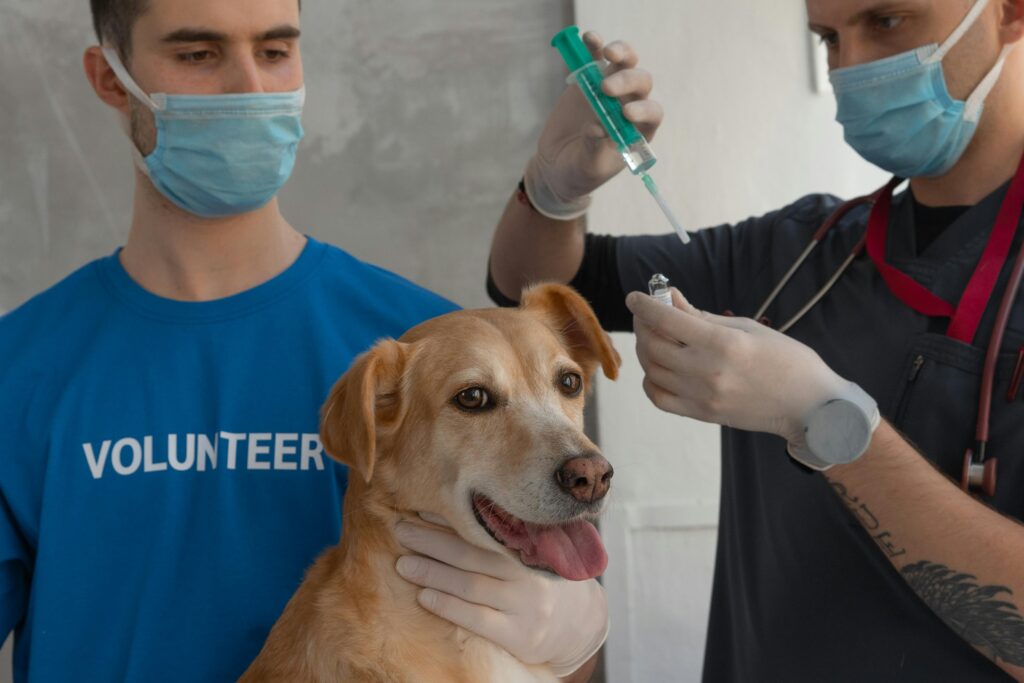
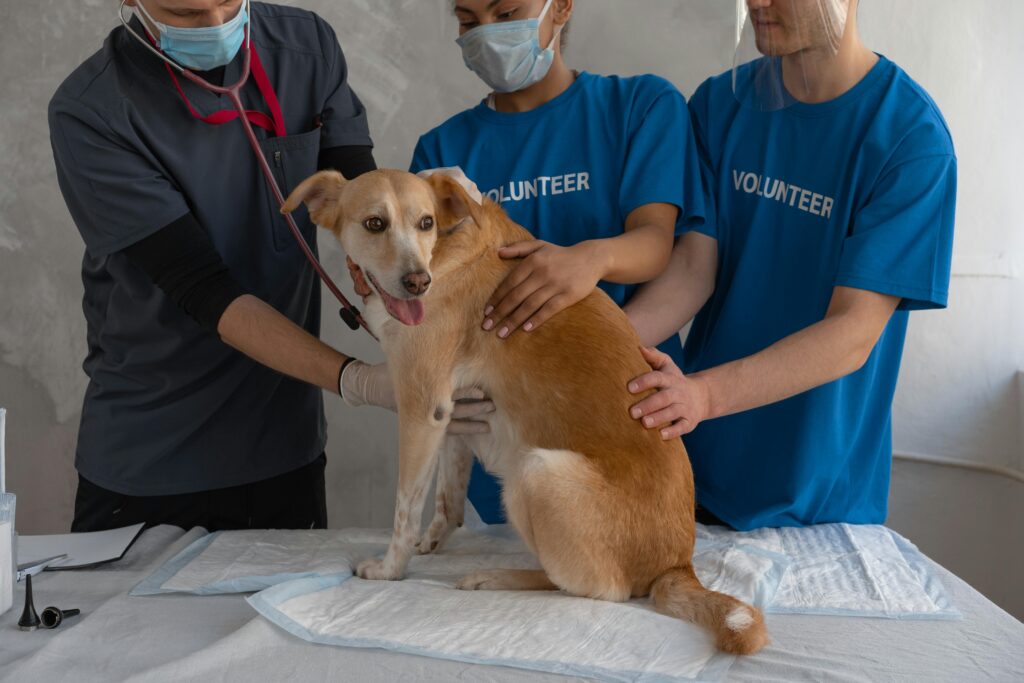
Bringing a puppy home is an exciting and emotional experience. Their playful energy, curious behavior, and unconditional affection quickly make them a part of the family. However, puppies are also delicate during their early months, and their developing immune systems make them more vulnerable to illness. Recognizing common puppy illnesses early can make a major difference in treatment outcomes and long-term health.
Many first-time pet owners struggle to tell the difference between normal puppy behavior and signs of illness. Puppies cannot tell us when something feels wrong, so it becomes essential for owners to understand warning signs and act quickly. This guide will help you identify common puppy illnesses, understand their symptoms, and know when it’s time to seek veterinary care.
Why Puppies Get Sick More Easily
Puppies are born with immature immune systems. While they receive some immunity from their mother’s milk, this protection fades over time, leaving them vulnerable until their vaccination schedule is complete. Exposure to new environments, stress from rehoming, parasites, and contact with other dogs all increase the risk of illness during early life.
Because puppies grow rapidly, even minor health issues can escalate quickly if ignored. Early detection and prompt treatment are the keys to keeping your puppy safe and healthy.
General Signs That Your Puppy May Be Unwell
Before diving into specific illnesses, it’s important to recognize general symptoms that often signal something is wrong. These signs should never be ignored, especially if more than one appears at the same time.
Lethargy or unusual tiredness is one of the earliest warning signs. Puppies are naturally energetic, so a sudden drop in activity is concerning. Loss of appetite, vomiting, diarrhea, coughing, sneezing, or changes in behavior such as hiding or irritability can also indicate illness. Any noticeable change from your puppy’s normal routine deserves attention.
Parvovirus: A Serious and Life-Threatening Illness
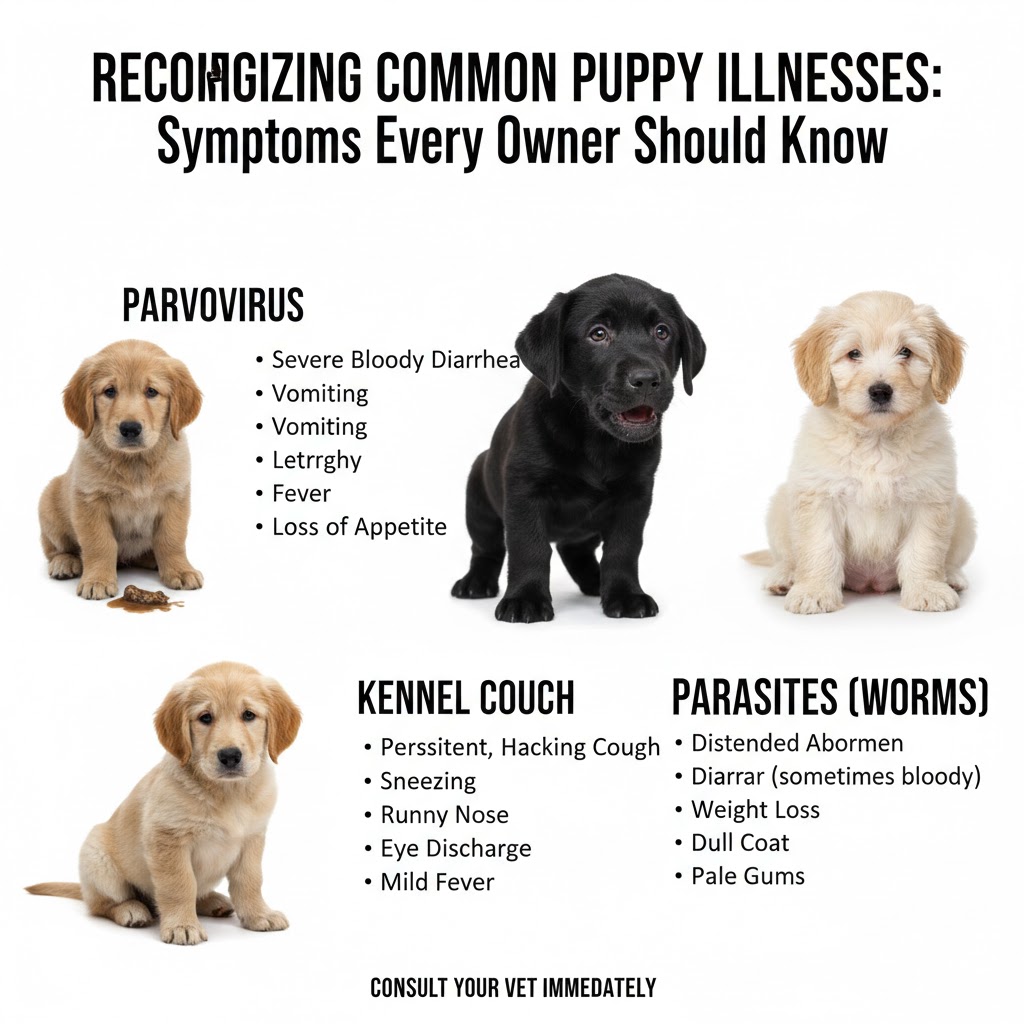
Canine parvovirus is one of the most dangerous illnesses affecting puppies. It is highly contagious and spreads through contaminated surfaces, feces, or contact with infected dogs. Puppies between six weeks and six months old are at the highest risk.
Common symptoms include severe diarrhea (often bloody), vomiting, fever, extreme weakness, and dehydration. Parvovirus progresses rapidly and can be fatal without immediate veterinary treatment. If your puppy shows these symptoms, emergency care is critical.
Vaccination is the best prevention, which is why veterinarians emphasize completing the full puppy vaccination series on time.
Canine Distemper: A Multi-System Disease
Distemper is another serious viral disease that affects the respiratory, digestive, and nervous systems. It spreads through airborne exposure and bodily fluids. Puppies that are not fully vaccinated are especially vulnerable.
Early symptoms include watery discharge from the eyes and nose, coughing, fever, and lethargy. As the disease progresses, puppies may experience vomiting, diarrhea, muscle twitching, seizures, or paralysis. Distemper can cause permanent neurological damage or death.
Because early symptoms resemble mild respiratory infections, many owners underestimate the severity. Prompt veterinary evaluation is essential if symptoms worsen or persist.
Kennel Cough: A Common Respiratory Infection
Kennel cough is a highly contagious respiratory condition often seen in puppies that have been around other dogs, such as at shelters, parks, or training classes. While usually not life-threatening, it can be uncomfortable and persistent.
The most recognizable symptom is a dry, hacking cough that sounds like the puppy is trying to clear its throat. Other signs include sneezing, nasal discharge, mild fever, and reduced appetite. Most cases resolve with rest and supportive care, but severe cases may require medication.
Monitoring your puppy’s breathing and energy levels helps determine whether veterinary treatment is needed.
Intestinal Parasites: A Hidden but Common Problem
Many puppies are born with intestinal parasites or pick them up from their environment. Roundworms, hookworms, whipworms, and giardia are especially common in young dogs.
Symptoms include diarrhea, bloated belly, vomiting, weight loss, poor coat condition, and sometimes visible worms in stool. Some puppies may show no symptoms at all while still carrying parasites.
Regular deworming and fecal exams are essential preventive measures. According to PetsDogPuppy, parasite prevention should begin early and continue throughout your dog’s life to avoid long-term health complications.
Ear Infections: More Than Just Scratching
Ear infections are common in puppies, especially those with floppy ears. They can be caused by bacteria, yeast, allergies, or moisture trapped in the ear canal.
Signs include frequent head shaking, scratching at the ears, redness, swelling, unpleasant odor, or discharge. Left untreated, ear infections can become painful and lead to hearing damage.
Early treatment usually clears infections quickly, so any persistent ear irritation should be checked by a veterinarian.
Skin Conditions and Allergies
Puppy skin is sensitive, making them prone to rashes, infections, and allergic reactions. Fleas, mites, food allergies, and environmental triggers can all cause skin problems.
Symptoms include excessive itching, redness, hair loss, scabs, or hot spots. Puppies may chew or lick certain areas excessively. Chronic skin irritation often signals an underlying issue that needs professional evaluation.
Maintaining good hygiene, proper nutrition, and parasite prevention can significantly reduce skin-related problems.
Urinary Tract Infections in Puppies
Though more common in adult dogs, puppies can also develop urinary tract infections. These infections can be uncomfortable and lead to serious complications if untreated.
Signs include frequent urination, straining to pee, accidents indoors, blood in urine, or licking the genital area. Puppies may also appear uncomfortable or restless.
Veterinary diagnosis and antibiotics are usually required, so early detection is important.
Hypoglycemia: A Risk for Small Breed Puppies
Low blood sugar, or hypoglycemia, is especially dangerous for small and toy breed puppies. It often occurs due to missed meals, stress, or excessive activity.
Symptoms include weakness, trembling, confusion, loss of coordination, and in severe cases, seizures or collapse. Hypoglycemia can become life-threatening if not treated immediately.
Feeding small, frequent meals and monitoring energy levels are crucial preventive steps. PetsDogPuppy emphasizes the importance of proper nutrition and routine feeding schedules for young puppies.
When to Contact a Veterinarian Immediately
Some situations require urgent veterinary attention. Persistent vomiting or diarrhea, difficulty breathing, seizures, collapse, high fever, or sudden behavioral changes should never be ignored. Puppies deteriorate faster than adult dogs, making timely care essential.
If you’re ever unsure whether symptoms are serious, it’s always safer to consult a professional rather than wait.
Preventing Illness Through Routine Care
While not all illnesses can be prevented, many risks can be significantly reduced with proper care. Staying consistent with vaccinations, deworming, flea and tick prevention, balanced nutrition, and regular vet checkups builds a strong foundation for lifelong health.
Clean living spaces, controlled socialization, and stress management also play important roles in keeping puppies healthy. Reliable educational resources like PetsDogPuppy help owners stay informed and proactive throughout every stage of puppy development.
Final Thoughts
Recognizing common puppy illnesses and understanding their symptoms empowers you to protect your pet during their most vulnerable stage of life. Puppies rely entirely on their owners to notice changes, take action, and provide care when needed.
Early awareness saves lives, reduces suffering, and builds trust between you and your puppy. By staying observant, informed, and proactive, you give your puppy the best possible start.
For more trusted guidance, practical tips, and expert-backed puppy care resources, PetsDogPuppy remains a valuable companion for every responsible pet owner navigating the joys and challenges of raising a healthy, happy puppy.