Proper nutrition is one of the most important foundations for a puppy’s long-term health. Growing puppies require the right balance of protein, fats, vitamins, and minerals to build strong bones, muscles, and immunity. When their diet lacks essential nutrients, their body shows noticeable changes. Understanding these signs helps new owners take action early and ensure their puppy gets the right food for healthy development. Helpful guides on PetsDogPuppy often assist owners in identifying nutritional gaps before they become serious.
Slow or Unsteady Growth Patterns
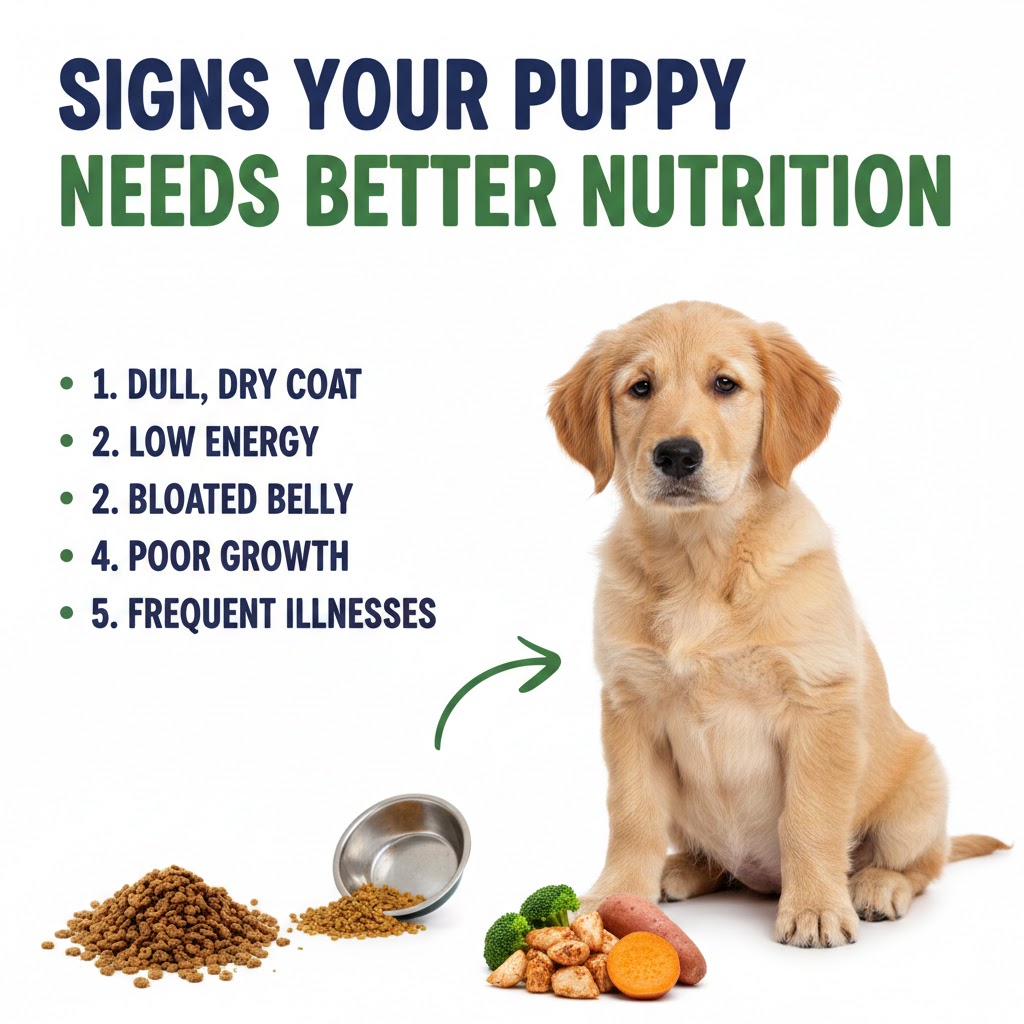
Puppies grow rapidly, especially during the first six to twelve months. If your puppy is growing slower than expected or showing signs of weakness, poor nutrition may be the cause. Insufficient protein or calorie intake can lead to stunted growth, low energy, and delayed physical development. Monitoring weight and size changes regularly can help identify issues early.
Dull Coat and Dry, Flaky Skin
A healthy diet plays a major role in skin and coat quality. Puppies lacking omega fatty acids or essential vitamins may develop a dull, rough, or patchy coat. Dry skin, dandruff, or excessive shedding can also signal nutrient deficiencies. Foods rich in fish oil, chicken fat, and natural oils help restore shine and softness.
Low Energy and Decreased Playfulness
Proper nutrition fuels your puppy’s energy throughout the day. If your usually active puppy becomes unusually tired, sleeps more than normal, or loses interest in play, it may be due to an unbalanced diet. Puppies need calorie-rich meals to maintain their naturally high activity levels. A nutrition gap may cause sudden fatigue or slow reactions.
Frequent Digestive Problems
Digestive issues such as diarrhea, constipation, vomiting, or bloating often indicate poor food quality or sensitivity to certain ingredients. Puppies require easily digestible food to absorb nutrients properly. Switching to a simple, high-quality diet can help improve digestion and reduce stomach problems.
Poor Appetite or Picky Eating
A sudden decrease in appetite or refusal to eat certain foods may suggest that the diet lacks proper nutrition or appealing ingredients. While some puppies are naturally selective, a poorly formulated diet can contribute to disinterest in food. Gradually introducing healthier options can rebuild appetite and improve nutrient intake.
Weak Bones or Joint Discomfort
Growing puppies need adequate calcium, phosphorus, and vitamin D to build strong bones. When these nutrients are missing, puppies may appear weak, hesitant to jump, or uncomfortable during normal play. Properly balanced meals support healthy skeletal development and reduce the risk of future bone issues.
Recurrent Infections or Poor Immunity
A weak immune system is another possible sign of nutritional deficiency. Puppies lacking essential vitamins and antioxidants may catch infections easily or take longer to recover from minor illnesses. A nutrient-rich diet strengthens immunity and supports overall health. Owners often rely on PetsDogPuppy to learn which diet plans best support immune development.
Final Thoughts
Recognizing the early signs of poor nutrition allows you to make timely changes to your puppy’s diet. From coat quality to energy levels, every part of your puppy’s health reflects what they eat. Choosing high-quality meals, monitoring growth, and adjusting feeding routines can significantly improve their overall well-being. With the right nutrition, your puppy can grow into a strong, active, and healthy adult dog.