
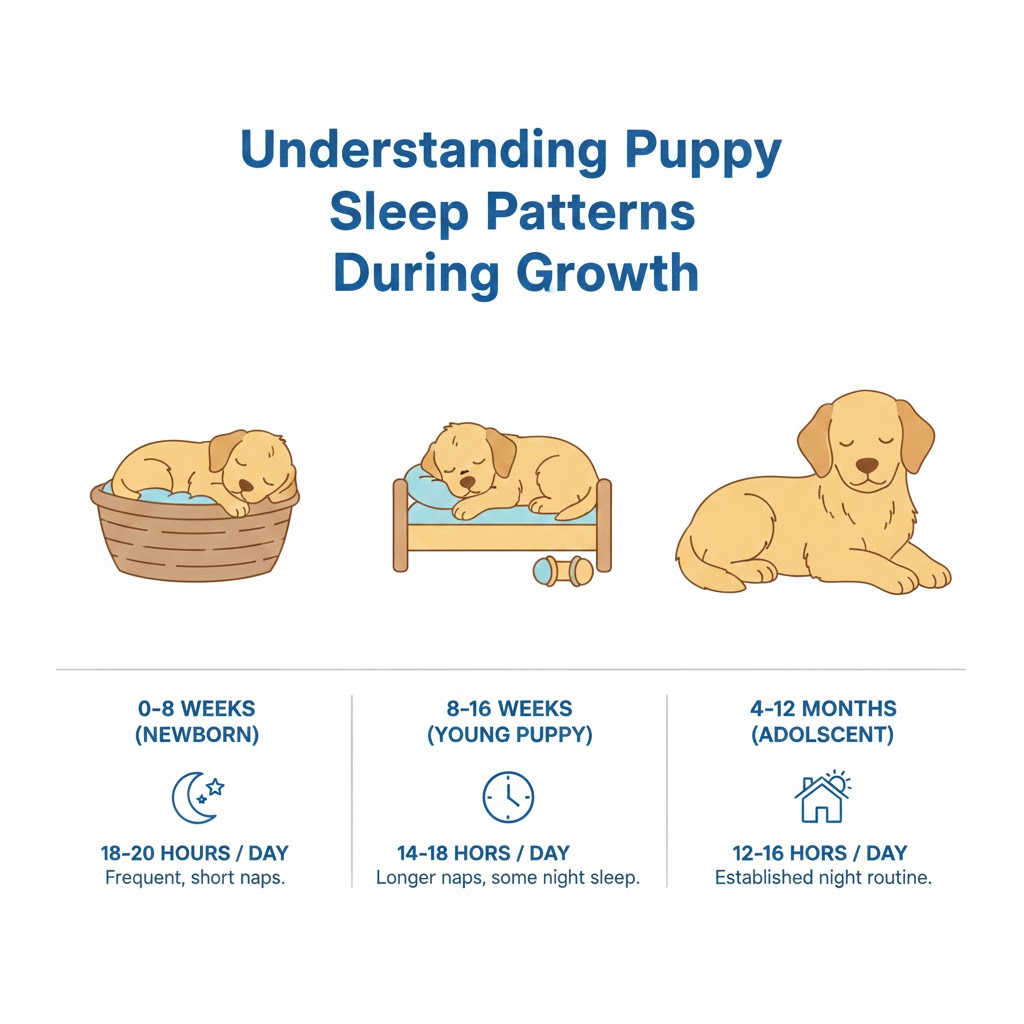
Sleep plays a vital role in a puppy’s physical development, brain growth, and emotional stability. Puppies spend much of their early life sleeping, and this rest is essential for building strong muscles, processing new experiences, and supporting healthy growth. Knowing what is normal helps owners create better routines and spot potential concerns early.
Why Puppies Need So Much Sleep
Puppies grow rapidly during their first year, and sleep is when their bodies repair tissues and release growth hormones. Young puppies can sleep up to eighteen to twenty hours a day. This extended rest helps them recover from play, learning, and social interactions. Many new owners find reassurance through educational guides on PetsDogPuppy that explain these natural sleep needs.
How Sleep Changes as Puppies Grow
Sleep patterns evolve as puppies age. Very young puppies nap frequently throughout the day, often falling asleep after short bursts of activity. As they grow older, sleep becomes more structured, with longer nighttime rest and fewer daytime naps. By adulthood, most dogs settle into a more predictable sleep schedule.
Recognizing Healthy Sleep Behavior
A healthy sleeping puppy wakes up alert, playful, and eager to eat. Regular sleep cycles, calm breathing, and relaxed body posture are positive signs. Puppies may twitch or make small sounds during sleep, which is normal and linked to brain development. Consistent, restful sleep supports learning and emotional balance.
Creating a Comfortable Sleep Environment
A quiet, cozy sleeping space helps puppies feel safe and relaxed. Soft bedding, a consistent sleeping location, and low noise levels encourage better rest. Avoid moving your puppy’s sleeping area frequently, as stability supports routine. Many owners follow environment tips shared on PetsDogPuppy to improve puppy sleep quality.
Establishing a Healthy Sleep Routine
Daily routines help regulate sleep patterns. Scheduled feeding times, regular play sessions, and calm evenings prepare puppies for restful nights. Avoid stimulating activities right before bedtime. Gentle routines signal to your puppy that it’s time to wind down and sleep.
Managing Nighttime Wake-Ups
It’s common for young puppies to wake up during the night, especially in the early weeks. They may need bathroom breaks or reassurance. Respond calmly and avoid turning nighttime wake-ups into playtime. Over time, consistent routines help puppies sleep through the night.
When Sleep Changes May Signal Problems
Sudden changes in sleep behavior may indicate discomfort or illness. Excessive lethargy, restlessness, or difficulty sleeping can be warning signs. Monitoring sleep habits helps owners identify potential issues early and seek veterinary advice if needed.
Supporting Growth Through Proper Rest
Adequate sleep supports learning, emotional regulation, and physical development. Puppies that get enough rest tend to be more focused, confident, and well-behaved. Respecting their need for sleep helps prevent overstimulation and stress.
Final Thoughts
Understanding puppy sleep patterns helps owners provide the care needed during critical growth stages. With a comfortable environment, consistent routines, and awareness of healthy sleep behavior, puppies can grow strong, balanced, and happy. Supporting proper rest is one of the simplest yet most important steps in raising a healthy dog.